In this reflective piece, Satyajit Shinde combines his love of words with science through the evolution of CRISPR’s journey and its technological leap from the laboratory to a global community, grappling with ethical challenges — through a lens that treats writing as art.
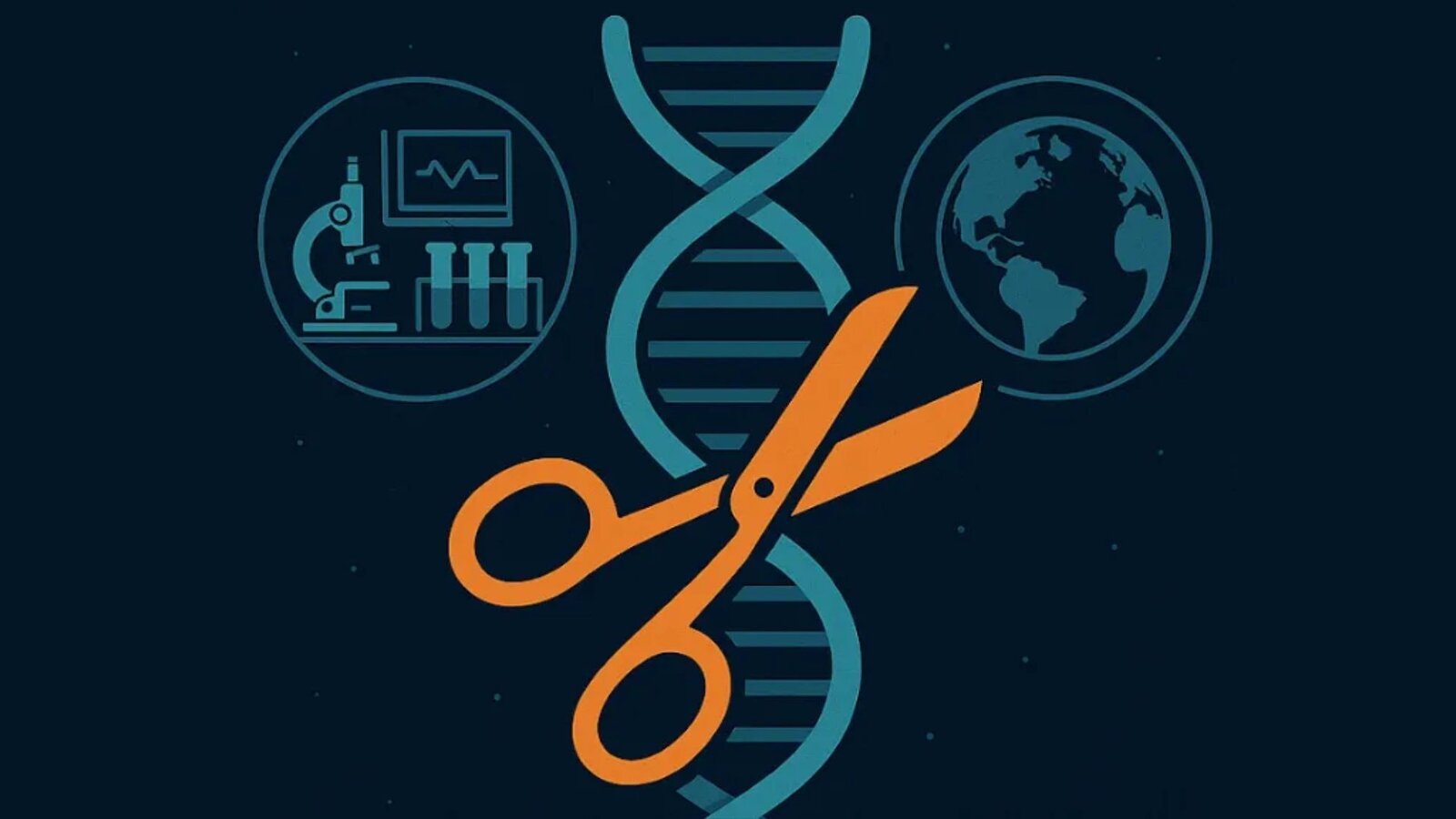
CRISPR began life as a modest line of bacterial code, yet within less than a generation it has been redrafted into a genuine sword for genome editing. By 2025, laboratories around the world routinely cite the method in grant proposals and patent filings alike. That rapid institutional uptake has put fresh pressure on researchers to sort out the ethical tangles it creates — a concern that now ranks alongside science itself.
From lab bench to field and factory
A decade ago, the conversation fixed on curing rare hereditary conditions; today it circles crops and concrete production lines just as easily. Gene-edited tomatoes in Europe resist blight and bruise, while pulses in North America pack in extra protein without extra fertilizer. Indian breeders are quietly testing rice and millet strains that require less water and withstand severe drought — moves that could soothe long-standing food-security nerves.
Industrial engineers are writing their own story. Custom microbes now break down discarded plastics, belch out delta-9-THC, and churn out cheaper biofuels by skipping costly fermentation steps. That leap — from bench-top yeast to cost-competitive factory floor — upends long-held economic assumptions by turning waste into wealth and chemistry into kindling.
I recently came across a report by Roots Analysis that really put things into perspective. According to them, the CRISPR market size is projected to grow from USD 2.87 billion in 2025 to USD 12.22 billion by 2035, representing a CAGR of 15.60% during the forecast period till 2035. This explosive growth underscores just how quickly gene editing is moving from research to real-world application — and how urgent it is to build the right guardrails around it.
Medical applications: Progress and prudence
Excitement pulses through laboratories as CRISPR moves from bench research toward real-life clinics. Sickle-cell anemia, hereditary blindness, and a host of other inherited disorders flicker on the horizon of possible cures. Yet ethical alarm bells ring just as loudly, particularly when conversations drift toward germline alteration that rewrites not just one patient, but many generations to come. International symposia reveal a scientific community fractured on this point, arguing whether such profound change is justified or simply reckless.
India presents a different but equally compelling stage. Thalassemia and other inherited conditions afflict millions here, and CRISPR offers a glimmer of hope that feels almost tangible.
The country’s regulatory landscape, however, remains rudimentary, leaving wide open questions about safety, equitable access, and the very real potential for misuse of powerful editing tools.
Democratising innovation — but at what cost?
One reason the buzz around CRISPR never seems to die down is cost: the kits are affordable, the reagents can be ordered online, and a modest lab can get started within weeks. That accessibility shatters the old monopoly that elite institutions once held over frontier biotechnology. The upside is frantic, bottom-up innovation that single central authority can easily curtail. The downside, however, is a surge of unauthorised experiments that skirt ethical review and regulatory scrutiny. Researchers in rural labs, curious entrepreneurs, and even hobbyist biohackers suddenly share the same toolkit — and not all of them exercise the same caution. India now finds itself tiptoeing between encouragement and oversight, unsure where the balance will finally settle. Clear guidelines, culturally resonant public engagement, and nimble ethics boards may temper the whirlwind — but that infrastructure is still being drafted even as science races forward.
A call for ethical foresight
Innovation typically outruns reflection, yet the rising power of CRISPR has made moral pause unavoidable. Fresh protocols will not spring fully formed from any single discipline; geneticists, philosophers, lawmakers, farmers, and ordinary citizens alike will have to deliberate face-to-face. Ideas hammered out in the Global North cannot claim the final word, or risk losing sight of uneven advantages and heavy costs felt elsewhere.
Where do we go from here?
In mid-2025, a safely edited mosquito or a plant seed carrying designer resistance may land in your hands by lunchtime. That immediacy turns yesterday’s science-fiction debate into tomorrow’s board agenda. Nations with sprawling laboratories and crowded clinics, India included, find promise tied too closely to peril.
A broad, patient dialogue may be the only compass steady enough to guide us through the knot of choices now forming on the horizon.