New study from BRIC-National Institute of Immunology reveals how vitamin B12 boosts serotonin signalling and promotes longevity through brain-gut interaction.

We all know that eating our greens — or reds, oranges, and purples — helps us stay healthy. But what if we told you that a tiny amount of a single vitamin, sourced from our diet and gut microbes, could profoundly alter brain chemistry, reshape our food choices, restructure communication between the brain and the gut, and help us age more gracefully?
Our brain is in constant conversation with the gut, and new research is showing just how deep this connection goes. Scientists from the Molecular Aging Laboratory at the BRIC-National Institute of Immunology, New Delhi, uncovered a surprising role for vitamin B12 in orchestrating communication between the brain and the gut. Using the tiny, transparent roundworm Caenorhabditis elegans, the team discovered a surprising connection between vitamin B12 and a neurotransmitter, and the happiness hormone, serotonin. The study, published in Nature Communications, was led by Arnab Mukhopadhyay and Sabnam Sahin Rahman.
Vitamin B12 is a crucial cofactor in the methionine cycle (Met‑C), a metabolic pathway involved in methylation, gene regulation, and protein synthesis. Humans can only acquire vitamin B12 through diet or from certain gut bacteria. Deficiency of vitamin B12 or genetic impairments in this Met‑C pathway are linked to a range of disorders, including cardiovascular disease, depression, anxiety, insulin resistance, and obesity.
I think one of the most interesting observations we made was that a vitamin B12-rich diet can profoundly influence physiology in worms with a specific genetic background — enhancing their stress tolerance, reshaping food-seeking behavior, and remarkably extending their lifespan,”
said the lead researcher, Sabnam.
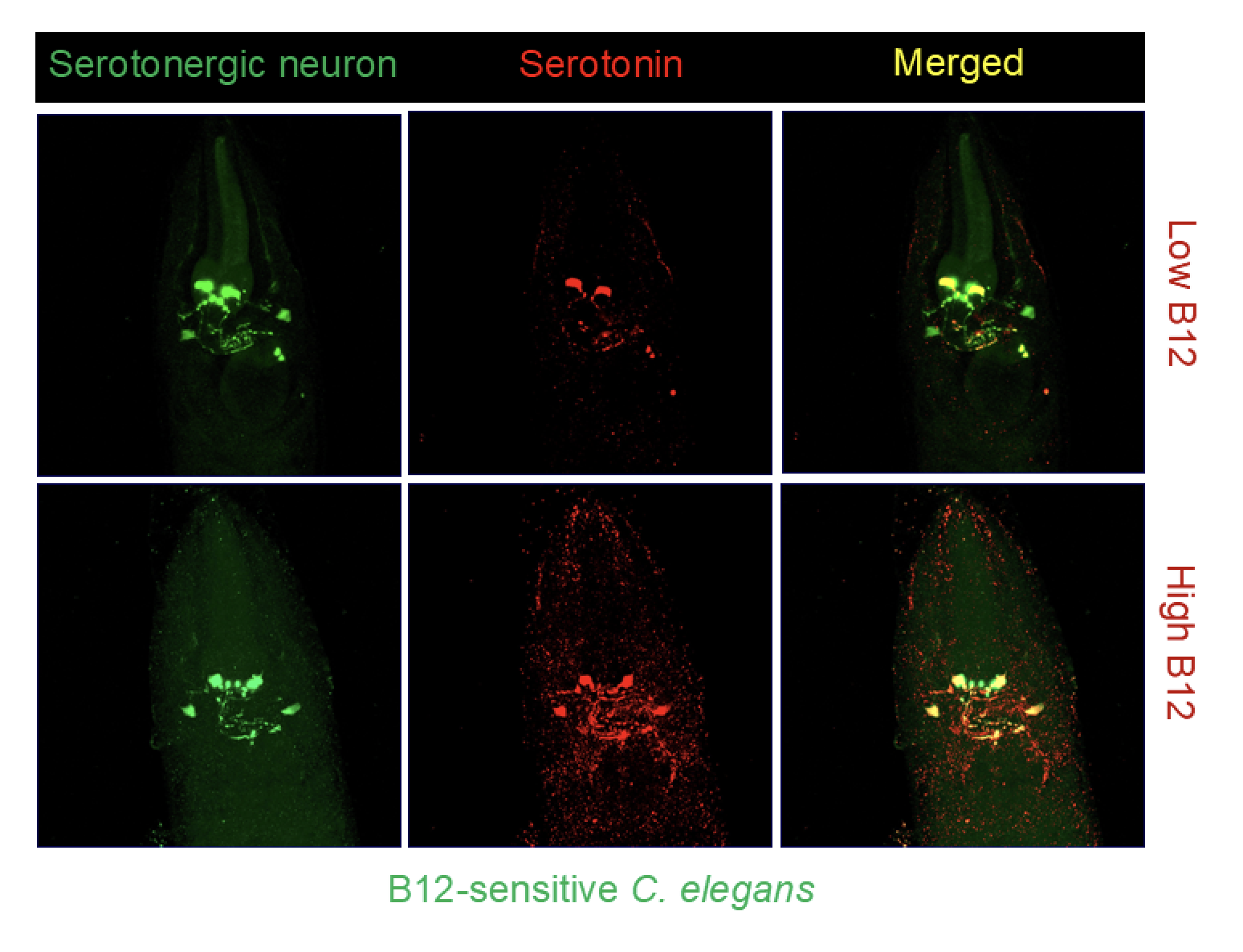
The team discovered that the key player in this nutrient-brain-body dialogue is the chemosensory ADF neurons — a group of brain cells in the worm that sense external chemical cues. When B12 activates the methionine cycle in these neurons, it boosts serotonin production — the same neurotransmitter linked to mood and well-being in humans. This serotonin surge then triggers a cascade of signalling in other neurons, prompting the release of more neurochemicals, like a neuropeptide hormone that acts on the gut. The outcome: a gut-based stress response pathway, the p38 MAP-kinase pathway, is activated, improving the worm’s ability to cope with environmental stressors and promoting longevity.
This isn’t just about stress and survival in worms, though! Crucially, this is a story about internal teamwork. The worm’s brain doesn’t just sense nutrients — it uses that information to direct behaviour.
The team found that the B12-induced serotonin response motivated the worms to actively seek out B12-rich foods, revealing a fascinating feedback loop in which diet influences brain signaling, which in turn alters food preference and gut resilience. It’s as if the brain and gut are working in perfect sync!
The brain registers the benefits of a B12-rich meal and makes more serotonin, which in turn tells the gut to respond with improved stress defences. Together, this shapes behaviour, nudging the worms to change their foraging pattern and actively seek out B12-rich food.
“This work highlights a previously unappreciated link between dietary B12, serotonin signaling, and organismal stress responses,” says Arnab Mukhopadhyay.
It provides a molecular framework for understanding how micronutrients shape brain-gut interactions to influence aging and behavior. It’s as if their brain and gut are in harmony, leaving a lasting impression on the body’s physiology.”
While this research was conducted in worms, the implications for humans are profound. It underscores the deep evolutionary roots of diet-brain-gut communication and offers insights into how micronutrients, brain chemistry, and metabolic health may be linked in aging and disease. It’s a powerful reminder that even in creatures as small as C. elegans, food is more than fuel; it’s a molecular message that coordinates internal systems to promote health and longevity.
So the next time you have a “gut feeling,” science suggests you might want to listen — your brain and gut are talking.