<?xml version="1.0" encoding="UTF-8"?><feed xmlns="http://www.w3.org/2005/Atom" xml:lang="en"><title>IndiaBioscience</title><link
    rel="alternate"
    href="https://indiabioscience.org/"
    type="text/html"
    /><link
    rel="self"
    href="https://indiabioscience.org/feed"
    type="application/atom+xml"
    /><id>https://indiabioscience.org/feed</id><updated>2026-01-08T12:53:08+05:30</updated><entry><title>What has taken the malarial vaccines so long?</title><link
                  rel="alternate"
                  href="https://indiabioscience.org/columns/scitales-by-ccmb/what-has-taken-the-malarial-vaccines-so-long"
                  type="text/html"
                  /><summary type="html"><![CDATA[
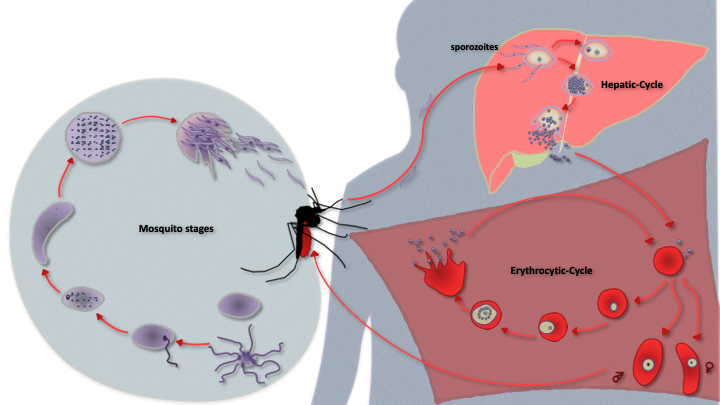
                <p dir="ltr">In the rise of antimicrobial resistance among pathogens and infectious diseases, vaccines are a potent global health solution. <a href="https://www.ncbi.nlm.nih.gov/pmc/articles/PMC4257029/" target="_blank" rel="noreferrer noopener">Vaccines</a> mimic the pathogens to train the immune system. <a href="https://www.sciencedirect.com/science/article/pii/S009286742031237X" target="_blank" rel="noreferrer noopener">The training</a> allows the immune system to be quickly activated in the event of a real infection by the pathogen. Notable recent examples are vaccines against <a href="https://www.nature.com/articles/s41392-022-00996-y" target="_blank" rel="noreferrer noopener">COVID-19</a>, a disease caused by SARS-CoV-2 viral infection. While this was one of the greatest achievements in the history of vaccine development, the quest for vaccines against many pathogens has been challenging, resulting in little success. Why has that been the case? I will take you through one such example that I study; the <em>Plasmodium</em> parasites that cause <a href="https://onlinelibrary.wiley.com/doi/full/10.1111/joim.12223" target="_blank" rel="noreferrer noopener">malaria</a>.<br /></p>              ]]></summary><id>tag:indiabioscience.org,2026-01-08:/columns/scitales-by-ccmb/what-has-taken-the-malarial-vaccines-so-long</id><published>2026-01-08T10:00:00+05:30</published><updated>2025-10-15T17:33:18+05:30</updated><author><name>G Srinivas Reddy</name><uri>https://indiabioscience.org/authors/GSrinivasReddy</uri></author><content type="html"><![CDATA[
                
<p>In the rise of antimicrobial resistance among pathogens and infectious diseases, vaccines are a potent global health solution. <a href="https://www.ncbi.nlm.nih.gov/pmc/articles/PMC4257029/" target="_blank" rel="noreferrer noopener">Vaccines</a> mimic the pathogens to train the immune system. <a href="https://www.sciencedirect.com/science/article/pii/S009286742031237X" target="_blank" rel="noreferrer noopener">The training</a> allows the immune system to be quickly activated in the event of a real infection by the pathogen. Notable recent examples are vaccines against <a href="https://www.nature.com/articles/s41392-022-00996-y" target="_blank" rel="noreferrer noopener">COVID-19</a>, a disease caused by SARS-CoV-2 viral infection. While this was one of the greatest achievements in the history of vaccine development, the quest for vaccines against many pathogens has been challenging, resulting in little success. Why has that been the case? I will take you through one such example that I study; the <em>Plasmodium</em> parasites that cause <a href="https://onlinelibrary.wiley.com/doi/full/10.1111/joim.12223" target="_blank" rel="noreferrer noopener">malaria</a>.<br /></p><figure><a href="https://indiabioscience.org/columns/scitales-by-ccmb/what-has-taken-the-malarial-vaccines-so-long"><img
                width="1024"
                height="580"
                style="max-width: 100%; height: auto"
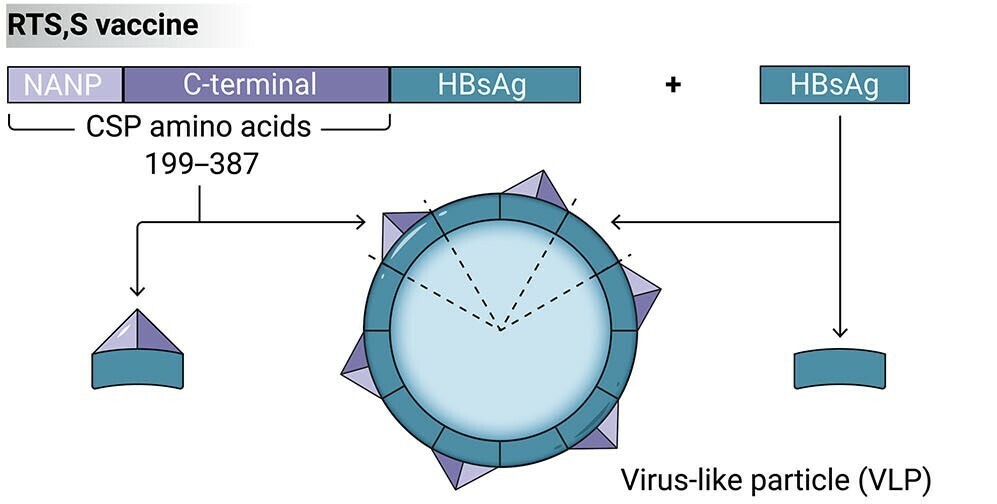
                src="https://cdn.indiabioscience.org/media/articles/WhatsApp-Image-2024-03-18-at-10.49.57-AM.jpeg"></a></figure><p>Despite a century-old battle to eradicate malaria, it remains one of the leading causes of global morbidity and mortality. WHO reported an estimated 247 million cases of malaria and more than 0.6 million malaria-associated deaths in the year 2021 in 84 malaria endemic countries. A majority of these cases are reported in countries of the <a href="https://www.who.int/teams/global-malaria-programme/reports/world-malaria-report-2022" target="_blank" rel="noopener">African</a> region. Within <a href="https://www.pib.gov.in/PressReleasePage.aspx?PRID=1677601" target="_blank" rel="noopener">India</a>, malaria incidence and deaths are higher in the states of Odisha, Chhattisgarh, Jharkhand, Meghalaya and Madhya Pradesh. The disease predominantly affects children under the age of 5 and pregnant women. Patients show symptoms such as irregular fever, chills, headache and malaise. Under severe disease conditions, complications arise, leading to renal failure, cerebral malaria, pulmonary oedema or <a href="https://www.mjhid.org/index.php/mjhid/article/view/2012.026" target="_blank" rel="noopener">haemorrhage</a>.</p><p><strong>The shape-shifting <em>Plasmodium</em> parasites</strong></p><p>To date, more than 200 species of <em>Plasmodium</em> have been described, which cause malaria in a diverse range of vertebrate hosts. 5 strains are known to cause disease in humans. The parasites have a complex <a href="https://jphysiolanthropol.biomedcentral.com/articles/10.1186/s40101-020-00251-9" target="_blank" rel="noopener">life-cycle</a>, both within the mosquito vector, through which the disease is transmitted, and the human host.</p><figure style="margin-left: auto; margin-right: auto; text-align: center; width: 485px; max-width: 485px;"><img src="https://cdn.indiabioscience.org/media/articles/Malaria-image-1.png" data-image="808914" width="485" height="273"><figcaption style="text-align: center;">Life-cycle of Plasmodium depicting transition of various developmental stages in both mosquito and the human host</figcaption></figure><p>The parasite grows in female Anopheles mosquito and in humans, jumping between the two through mosquito bites. Within the human host, sporozoites navigate their way to the liver. They infect liver cells to form thousands of merozoites. These enter the blood stream, infect red blood cells (RBCs) and develop to give rise to ring, trophozoite and schizont forms. Mature schizonts rupture infected RBCs. This allows several merozoites to come out, which then infect fresh RBCs to continue the cycle. During this stage, some of the merozoites also get programmed to form male and female gametes, which are then picked up by mosquitoes.</p><p>Once in the mosquito’s mid-gut, the male and female gametes fuse to form a zygote. It matures to form a motile ookinete, which traverses the epithelial lining of the mosquito to form an oocyst. A single oocyst gives rise to close to a thousand sporozoites, which traverse to the salivary gland of the mosquito, and are now ready to find new hosts.</p><p>Those developing vaccines against the <em>Plasmodium</em> are interested in understanding this complex life-cycle of the parasite. That is because, there is a huge diversity in the proteins on the cell surfaces of the parasite during its developmental stages. And these proteins are the primary target of the immune system.</p><p>For example, PfEMP1 (<em>P. falciparum</em> erythrocytic membrane protein 1) is a protein expressed in at least 60 different combinations and targeted to the surface of parasite infected RBCs. While host immune system can identify one form of the protein, allowing it to clear these parasite infected RBCs, this immunity is lost when the parasites switch to express a different form of <a href="https://www.annualreviews.org/doi/abs/10.1146/annurev.micro.61.080706.093134" target="_blank" rel="noopener">PfEMP1</a>. These complexities make it challenging for the host immune system to keep a check on these enigmatic parasites, unable to target them at the right stage.</p><p><strong>Malarial vaccines – One step at a time</strong></p><p>Out of 133 malaria vaccines that have been in clinical development, <a href="https://scitales.ccmb.res.in/wp-admin/Out%20of%20133%20malaria%20vaccines%20that%20have%20been%20in%20clinical%20development,%20two%20vaccines%20have%20been%20WHO%20prequalified%20and%20recommended%20-%20RTS,S/AS01E%20and%20R21/Matrix-M%20(chart%20A)." rel="noopener" target="_blank">two vaccines</a> have been prequalified and recommended by the WHO – RTS,S/AS01E and R21/Matrix-M. We will focus on these two while others are still in trials or did not meet the WHO-set criteria.</p><p>Vaccine development requires identifying a part or whole of the pathogen, which will not cause an infection but help the immune system in identifying the pathogen quickly in case of a real infection. These are called as antigens.</p><p>Initial efforts of malarial vaccine development used radiation-inactivated sporozoites. They don’t cause infection but still elicit immune responses. But this helped in achieving only partial protection. However, the researchers found that most of the <a href="https://tropmedhealth.biomedcentral.com/articles/10.1186/s41182-023-00516-w" target="_blank" rel="noopener">antibodies</a> produced through this vaccine was against the circumsporozoite protein (CSP), a major surface protein on sporozoites. This showed that the immune system acted the most against this protein, and CSP became the antigen of choice in malarial vaccine development.</p><p>The first effort was in collaboration between GlaxoSmithKline and Walter Reed Army Institute of Research, which resulted in the development of RTS, S vaccine. It is a designed like a virus. It contains 18 copies of a part of the CSP, called the repeat regions. These are attached to a hepatitis viral surface antigen, which helps in presenting CSP on virus-like particle’s surface. More access to CSP ensured better immune response.</p><p>This vaccine also contains adjuvants; substances that promote immune response, decrease the dose of antigen required and prolong the duration of protection. It uses a combination of liposomes and saponins (detergents) obtained from the Chilean soapbark tree, also known as <em>Quillaja saponaria</em> Molina, as its <a href="https://www.sciencedirect.com/science/article/pii/S002075192100117X" target="_blank" rel="noopener">adjuvant</a>.</p><p>Meeting the then WHO set goal of &gt;50% efficacy, RTS, S/AS01 also known as <a href="https://www.who.int/news/item/06-10-2021-who-recommends-groundbreaking-malaria-vaccine-for-children-at-risk" target="_blank" rel="noopener">Mosquirix<sup>TM</sup></a> was the first to be approved in 2021 by the WHO for large scale production and trials.</p><figure style="margin-left: auto; margin-right: auto; text-align: center; width: 496px; max-width: 496px;"><a href="https://www.science.org/doi/10.1126/scitranslmed.abo6646" target="_blank"><img src="https://cdn.indiabioscience.org/media/articles/Malaria-image-2.jpg" data-image="808916" width="496" height="251"></a><figcaption style="text-align: center;">Image source: https://www.science.org/doi/10.1126/scitranslmed.abo6646</figcaption></figure><p>Not all was sorted still. Clinical trials revealed that protection against malaria after administration of this vaccine is partial and wanes over time, leading to the <a href="https://www.nejm.org/doi/10.1056/NEJMoa1207564" target="_blank" rel="noopener">recurrence</a> of the malaria cases. We still needed vaccines with prolonged protection and improved efficacy. </p><p>Next came the R21/Matrix-M<sup>TM</sup> vaccine developed by Oxford University. Similar to the RTS, S vaccine, the R21 vaccine is also a virus-like particle, based on CSP. This, however, had reduced amount of viral antigen used in <a href="https://aiche.onlinelibrary.wiley.com/doi/full/10.1002/btm2.10514" target="_blank" rel="noopener">RTS, S vaccine</a>.</p><p>This vaccine also used an advanced <a href="https://www.tandfonline.com/doi/full/10.1080/21645515.2023.2189885" target="_blank" rel="noopener">Matrix-M<sup>TM</sup></a> adjuvant. Developed by Novavax, it is composed of fractions obtained from the bark of <em>Quillaja saponaria </em>tree, mixed with cholesterol and phospholipids to give rise to unique nanostructures that enhance the host immune responses. It met the revised target of reaching &gt;75% efficacy. And in 2023, WHO approved the vaccine for use in children aged 5 to 36 months.</p><figure style="margin-left: auto; margin-right: auto; text-align: center; width: 279px; max-width: 279px;"><a href="https://www.novavax.com/science-technology/matrix-m-adjuvant-technology" target="_blank"><img src="https://cdn.indiabioscience.org/media/articles/Malaria-image-3.png" data-image="808918" width="279" height="279"></a><figcaption style="text-align: center;">Honeycomb-like nanostructures in Matrix-M adjuvant. Saponins, which are naturally present in the soapbark tree (Quillaja saponaria), mixed with cholesterol and phospholipids result in these unique Matrix-A and Matrix-C structures. Image source: Novavax</figcaption></figure><p>The next obvious step is to produce and distribute the vaccine at a large scale. A cost-effective vaccine will be important for mass-scale vaccination in malaria prevalent countries of Africa. Serum Institute of India Pvt. Ltd. (SIIPL) has now been granted the licensure for production and distribution in <a href="https://www.ox.ac.uk/news/2023-10-02-oxford-r21matrix-m-malaria-vaccine-receives-who-recommendation-use-paving-way-global" target="_blank" rel="noopener">Ghana</a>. Current production capabilities at SIIPL are estimated to be over 200 million vaccine doses <a href="https://www.seruminstitute.com/press_release_sii_130423.php" target="_blank" rel="noopener">annually</a>. They played an important role in developing affordable vaccines against many diseases, including COVID-19. And it remains to be seen if they transform malaria management.</p><p>Until then, mosquito bed nets, anti-mosquito sprays, rapid diagnostic tools for detection, and antimalarial therapies remain our most viable tools to use.</p>
              ]]></content><category term="health-and-medicine" label="Health &amp; Medicine" /><category term="science" label="Science" /><category term="personal-experience" label="Personal Experience" /></entry><entry><title>TNQ Distinguished Lectures in the Life Sciences</title><link
                  rel="alternate"
                  href="https://indiabioscience.org/events/tnq-distinguished-lectures-in-the-life-sciences"
                  type="text/html"
                  /><summary type="html"><![CDATA[
                
<em>
  Other
</em>
from
<time>
  09 February
</time>
  to
  <time>
    13 February 2026
  </time>
at
New Delhi, Mumbai, Bengaluru.
              ]]></summary><id>tag:indiabioscience.org,2026-01-07:/events/tnq-distinguished-lectures-in-the-life-sciences</id><published>2026-01-07T14:27:00+05:30</published><updated>2026-01-07T14:59:14+05:30</updated><author><name>Shwetha C</name><uri>https://indiabioscience.org/authors/zGXpwL2g3eKrb2J</uri></author><content type="html"><![CDATA[
                
<dl><dt>
    Date
  </dt><dd><time datetime="2026-02-09">
      February 09</time><time datetime="2026-02-13">-13, 2026
      </time></dd><dt>
      Locations
    </dt><dd>
      New Delhi, Delhi &amp; NCR
    </dd><dd>
      Mumbai, Maharashtra
    </dd><dd>
      Bengaluru, Karnataka
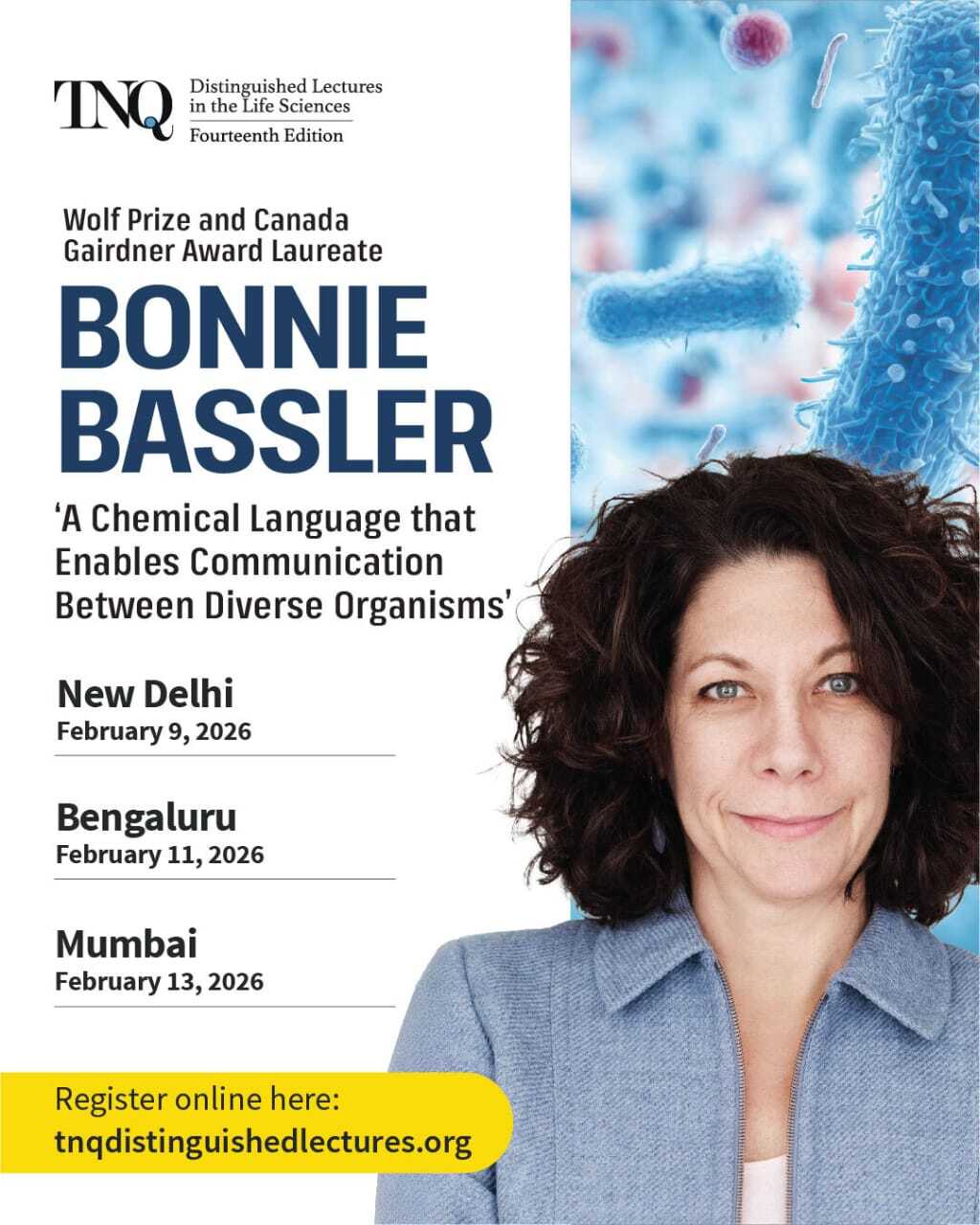
    </dd></dl><p>Fourteenth Edition Speaker: Wolf Prize and the Canada Gairdner Award Laurate, Bonnie Bassler</p><p>The Fourteenth Edition of the TNQ Distinguished Lectures in the Life Sciences are to be delivered by the renowned molecular biologist and professor at Princeton University, Bonnie Bassler, between February 9 and 13 in New Delhi, Bengaluru and Mumbai. <br /><br />Lecture title: A Chemical Language that Enables Communication between Diverse Organisms.<br /></p><p>Professor Bonnie Bassler is best known for her groundbreaking work in the field of bacterial communication, or quorum sensing. Her research has transformed our understanding of how bacteria interact with each other and coordinate behavior—a discovery that has significant implications for medicine, environmental science, and biotechnology. She is the recipient of both the Wolf Prize and the Canada Gairdner Award for her work.<br><br>The Lectures are open to all who register. The schedule is as follows:<br><br>• New Delhi: Monday, February 9, 2026<br>• Bengaluru: Wednesday, February 11, 2026<br>• Mumbai: Friday, February 13, 2026<br><br>Registration link: <a href="https://www.tnqdistinguishedlectures.org/" rel="noopener" target="_blank">https://www.tnqdistinguishedle..</a></p><figure><img src="https://cdn.indiabioscience.org/media/yim/TNQ-Distinguished-Lectures-combined-poster-Rohini-Karandikar.jpeg" data-image="830581"></figure>
              ]]></content><category term="microbiology" label="Microbiology" /><category term="delhi" label="New Delhi" /><category term="mumbai" label="Mumbai" /><category term="bengaluru" label="Bengaluru" /><category term="other" label="Other" /></entry><entry><title>Research Associate</title><link
                  rel="alternate"
                  href="https://indiabioscience.org/orgs/ahmedabad-university-1/jobs/research-associate-2"
                  type="text/html"
                  /><summary type="html"><![CDATA[
                At Ahmedabad University.
      
  <p>The Research Associate (RA) will take a lead on a Gujarat State Biotechnology Mission, Government&nbsp;…</p>

              ]]></summary><id>tag:indiabioscience.org,2026-01-06:/orgs/ahmedabad-university-1/jobs/research-associate-2</id><published>2026-01-06T14:43:00+05:30</published><updated>2026-01-06T14:43:19+05:30</updated><author><name>Shwetha C</name><uri>https://indiabioscience.org/authors/zGXpwL2g3eKrb2J</uri></author><content type="html"><![CDATA[
                
  
<hgroup><h3>
                  
      AU


  </h3><h4>
                  
      Gujarat, India


  </h4></hgroup><time
      class="red bold"
      title="20 January 2026"
      datetime="2026-01-20T00:00:00+05:30">
            Deadline
      20 January</time><dl><dt>Engagement</dt><dd>Contract</dd><dt>Hours</dt><dd>Full-time</dd></dl><h4>
      Profile
    </h4><p>The Research Associate (RA) will take a lead on a Gujarat State Biotechnology Mission, Government of Gujarat funded project and do the project related work only. The major duties will involve conducting experiments, analyse data, write and publish manuscripts, write and apply for research grants and mentor PhD and undergraduate students.</p><p>Responsibilities: Maintenance of various genetic lines, measuring various life-history and stress traits, isolation of genetic material, functional characterization of genes, and editing genes. The candidate should be extremely good in molecular biology techniques and bioinformatics.</p><p>Key Skills</p><ul><li>Fairly well understanding on molecular biology techniques (insect DNA/RNA extractions, rtPCR, CRISPR/Cas9, and functional genomics)</li><li>Comfortable with bioinformatics tools.</li></ul><h4>
      Duration
    </h4><p>2 years</p><h4>
      Qualifications
    </h4><p>PhD in Life Sciences with strong foundations in Ecology, Evolution, and Physiology. Fresh PhDs will be preferred. The candidate should be good in communication skills, dynamic, independent thinker, and a quick learner.</p><h4>
      To Apply
    </h4><p>Interested Candidates may send their applications through email to <a href="mailto:subhash.rajpurohit@ahduni.edu.in" target="_blank" rel="noreferrer noopener"><u><strong>subhash.rajpurohit@ahduni.edu.in</strong></u></a> with the subject line Postdoc Position_Tropical Fly_Ahmedabad University.</p><p>For more details click <a href="https://ahduni.edu.in/careers/academic-support/#careers28" target="_blank" rel="noreferrer noopener">here</a></p><h4>
    Contact
  </h4><dl class=""><dt class="calm push-1q-bottom  prose-type italic"></dt><dd class="title-type calm"><abbr
                    class="bold prose-type all-lower gap-1q-right noline"
                    title="Email">
                    E
                  </abbr><span id="enkoder_0_276942421">JavaScript is required to reveal this email address.</span><script id="script_enkoder_0_276942421" type="text/javascript">
/* <!-- */
function hivelogic_enkoder_0_276942421() {
var kode="kode=\"110 114 103 104 64 37 114 110 104 103 95 37 64 110 114 103 104 95 37 95 95 44 64 95 95 62 95 95 95 42 95 95 95 95 95 95 95 42 44 95 95 48 61 119 52 113 107 111 106 104 104 114 49 43 103 68 110 100 119 102 117 104 107 114 49 66 103 119 110 113 107 111 106 104 104 114 49 63 103 43 110 123 108 104 46 114 64 128 103 108 110 119 44 117 43 107 68 49 100 103 102 110 104 44 114 46 46 43 52 68 108 100 119 102 117 104 107 114 49 64 103 123 110 44 46 64 126 108 53 44 46 48 62 119 52 113 107 111 106 104 104 114 49 43 103 108 110 51 63 108 62 117 64 105 43 95 95 114 62 95 95 95 95 95 95 95 42 95 95 95 95 64 62 95 42 95 95 123 95 95 95 37 95 95 95 95 62 95 95 95 95 95 95 95 42 95 95 95 95 44 95 95 95 95 43 95 95 95 95 95 95 95 42 95 95 95 95 108 109 95 95 44 113 104 114 117 49 121 43 117 118 44 104 95 95 104 49 95 95 95 95 95 95 95 42 95 95 95 95 95 95 95 95 95 95 95 95 95 95 95 42 95 95 95 95 119 111 95 95 118 43 104 108 114 115 64 49 103 103 110 110 95 95 104 114 95 95 95 95 95 95 95 37 95 95 95 95 62 103 95 95 102 114 112 120 113 104 49 119 104 106 72 119 104 111 104 112 119 113 124 69 103 76 95 95 43 95 95 95 95 95 95 95 95 95 95 95 95 95 95 95 95 95 95 95 42 95 95 95 95 95 95 95 95 72 95 95 78 81 71 82 85 72 76 98 95 95 71 95 95 95 95 95 95 95 95 95 95 95 95 95 95 95 95 95 95 95 42 95 95 95 95 95 95 95 95 44 95 95 114 49 119 120 117 104 87 75 79 80 103 64 102 104 103 114 88 104 76 85 114 70 115 112 113 114 113 104 43 119 118 104 100 102 104 115 95 95 43 95 95 95 95 95 95 95 95 95 95 95 95 95 95 95 95 95 95 95 37 95 95 95 95 95 95 95 95 95 95 95 95 95 95 95 95 95 95 95 95 95 95 95 95 95 95 95 95 95 95 95 95 95 95 95 95 95 95 95 95 63 95 95 35 100 111 102 118 100 95 95 118 95 95 95 95 95 95 95 95 95 95 95 95 95 95 95 95 64 95 95 95 95 95 95 95 37 95 95 95 95 95 95 95 95 95 95 95 95 95 95 95 95 95 95 95 95 106 95 95 95 95 95 95 95 95 95 95 95 95 95 95 95 95 117 95 95 124 100 120 35 103 113 117 104 108 111 104 113 111 35 106 108 119 107 107 48 121 114 95 95 104 95 95 95 95 95 95 95 95 95 95 95 95 95 95 95 95 117 95 95 95 95 95 95 95 37 95 95 95 95 95 95 95 95 95 95 95 95 95 95 95 95 95 95 95 95 35 95 95 95 95 95 95 95 95 95 95 95 95 95 95 95 95 107 95 95 104 117 95 95 105 95 95 95 95 95 95 95 95 95 95 95 95 95 95 95 95 64 95 95 95 95 95 95 95 37 95 95 95 95 95 95 95 95 95 95 95 95 95 95 95 95 95 95 95 95 112 95 95 95 95 95 95 95 95 95 95 95 95 95 95 95 95 100 95 95 111 108 114 119 118 61 101 120 100 107 107 118 117 49 109 100 120 115 114 117 108 107 67 119 107 100 120 103 108 113 104 49 120 103 108 49 95 95 113 95 95 95 95 95 95 95 95 95 95 95 95 95 95 95 95 95 95 95 95 95 95 95 95 95 95 95 95 95 95 95 95 95 95 95 95 95 95 95 95 95 95 95 95 95 95 95 95 95 95 95 37 95 95 95 95 95 95 95 95 95 95 95 95 95 95 95 95 95 95 95 95 95 95 95 95 95 95 95 95 95 95 95 95 95 95 95 95 95 95 95 95 65 95 95 120 118 107 101 118 100 49 107 100 117 115 109 117 120 107 114 119 108 100 67 103 107 113 120 49 108 103 104 49 120 95 95 108 95 95 95 95 95 95 95 95 95 95 95 95 63 95 95 95 95 113 95 95 95 95 95 95 95 95 95 95 95 95 50 95 95 95 95 100 95 95 95 95 95 95 95 95 95 95 95 95 95 95 95 95 95 95 95 95 95 95 95 95 95 95 95 95 95 95 95 95 95 95 95 37 95 95 95 95 95 95 95 95 44 95 95 95 95 65 95 95 95 95 95 95 95 95 95 95 95 95 44 95 95 95 95 62 64 95 95 95 95 95 95 95 37 95 95 95 95 103 110 95 95 95 95 104 114 95 95 95 95 64 103 95 37 110 104 62 114 95 37 95 95 110 114 103 104 64 110 114 103 104 49 118 115 111 108 119 43 95 42 95 95 95 42 95 95 44 49 117 104 121 104 117 118 104 43 44 49 109 114 108 113 95 42 95 95 44 43 95 42 95 95 95 37 62 123 62 95 42 64 62 95 42 114 105 43 117 64 108 62 51 63 108 110 43 103 114 49 104 104 111 106 113 107 119 52 48 62 44 46 108 53 64 126 44 46 123 110 64 103 114 49 104 107 102 117 100 119 68 108 43 52 46 46 44 114 110 104 103 102 49 100 107 68 117 43 119 44 108 110 128 103 114 64 104 46 123 108 43 110 63 103 114 49 104 104 111 106 113 107 119 110 66 103 114 49 104 107 102 117 100 119 68 110 43 103 114 49 104 104 111 106 113 107 119 52 48 61 44 95 42 95 42 62 44 37 62 123 64 42 42 62 105 114 117 43 108 64 51 62 108 63 43 110 114 103 104 49 111 104 113 106 119 107 48 52 44 62 108 46 64 53 44 126 123 46 64 110 114 103 104 49 102 107 100 117 68 119 43 108 46 52 44 46 110 114 103 104 49 102 107 100 117 68 119 43 108 44 128 110 114 103 104 64 123 46 43 108 63 110 114 103 104 49 111 104 113 106 119 107 66 110 114 103 104 49 102 107 100 117 68 119 43 110 114 103 104 49 111 104 113 106 119 107 48 52 44 61 42 42 44 62\";kode=kode.split(\' \');x=\'\';for(i=0;i<kode.length;i++){x+=String.fromCharCode(parseInt(kode[i])-3)}kode=x;",i,c,x,script=document.currentScript||document.getElementById("script_enkoder_0_276942421");while(kode.indexOf("getElementById('ENKODER_ID')")===-1){eval(kode)};kode=kode.replace('ENKODER_ID','enkoder_0_276942421');eval(kode);script&&script.parentNode.removeChild(script);
}
hivelogic_enkoder_0_276942421();
/* --> */
</script></dd></dl>
  
              ]]></content><category term="research" label="Research" /><category term="phd" label="PhD" /><category term="gujarat" label="Gujarat" /></entry><entry><title>Bioinformatics Analyst</title><link
                  rel="alternate"
                  href="https://indiabioscience.org/orgs/exsegen-genomics-research-pvt-ltd/jobs/bioinformatics-analyst-3"
                  type="text/html"
                  /><summary type="html"><![CDATA[
                At Exsegen Genomics Research Pvt Ltd.
      
  <p>Exsegen Genomics (www.exsegen.com) is looking to hire graduates with hands-on experience in bioinformatics. The candidate&nbsp;…</p>

              ]]></summary><id>tag:indiabioscience.org,2026-01-06:/orgs/exsegen-genomics-research-pvt-ltd/jobs/bioinformatics-analyst-3</id><published>2026-01-06T11:02:00+05:30</published><updated>2026-01-08T12:51:16+05:30</updated><author><name>Shwetha C</name><uri>https://indiabioscience.org/authors/zGXpwL2g3eKrb2J</uri></author><content type="html"><![CDATA[
                
  
<hgroup><h3>
                  
      Exsegen Genomics Research Pvt Ltd


  </h3><h4>
                  
      Hyderabad, Telangana


  </h4></hgroup><time
      class="red"
      title="28 February 2026"
      datetime="2026-02-28T00:00:00+05:30">
            Deadline
      28 February</time><dl><dt>Engagement</dt><dd>Contract</dd><dt>Hours</dt><dd>Full-time</dd></dl><h4>
      Profile
    </h4><p>Exsegen Genomics (<a href="http://www.exsegen.com/" target="_blank" rel="noreferrer noopener">www.exsegen.com</a>) is looking to hire graduates with hands-on experience in bioinformatics. The candidate will work on a multi-disciplinary project and will be working with a team of scientists, clinicians, and mathematicians/computer science professionals. </p><p>Programming</p><ul><li>Languages – python, R, shell scripting</li><li>Tools/modules – git, VS code, anaconda, pytest</li><li>Software development/testing</li></ul><p>Bioinformatics</p><ul><li>NGS data processing pipeline development and automation – somatic mutation calls, variant annotation, CNV calls, expression quantification, fusion calls, isoform detection</li><li>Experience with genomic/transcriptomic/methylation data analysis and interpretation </li></ul><p>Data science</p><ul><li>Languages/concepts – python, R, PCA, clustering, regression</li><li>Tools/modules – jupyter notebooks, pandas, numpy, scikit-learn, scipy, matplotlib, seaborn</li></ul><h4>
      Qualifications
    </h4><p>M.Sc or B.Sc in Bioinformatics</p><h4>
      To Apply
    </h4><p>Immediate opening. Interested Candidates can send your CV including your list of publications and references to: <u><a href="mailto:praveenm@exsegen.com" target="_blank" rel="noreferrer noopener">praveenm@exsegen.com</a></u></p>
  
              ]]></content><category term="unclassified" label="Other" /><category term="masters" label="Masters" /><category term="undergrad" label="Bachelors" /><category term="hyderabad" label="Hyderabad" /></entry><entry><title>Project Associate</title><link
                  rel="alternate"
                  href="https://indiabioscience.org/orgs/ils/jobs/project-associate-2"
                  type="text/html"
                  /><summary type="html"><![CDATA[
                At DBT-Institute of Life Sciences.
      
  <p>Institute of Life Sciences (ILS), Bhubaneswar, an autonomous institute of the Department ofBiotechnology, Ministry of&nbsp;…</p>

              ]]></summary><id>tag:indiabioscience.org,2026-01-05:/orgs/ils/jobs/project-associate-2</id><published>2026-01-05T17:14:00+05:30</published><updated>2026-01-05T17:14:15+05:30</updated><author><name>Shwetha C</name><uri>https://indiabioscience.org/authors/zGXpwL2g3eKrb2J</uri></author><content type="html"><![CDATA[
                
  
<hgroup><h3>
                  
      DBT-ILS


  </h3><h4>
                  
      Bhubaneswar, Odisha


  </h4></hgroup><time
      class="red bold"
      title="15 January 2026"
      datetime="2026-01-15T00:00:00+05:30">
            Deadline
      15 January</time><dl><dt>Engagement</dt><dd>Contract</dd><dt>Hours</dt><dd>Full-time</dd></dl><h4>
      Profile
    </h4><p>Institute of Life Sciences (ILS), Bhubaneswar, an autonomous institute of the Department ofBiotechnology, Ministry of Science &amp; Technology, Government of India invites applications from eligibleIndian Nationals for the following positions under the project titled “Advanced bioinformatics centre for research in tribal health and regional well being”</p><p>Project duration: Approx. 3 years or the completion of the project as per GoI orders and based on annual performance appraisal</p><h4>
      Money
    </h4><p>Rs. 37000 +16% HRA per month</p><h4>
      Qualifications
    </h4><p>Master degree or equivalent in Science, Engineering or Technology with at least 60% marks or equivalent. The candidates must have qualified at least one of the national level competitive exams such as NET/GATE/GPAT etc.</p><h4>
      Experience
    </h4><p>Desirable: Bioinformatics research experience (machine learning/molecular modeling/NGS data analysis/database development) will be a plus. The candidate should have programming/scripting knowledge</p><h4>
      To Apply
    </h4><p>Interested/eligible candidates may apply ONLINE through the link provided at theinstitute website (www.ils.res.in )</p><p>Last date for receiving application: 15th January, 2026</p><p>Date of display of shortlisted candidates: 19th January, 2026</p><p>Tentative Date of interview (Hybrid mode): To be displayed on the Institute website.</p><p>Selection will be carried out through application screening, followed by an interview.</p><p>N.B.: The list of shortlisted candidates' names and the date of the interview will be published on the ILSwebsite.</p><p>All the positions are purely temporary and coterminous with the project. No TA/DA will be paid for attendingthe interview. The decision of the Director regarding the selection of candidates will be final and no further correspondence will be entertained in this regard.</p><p>*In case of candidates not matching the requirements satisfactorily, the Director reserves right to offer a lower salary.</p><p>*DST norms will be followed in all the procedures.</p><p>Note: All communication will be through e-mail (Technical support: app@ils.res.in other queries: academics@ils.res.in). No separate call letter will be issued to the candidates.</p><p>For more details click <a href="https://www.ils.res.in/wp-content/uploads/2026/01/Advt-no-01-2026.pdf" target="_blank" rel="noreferrer noopener">here</a></p>
  
              ]]></content><category term="research" label="Research" /><category term="masters" label="Masters" /><category term="bhubaneswar" label="Bhubaneswar" /></entry><entry><title>Postdoctoral Fellow</title><link
                  rel="alternate"
                  href="https://indiabioscience.org/orgs/chinta/jobs/postdoctoral-fellow"
                  type="text/html"
                  /><summary type="html"><![CDATA[
                At Centre for High Impact Neuroscience and Translational Applications.
      
  <p>Cancer-related Advanced Research and Education is seeking a highly motivated Postdoctoral fellow to join a&nbsp;…</p>

              ]]></summary><id>tag:indiabioscience.org,2026-01-05:/orgs/chinta/jobs/postdoctoral-fellow</id><published>2026-01-05T16:19:00+05:30</published><updated>2026-01-05T16:19:59+05:30</updated><author><name>Shwetha C</name><uri>https://indiabioscience.org/authors/zGXpwL2g3eKrb2J</uri></author><content type="html"><![CDATA[
                
  
<hgroup><h3>
                  
      CHINTA


  </h3><h4>
                  
      West Bengal, India


  </h4></hgroup><time
      class="red"
      title="28 February 2026"
      datetime="2026-02-28T00:00:00+05:30">
            Deadline
      28 February</time><dl><dt>Engagement</dt><dd>Contract</dd><dt>Hours</dt><dd>Full-time</dd></dl><h4>
      Profile
    </h4><p>Cancer-related Advanced Research and Education is seeking a highly motivated Postdoctoral fellow to join a dynamic, interdisciplinary, and internationally collaborative team developing next-generation immunotherapies for various solid tumors as well as leukemias.</p><p>This position is part of a globally coordinated project involving the labs of Dr. Ashish Goyal (TCG CREST, India), Dr. Angelika Riemer (DKFZ, Germany), Dr. Chandan Guha (Albert Einstein College of Medicine, USA), and Dr. Vivek Mittal (Weill Cornell Medical, USA). The project focuses on leveraging endogenous retrovirus (ERV)- derived antigens and cutting-edge mRNA vaccine technologies to boost the efficacy of immune checkpoint inhibitors in resistant tumors. For more information please visit <a href="https://www.tcgcrest.org/people/ashish-goyal/" target="_blank" rel="noreferrer noopener">https://www.tcgcrest.org/peopl...</a></p><p>Key Responsibilities:</p><ul><li>Design and execute in vivo mouse model studies</li><li>Perform RNA-seq and immunopeptidomics analyses</li><li>Conduct in vitro and in vivo immunogenicity assays</li><li>Collaborate with international teams at DKFZ (Germany), Albert Einstein College of Medicine (USA), and Weill Cornell Medical (USA)</li><li>Writing manuscripts and grant applications</li><li>Training PhDs, Masters, and Bachelors students</li></ul><h4>
      Qualifications
    </h4><p>PhD in Immunology, Molecular Biology, Cancer Biology, or related fields.<br /></p><h4>
      Experience
    </h4><ul><li>Strong experience in syngeneic mouse models of cancer, flow cytometry, and -omics analyses</li><li>Prior work experience in immunotherapy or vaccine development is a plus</li></ul><h4>
      To Apply
    </h4><p>To apply, please send the following documents to ashish.goyal@tcgcrest.org:</p><ul><li>A detailed CV</li><li>A cover letter, including a one-page proposal outlining how you would leverage ERV-derived antigens for cancer immunotherapy</li><li>Contact details of at least two referees</li></ul>
  
              ]]></content><category term="research" label="Research" /><category term="phd" label="PhD" /><category term="west-bengal" label="West Bengal" /></entry><entry><title>Junior Research Fellow</title><link
                  rel="alternate"
                  href="https://indiabioscience.org/orgs/jnu/jobs/junior-research-fellow-4"
                  type="text/html"
                  /><summary type="html"><![CDATA[
                At Jawaharlal Nehru University.
      
  <p>Applications are invited for ONE post of Junior Research Fellow (JRF) in the Department of&nbsp;…</p>

              ]]></summary><id>tag:indiabioscience.org,2026-01-05:/orgs/jnu/jobs/junior-research-fellow-4</id><published>2026-01-05T15:26:00+05:30</published><updated>2026-01-05T15:26:48+05:30</updated><author><name>Shwetha C</name><uri>https://indiabioscience.org/authors/zGXpwL2g3eKrb2J</uri></author><content type="html"><![CDATA[
                
  
<hgroup><h3>
                  
      JNU


  </h3><h4>
                  
      New Delhi, Delhi &amp; NCR


  </h4></hgroup><time
      class="red bold"
      title="10 January 2026"
      datetime="2026-01-10T00:00:00+05:30">
            Deadline
      10 January</time><dl><dt>Engagement</dt><dd>Contract</dd><dt>Hours</dt><dd>Full-time</dd></dl><h4>
      Profile
    </h4><p>Applications are invited for ONE post of Junior Research Fellow (JRF) in the Department of Biotechnology, Government of India sponsored research project entitled, ‘Exploring molecular mechanism of glycosylphosphatidylinositol anchored proteins belonging to 6-cys family in asexual erythrocytic development of malaria parasite.”</p><h4>
      Money
    </h4><p>Salary as per DBT rules.</p><h4>
      Qualifications
    </h4><p>A Master’s degree or equivalent in Biotechnology/Life Sciences or any other related area. Refer to DBT guidelines for complete qualifications. At least 1 year of research experience in cell &amp; molecular biology of protozoan parasites. Highly motivated, research-oriented candidates with experience in working with molecular cloning will be preferred.</p><h4>
      To Apply
    </h4><p>Only shortlisted candidates will be communicated to appear for the interview and no other communications in this regard should be expected.</p><p>Application consisting of a detailed CV and cover letter should reach the undersigned only as soft copy. Research work done should be clearly summarized with references and published articles. Subject of the email MUST be JRF_DBT_’name of the candidate’.<br />Email: abhisheka@jnu.ac.in</p><p>For more details click <a href="https://www.jnu.ac.in/career" target="_blank" rel="noreferrer noopener">here</a></p>
  
              ]]></content><category term="research" label="Research" /><category term="masters" label="Masters" /><category term="delhi" label="New Delhi" /></entry><entry><title>Executive Manager</title><link
                  rel="alternate"
                  href="https://indiabioscience.org/orgs/ncbs/jobs/executive-manager"
                  type="text/html"
                  /><summary type="html"><![CDATA[
                At National Centre for Biological Sciences - TIFR.
      
  <p>The Centre for Artificial Learning and Intelligence for Biological Research and Education (CALIBRE) is an&nbsp;…</p>

              ]]></summary><id>tag:indiabioscience.org,2026-01-05:/orgs/ncbs/jobs/executive-manager</id><published>2026-01-05T15:14:00+05:30</published><updated>2026-01-05T15:14:47+05:30</updated><author><name>Shwetha C</name><uri>https://indiabioscience.org/authors/zGXpwL2g3eKrb2J</uri></author><content type="html"><![CDATA[
                
  
<hgroup><h3>
                  
      NCBS - TIFR


  </h3><h4>
                  
      Bengaluru, Karnataka


  </h4></hgroup><time
      class="red bold"
      title="10 January 2026"
      datetime="2026-01-10T00:00:00+05:30">
            Deadline
      10 January</time><dl><dt>Engagement</dt><dd>Contract</dd><dt>Hours</dt><dd>Full-time</dd><dt>Website</dt><dd><a
        href="https://www.ncbs.res.in/">
        ncbs.res.in &rarr;
      </a></dd></dl><h4>
      Profile
    </h4><p>The Centre for Artificial Learning and Intelligence for Biological Research and Education (CALIBRE) is an exciting new scientific venture of the National Centre for Biological Sciences (NCBS) and the International Centre for Theoretical Sciences (ICTS), supported by Mr. Vishal Gupta, founder of Reed India Consulting LLP, and Major Deepshikha Gupta. CALIBRE will be an interdisciplinary centre dedicated to advancing the integration of Artificial Intelligence (AI) in biological research, education and innovation.</p><p>The CALIBRE invites applications from suitable candidates for the position of Executive Manager on a fixed term basis. The position is based at NCBS and is available immediately for a period of up to five years. Appointments will be for one year and renewable annually subject to the outcome of a performance assessment. Remuneration will be based on qualifications and accomplishments, subject to institutional guidelines.</p><p>The successful candidate will be expected to oversee coordination, implementation, and administration of various initiatives under the CALIBRE program at NCBS–TIFR.</p><p>Proven communication ability both written and oral.<br />• The ability to analyse, summarize and communicate information.<br />• The ability to work both independently and as part of a team.<br />• Strong time-management and interpersonal skills.<br />• Initiative, enthusiasm and a flexible approach to work.</p><p><u>Job Responsibilities:</u></p><ul><li>Project Coordination: Manage day-to-day project activities and maintain effective communication with collaborating scientists and partner institutions.</li><li>Programme Implementation: Assist in planning, executing, and implementing various program initiatives in coordination with other departments at NCBS as needed</li><li>Stakeholder &amp; Donor Engagement: Serve as the primary point of contact for donors and external partners,</li><li>Outreach: Create content showcasing the program, conduct outreach activities, liaise with stakeholders and represent the programme, as required.</li><li>Organize meetings of the steering committee and other administrative structures of CALIBRE</li><li>Administrative Support: Track and monitor project expenditures, Handle HR-related matters for project staff, oversee procurement activities, and facilitate approvals from relevant regulatory and government bodies.</li><li>Reporting: Prepare reports and coordinate reporting to the donors as per agency requirements.</li><li>Undertake any other duties that may be required from time to time to assist with the project. </li></ul><h4>
      Money
    </h4><p>Commensurate with experience and qualification</p><h4>
      Qualifications
    </h4><p>MSc/MTech or Ph.D in any of the sciences or engineering disciplines.</p><h4>
      Experience
    </h4><p>Minimum 2 -3 years’ experience in program management.</p><h4>
      To Apply
    </h4><ul><li>Interested candidates should register ONLINE through the link on our website using a valid email ID.</li><li>You will receive an email with the link on your registered email ID.</li><li>Using the link, you can fill in the application.</li><li>Once you fill in the application you can SAVE or PREVIEW the application. Please Note: Any corrections should be made before you SAVE the application.</li><li>After you SAVE, you can submit the application by clicking “SUBMIT”.</li><li>All essential certificate is proof of your qualification, date of birth, experience, etc. Should be uploaded while submitting the Online application</li></ul><p>For more details click <a href="https://www.ncbs.res.in/jobportal/node/134329" target="_blank" rel="noreferrer noopener">here</a></p>
  
              ]]></content><category term="unclassified" label="Other" /><category term="phd" label="PhD" /><category term="masters" label="Masters" /><category term="bengaluru" label="Bengaluru" /></entry><entry><title>Zebrafish Embryo toxicity, Neurobehavior and Modern Molecular Techniques Protocols</title><link
                  rel="alternate"
                  href="https://indiabioscience.org/events/zebrafish-embryo-toxicity-neurobehavior-and-modern-molecular-techniques-protocols"
                  type="text/html"
                  /><summary type="html"><![CDATA[
                
<em>
  Workshop
</em>
from
<time>
  22 January
</time>
  to
  <time>
    23 January 2026
  </time>
at
Online.
              ]]></summary><id>tag:indiabioscience.org,2026-01-05:/events/zebrafish-embryo-toxicity-neurobehavior-and-modern-molecular-techniques-protocols</id><published>2026-01-05T13:56:00+05:30</published><updated>2026-01-05T13:56:10+05:30</updated><author><name>Shwetha C</name><uri>https://indiabioscience.org/authors/zGXpwL2g3eKrb2J</uri></author><content type="html"><![CDATA[
                
<dl><dt>
    Date
  </dt><dd><time datetime="2026-01-22">
      January 22</time><time datetime="2026-01-23">-23, 2026
      </time></dd><dt>
      Location
    </dt><dd>
      Online
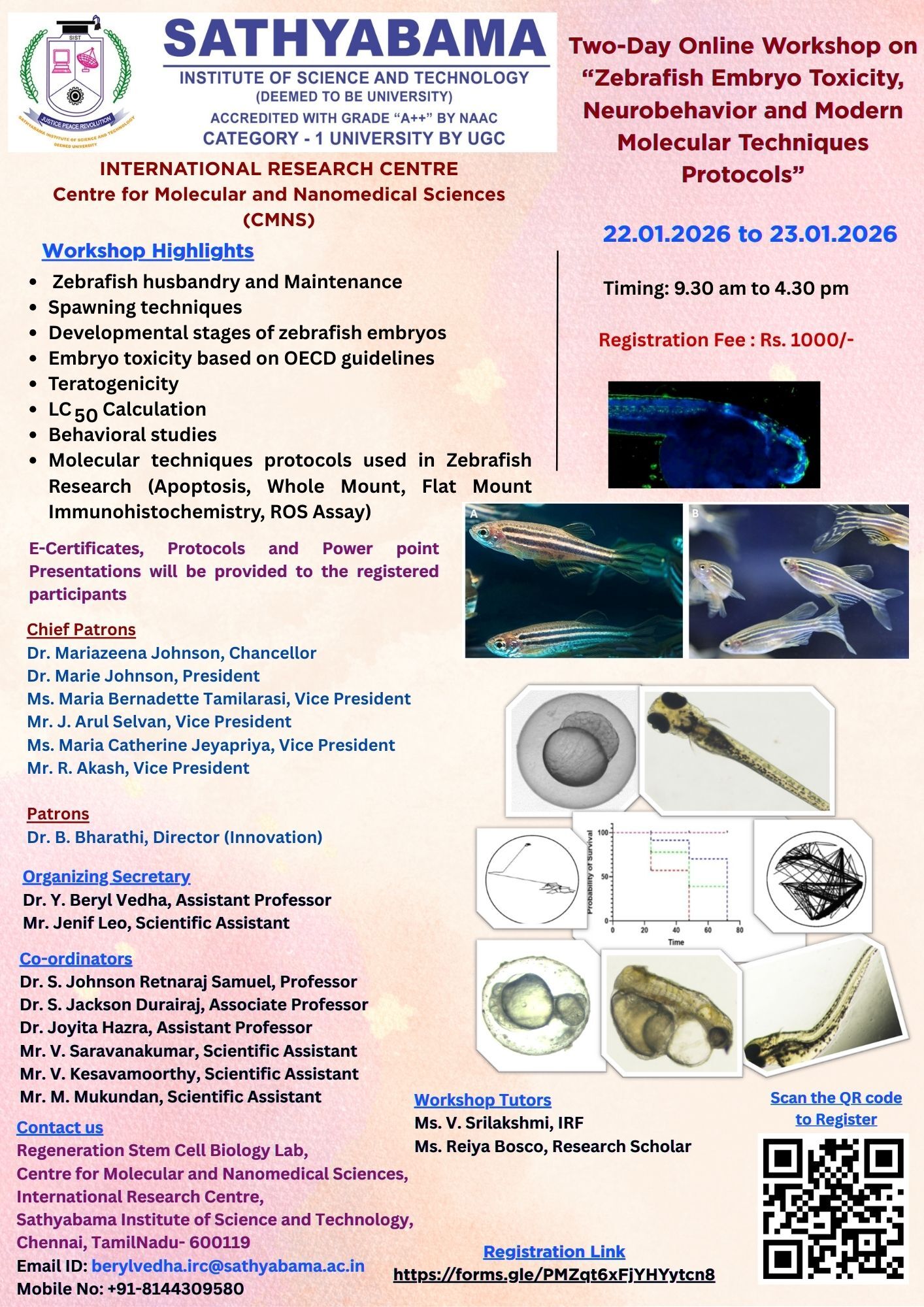
    </dd></dl><p>Sathyabama Institute of Science and Technology is organizing a Two-day online workshop on " Zebrafish Embryo toxicity, Neurobehavior and Modern Molecular Techniques Protocols" on 22nd to 23rd January 2026 at 9.30 am to 4.00pm.</p><p>Zebrafish (Danio rerio) has become a prominent vertebrate model for understanding the pathophysiology of the disease, in vivo model for development, neurotoxicity research and many more. This workshop is intended for Students (UG &amp; PG)/ Research Scholars/ Academic Professionals/ Industrialists to understand the use of zebrafish models in scientific research. The workshop includes introductory lectures on zebrafish models related to zebrafish husbandry, developmental stages, embryotoxicity.</p><figure><img src="https://cdn.indiabioscience.org/media/yim/Zebrafish-Online-Workshop-Jan-2026.jpg" data-image="823252"></figure>
              ]]></content><category term="online" label="Online" /><category term="workshop" label="Workshop" /></entry><entry><title>Molecular Docking, Biological Software Packages and Cell Culture Techniques Protocol</title><link
                  rel="alternate"
                  href="https://indiabioscience.org/events/hands-on-online-workshop-molecular-docking-biological-software-packages-and-cell-culture-techniques-protocol"
                  type="text/html"
                  /><summary type="html"><![CDATA[
                
<em>
  Workshop
</em>
from
<time>
  29 January
</time>
  to
  <time>
    31 January 2026
  </time>
at
Online.
              ]]></summary><id>tag:indiabioscience.org,2026-01-05:/events/hands-on-online-workshop-molecular-docking-biological-software-packages-and-cell-culture-techniques-protocol</id><published>2026-01-05T13:50:00+05:30</published><updated>2026-01-06T11:07:13+05:30</updated><author><name>Shwetha C</name><uri>https://indiabioscience.org/authors/zGXpwL2g3eKrb2J</uri></author><content type="html"><![CDATA[
                
<dl><dt>
    Date
  </dt><dd><time datetime="2026-01-29">
      January 29</time><time datetime="2026-01-31">-31, 2026
      </time></dd><dt>
      Location
    </dt><dd>
      Online
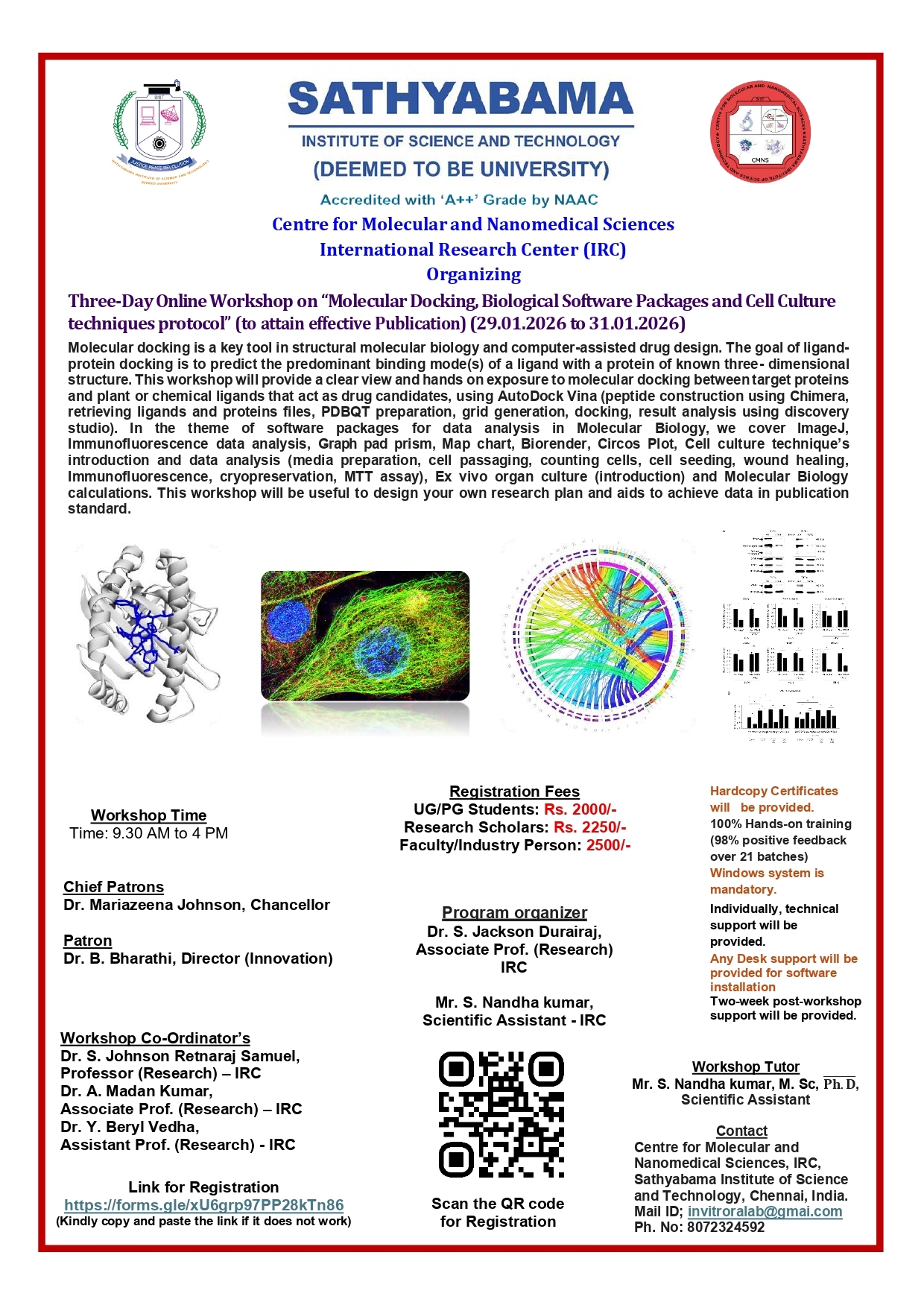
    </dd></dl><p>Sathyabama Institute of Science and Technology invite for the Hands-on Online Workshop (Zoom Platform) on​“Molecular Docking, Biological Software Packages and Cell Culture Techniques” (to attain publication) between 29th – 31st January, 2026’; Timing 09.30 am to 4.00 pm (IST), Organised by the Centre for Molecular and Nanomedical Sciences, International Research Centre (IRC), Sathyabama Institute of Science and Technology, Chennai. This workshop will provide a platform for the beginners to explore molecular docking, computational and cell culture techniques and implement these techniques in their field of research. Kindly find the attached brochure for complete details.</p><p>Following computational techniques such as; Molecular Docking using AutoDock Vina (Protein-ligand); Ligand preparation — Chimera; Docking analysis; Protein and Ligand preparation; Grid generation; Result analysis using Discovery Studio; Protein target screening and toxicity prediction will be covered. This workshop will provide a platform for the beginners to explore molecular docking, computational and cell culture techniques and implement these techniques in their field of research.<br><br>In the theme of data analysis, we are going to teach<br></p><ol><li>ImageJ — Java-based image processing program, we can use it for many biological research experiments example western blotting, wound healing, immunofluorescence etc.,</li><li>Biorender — Scientific diagrams, and illustrations.<br></li><li>Circos Plot — Circos ideal for exploring relationships between objects or positions.</li><li>Mapchart — Make your own custom map of the World.</li><li>GraphPad Prism — Data analysis and graphing software (Survival graph).</li></ol><p>Cell culture techniques and protocols include media preparation, cell passaging, counting cells in a Haemocytometer, cell seeding for MTT, wound healing and Immunofluorescence, cryopreservation, MTT assay and ex vivo organ (intro) calculations. Molecular Biology calculation includes stock and working concentration preparation and other basics.</p><figure><img src="https://cdn.indiabioscience.org/media/yim/Brochure-2.jpg" data-image="823271"></figure>
              ]]></content><category term="molecular-biology" label="Molecular Biology" /><category term="online" label="Online" /><category term="workshop" label="Workshop" /></entry><entry><title>Animal Cell Culture Techniques</title><link
                  rel="alternate"
                  href="https://indiabioscience.org/events/animal-cell-culture-techniques"
                  type="text/html"
                  /><summary type="html"><![CDATA[
                
<em>
  Workshop
</em>
from
<time>
  05 February
</time>
  to
  <time>
    07 February 2026
  </time>
at
Chennai.
              ]]></summary><id>tag:indiabioscience.org,2026-01-05:/events/animal-cell-culture-techniques</id><published>2026-01-05T11:51:00+05:30</published><updated>2026-01-05T11:51:09+05:30</updated><author><name>Shwetha C</name><uri>https://indiabioscience.org/authors/zGXpwL2g3eKrb2J</uri></author><content type="html"><![CDATA[
                
<dl><dt>
    Date
  </dt><dd><time datetime="2026-02-05">
      February 05</time><time datetime="2026-02-07">-07, 2026
      </time></dd><dt>
      Location
    </dt><dd>
      Chennai, Tamil Nadu
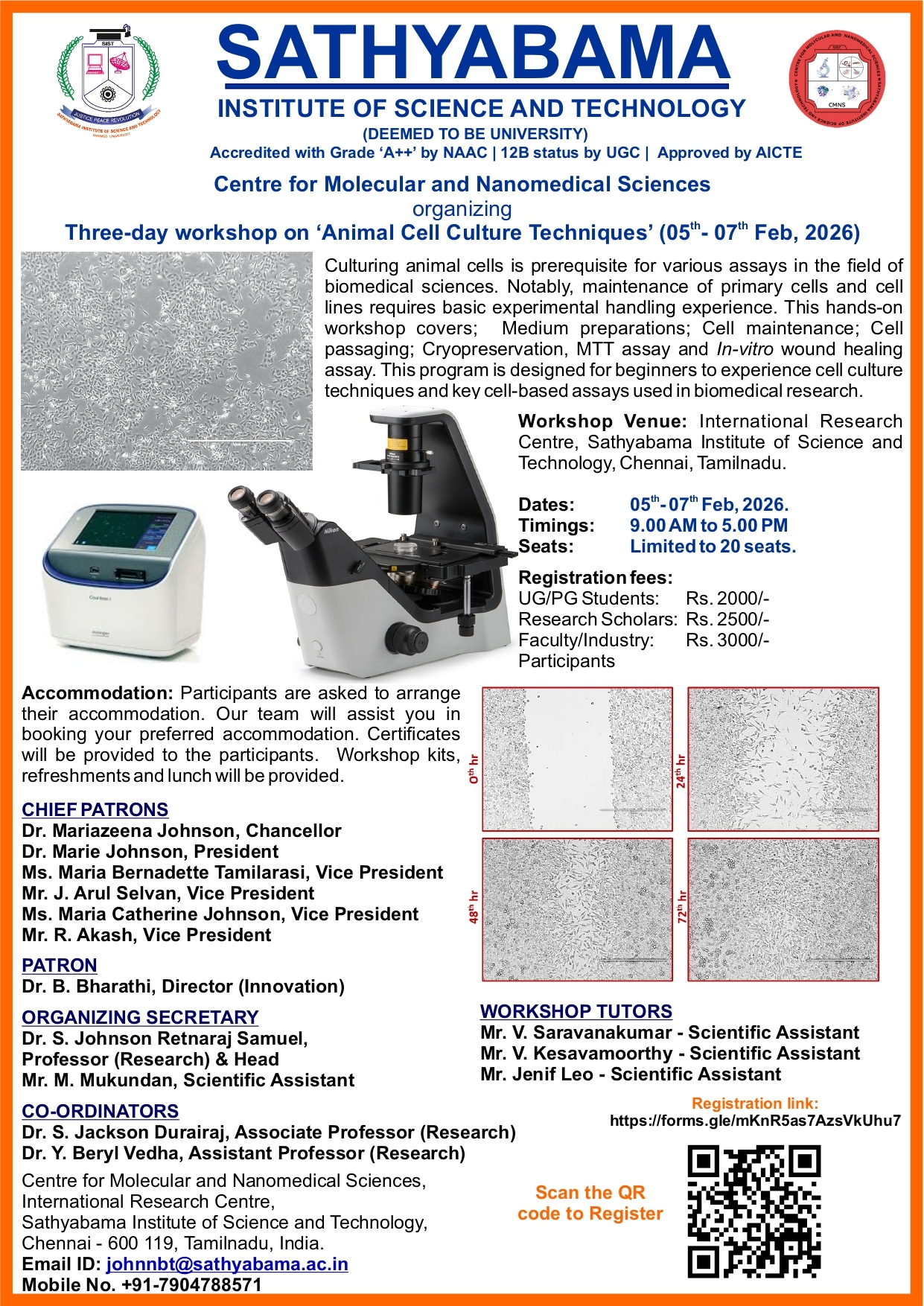
    </dd></dl><p>Sathyabama Institute of Science and Technology is organising a Three-day workshop on ‘Animal Cell Culture Techniques’ (05th - 07th Feb, 2026) at the 'International Research Center of Sathyabama Institute of Science and Technology, Chennai through physical mode.<br /><br />Culturing animal cells is a prerequisite for various assays in the field of biomedical sciences. Notably, maintenance of primary cells and cell lines requires basic experimental handling experience.</p><p> This hands-on workshop covers;<br />Medium preparations<br />Cell maintenance<br />Cell passaging<br />Cryopreservation<br />MTT assay<br /><em>In-vitro</em> wound healing assay</p><figure><img src="https://cdn.indiabioscience.org/media/yim/Sathyabama_Animal-cell-culture-workshop_Brochure_2026__page-0001.jpg" data-image="823241"></figure>
              ]]></content><category term="chennai" label="Chennai" /><category term="workshop" label="Workshop" /></entry><entry><title>Reflections from working in the biotech industry: Key lessons and advice that have stayed</title><link
                  rel="alternate"
                  href="https://indiabioscience.org/columns/conversations/reflections-from-working-in-the-biotech-industry-key-lessons-and-advice-that-has-stayed"
                  type="text/html"
                  /><summary type="html"><![CDATA[
                <p dir="ltr">Reflecting on her journey in biotechnology, Ruchika Srivastava<strong></strong>came to realise that the lessons she learnt extend far beyond the realm of science. They shape how we work, why we work, and how we connect with others, gradually becoming a way of life.</p>              ]]></summary><id>tag:indiabioscience.org,2026-01-05:/columns/conversations/reflections-from-working-in-the-biotech-industry-key-lessons-and-advice-that-has-stayed</id><published>2026-01-05T10:00:00+05:30</published><updated>2026-01-07T14:00:51+05:30</updated><author><name>Ruchika Srivastava</name><uri>https://indiabioscience.org/authors/RuchikaSrivastava</uri></author><content type="html"><![CDATA[
                
<p>Reflecting on her journey in biotechnology, Ruchika Srivastava came to realise that the lessons she learnt extend far beyond the realm of science. They shape how we work, why we work, and how we connect with others, gradually becoming a way of life.</p><figure><a href="https://indiabioscience.org/columns/conversations/reflections-from-working-in-the-biotech-industry-key-lessons-and-advice-that-has-stayed"><img
                width="1920"
                height="1080"
                style="max-width: 100%; height: auto"
                src="https://cdn.indiabioscience.org/media/articles/Ruchika-Srivastava_Empathy.jpg"></a></figure><p>Over the course of a career in biotechnology, learning extends far beyond experiments and publications. It emerges from working with people, navigating uncertainty, confronting failure, and witnessing the real-world impact of scientific work. The reflections below capture key lessons shaped by experience, about teamwork, empathy, resilience, planning, and purpose, that together define what it truly means to build a meaningful and lasting career in biotech.</p><p><strong>1. Take time to know the people you work with</strong></p><p>I learned early in my career that while an organisation’s brand can attract great talent, it doesn’t retain it — <em>people</em> do. The colleagues, mentors, and leaders you work with shape your experience more than any logo or title ever could. Invest time in getting to know the people around you. </p><blockquote class="pull-quote"><em>Be the kind of person others want to work with — and work for.</em> In the end, it’s the people around you who make the work worthwhile.</blockquote><p><strong>2. Team dynamics</strong></p><p>Biotech is never a solitary pursuit. Every breakthrough relies on scientists, clinicians, writers, and many others working together. I once heard team dynamics explained like a Venn diagram — some strengths overlap, but most do not. <em>The best teams recognise and leverage these unique strengths.</em> Bringing people together to work cohesively is what produces the drugs that change the world.</p><p><strong>3. Genuine interest in the field</strong></p><p>Perhaps the most important driver in research is passion. A genuine interest in biotechnology fuels curiosity, persistence, and the willingness to learn. </p><blockquote class="pull-quote"><em>Your career isn’t a sprint; it’s a marathon. Genuine interest helps you sustain the journey.</em></blockquote><p><strong>4. Seeing the bigger picture</strong></p><p>It’s easy to get caught up in the details of experiments. But stepping back to see the bigger picture and the global context of our work keeps us grounded in purpose.</p><p>My biggest learning hasn’t come from a textbook or a research paper, but from witnessing the impact our work has on real lives. That perspective sharpened during the COVID-19 pandemic, when scientists continued working in the lab while much of the world stayed home — layering on safety protocols, working in shifts, and still pushing forward at breakneck speed to deliver solutions the world desperately needed. <em>Their efforts were not only scientific achievements but also profound acts of empathy and commitment to humanity.</em></p><p><strong>5. Empathy</strong></p><p>Biotechnology is driven by experiments, data, and precision — but it is also deeply human. During company-wide meetings, we often watched videos of patients whose lives had been transformed by the treatments we helped develop. In those moments, patients shared their journeys — often emotional, always raw — and expressed gratitude to the scientists who gave them a second chance at life. <em>These stories were powerful reminders that behind every cell culture, every assay, and every regulatory milestone is a human being, a family, and a lived experience.</em></p><p><strong>6. Planning</strong></p><p>Progress in biotech doesn’t happen by chance. Careful planning — from experimental design to regulatory strategy — transforms ideas into breakthroughs<em>. </em></p><blockquote class="pull-quote"><em>Planning gives us the discipline to move forward with intention, while still leaving space for innovation and flexibility. It is the foundation that turns scientific curiosity into structured progress.</em></blockquote><p><strong>7. The value of documentation</strong></p><p>Clear and accurate records enable teams to build upon one another’s work, ensure compliance, and maintain the integrity of results.One of the best pieces of advice I received early in my career came from my father, a food technology expert. He told me, <em>“Write your experimental details as if someone across the ocean is going to repeat it without speaking to you.” </em> In biotech, documentation is not just paperwork — it’s the bridge between innovation and trust, turning experiments into evidence and progress into impact.<br></p><p><strong>8. Stepping outside your comfort zone and saying yes to opportunities</strong></p><p>Growth happens when we challenge ourselves. Whether it’s taking on a new role, learning a new skill, or exploring an unfamiliar area, stepping outside your comfort zone opens doors to opportunities you may never have imagined. </p><blockquote class="pull-quote"><em>Don’t fear the unfamiliar — that’s where growth lives.</em></blockquote><p><strong>9. Accepting failure</strong></p><p>As the saying goes, <em>drug development is not rocket science; it’s harder than rocket science.</em> In biotechnology, failure is not the opposite of success — it’s part of the path to it. </p><blockquote class="pull-quote"><em>Experiments that don’t work, projects that stall, or submissions that face setbacks all teach us valuable lessons if we’re willing to learn.</em></blockquote><p>Accepting failure with humility and resilience allows us to adapt, grow, and ultimately move closer to meaningful breakthroughs.</p><p><strong>10. Invest in training people</strong></p><p>If people are our greatest strength, then training is our greatest investment. Building skills, sharing knowledge, and fostering continuous learning ensure that individuals and teams can thrive in a rapidly changing industry. </p><p><strong>11. Leaving the work in a better state</strong></p><p>From the smallest task to the biggest project, one guiding principle is to leave the work in a better state than when it was handed to you. This mindset builds continuity, raises standards, and ensures lasting impact. </p><blockquote class="pull-quote"><em>Good is never the end point — there is always room to make things better.</em></blockquote><p><strong>12. Take time to reflect</strong></p><p>From time to time, step back and reflect on your career path — where you are, where you want to be, and what truly matters to you. Be conscious of your choices and intentional about your direction. Reflection brings clarity, purpose, and alignment between what you do and why you do it — an essential habit in a fast-paced industry and an even more fast-paced life. </p><blockquote class="pull-quote"><em>The more deeply you understand , the more you realise that abundance isn’t about having more; it’s about seeing more.</em></blockquote><p><strong>13. Giving back</strong></p><p>Reflect on your own career and the individuals who supported you along the way — those who gave you your first opportunities, mentors who guided you, and colleagues who shared advice that helped you grow. If you are in a position to do so, pay it forward. Be the mentor, the supporter, the believer in someone else’s potential. There’s always someone less experienced or simply earlier in their journey. When we give back, we don’t just support someone else’s future — we enrich our own. It gives us a chance to experience happiness in its purest form — not the fleeting kind that comes from acquiring something new, but the enduring joy that stays with us long after the moment has passed. It is the foundation upon which meaningful human connections are built.</p><blockquote class="pull-quote">Because ultimately, science is about people. And so is success.</blockquote><p>Taken together, these lessons remind me that biotechnology is not just about science; it’s about people, processes, and purpose. And it is the balance of all three that makes this work both challenging and profoundly rewarding.</p><p><br></p>
              ]]></content><category term="science" label="Science" /><category term="advice" label="Advice" /></entry><entry><title>Cancer in young adults: from correlation to causation</title><link
                  rel="alternate"
                  href="https://indiabioscience.org/events/cancer-in-young-adults-from-correlation-to-causation"
                  type="text/html"
                  /><summary type="html"><![CDATA[
                
<em>
  Workshop
</em>
from
<time>
  04 February
</time>
  to
  <time>
    07 February 2026
  </time>
at
Chennai.
              ]]></summary><id>tag:indiabioscience.org,2026-01-02:/events/cancer-in-young-adults-from-correlation-to-causation</id><published>2026-01-02T13:14:00+05:30</published><updated>2026-01-05T15:59:53+05:30</updated><author><name>Shwetha C</name><uri>https://indiabioscience.org/authors/zGXpwL2g3eKrb2J</uri></author><content type="html"><![CDATA[
                
<dl><dt>
    Date
  </dt><dd><time datetime="2026-02-04">
      February 04</time><time datetime="2026-02-07">-07, 2026
      </time></dd><dt>
      Location
    </dt><dd>
      Chennai, Tamil Nadu
    </dd><dt>Website</dt><dd><a
        href="https://meetings.embo.org/event/26-cancer">
        meetings.embo.org/event/26-can… &rarr;
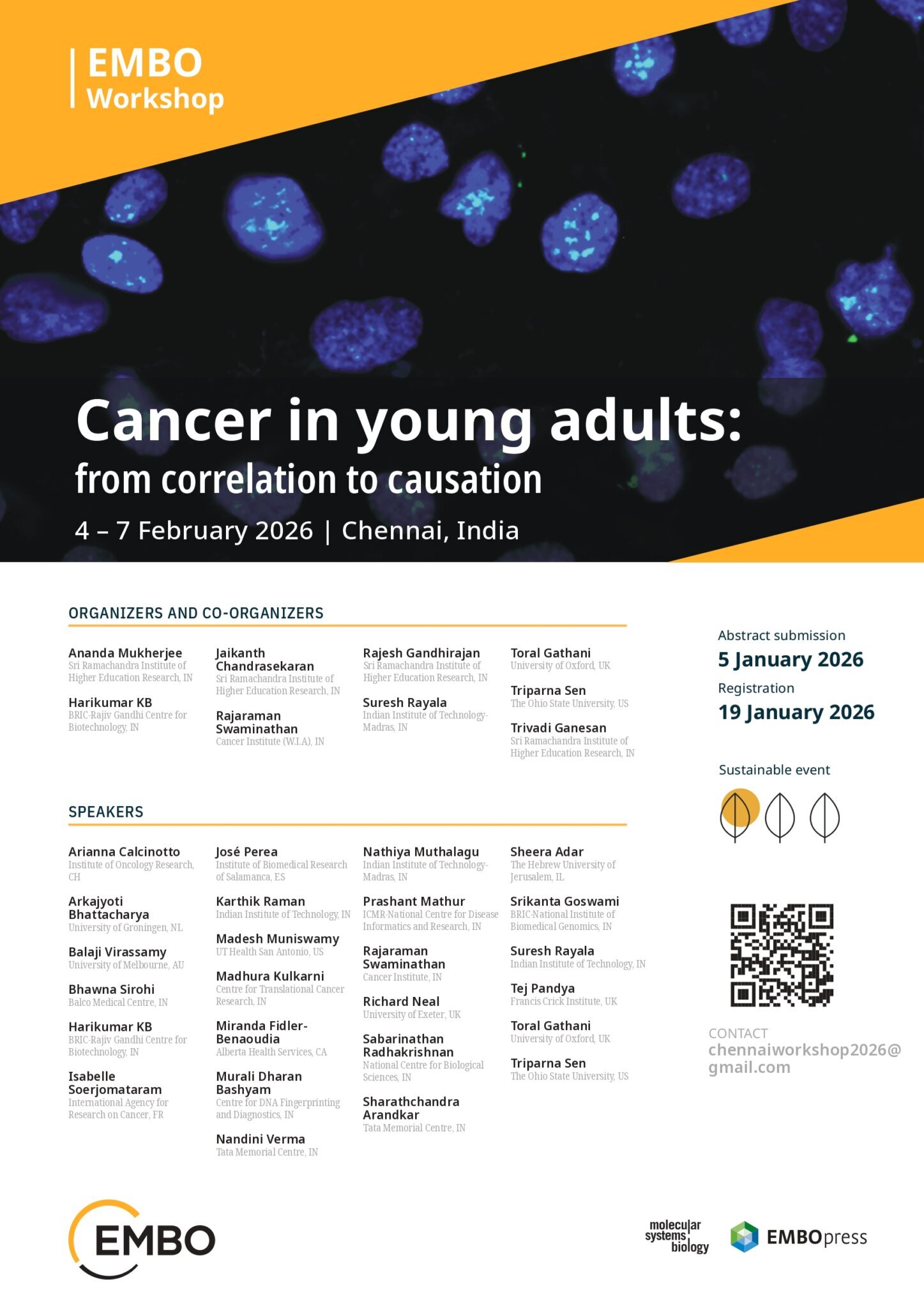
      </a></dd></dl><p>In the past thirty years, the incidence of the most prevalent cancer types has risen by approximately 80% among young adults who are under 50 years old globally. This situation is especially troubling for India, considering that more than half of its population are under 50 years. The reason for this increase in incidence is unclear due to insufficient understanding of etiology and mechanisms. Recent advances in multidimensional data analysis, encompassing clinical observations and omics-based exposome studies, are facilitating a preliminary understanding of the underlying causes of cancer in young adults. This EMBO Workshop will address epidemiology, emerging risk factors and strategies, gene-environment interactions, etiology and molecular pathologies, biological foundations and molecular mechanisms, preclinical experimental and simulation models, as well as precision medicine and treatment modalities. This EMBO Workshop will support in addressing challenges by enhancing our knowledge via collaborative efforts.<br /></p><p>EMBO Courses and Workshops are selected for their excellent scientific quality and timelines, provision of good networking activities for all participants and speaker gender diversity (at least 40% of speakers must be from the underrepresented gender).</p><p>Organisers are encouraged to implement measures to make the meeting environmentally more sustainable.</p><figure><img src="https://cdn.indiabioscience.org/media/yim/gw26-15-Poster_page-0001.jpg" data-image="823244"></figure>
              ]]></content><category term="chennai" label="Chennai" /><category term="workshop" label="Workshop" /></entry><entry><title>Anjana Badrinarayanan on discovery science, DNA repair, and the Infosys Prize 2025</title><link
                  rel="alternate"
                  href="https://indiabioscience.org/columns/conversations/anjana-badrinarayanan-on-discovery-science-dna-repair-and-the-infosys-prize-2025"
                  type="text/html"
                  /><summary type="html"><![CDATA[
                <p>IndiaBioscience spoke with <a href="https://www.infosysprize.org/laureates/2025/anjana-badrinarayanan.html" target="_blank" rel="noreferrer noopener">Anjana Badrinarayanan</a>, winner of the <a href="https://www.infosysprize.org/about-the-prize/categories/life-sciences.html" target="_blank" rel="noreferrer noopener">Infosys Prize 2025 in life sciences</a>, about her scientific journey and research. In response to questions posed by IndiaBioscience, she reflected on the meaning of the award, her work on genome maintenance and DNA repair, the role of live-cell imaging in understanding dynamic cellular processes, and the responsibilities that come with scientific recognition.</p>              ]]></summary><id>tag:indiabioscience.org,2026-01-02:/columns/conversations/anjana-badrinarayanan-on-discovery-science-dna-repair-and-the-infosys-prize-2025</id><published>2026-01-02T10:00:00+05:30</published><updated>2025-12-18T14:57:33+05:30</updated><author><name>Moumita Mazumdar</name><uri>https://indiabioscience.org/authors/moumita</uri></author><content type="html"><![CDATA[
                
<p>IndiaBioscience spoke with <a href="https://www.infosysprize.org/laureates/2025/anjana-badrinarayanan.html" target="_blank" rel="noreferrer noopener">Anjana Badrinarayanan</a>, winner of the <a href="https://www.infosysprize.org/about-the-prize/categories/life-sciences.html" target="_blank" rel="noreferrer noopener">Infosys Prize 2025 in life sciences</a>, about her scientific journey and research. In response to questions posed by IndiaBioscience, she reflected on the meaning of the award, her work on genome maintenance and DNA repair, the role of live-cell imaging in understanding dynamic cellular processes, and the responsibilities that come with scientific recognition.</p><figure><a href="https://indiabioscience.org/columns/conversations/anjana-badrinarayanan-on-discovery-science-dna-repair-and-the-infosys-prize-2025"><img
                width="1920"
                height="1080"
                style="max-width: 100%; height: auto"
                src="https://cdn.indiabioscience.org/media/articles/PCST-and-Biotales-2.jpg"></a></figure><p>In her responses, <a href="https://www.infosysprize.org/laureates/2025/anjana-badrinarayanan.html" target="_blank" rel="noreferrer noopener">Badrinarayanan</a> emphasised that receiving the Infosys Prize has reaffirmed her commitment to curiosity-driven, long-term research. She described how her work challenges static views of DNA repair by revealing it as a dynamic, cell-wide process shaped by movement, timing, and cellular state. She also reflected on the broader importance of patient, high-risk research, mentorship, and building supportive scientific ecosystems that enable young researchers to pursue ambitious questions.<br></p><p dir="ltr"><strong>Congratulations on receiving the Infosys Prize 2025. What does this recognition mean to you at this stage of your scientific career, and how do you see it shaping your future research direction?</strong><br></p><p dir="ltr"><em>Receiving the Infosys Prize at this stage of my career is both affirming and grounding. It is a recognition of long-term, curiosity-driven work that does not always yield quick answers, but steadily builds understanding over time. </em></p><blockquote dir="ltr" class="pull-quote"><em>Personally, it reinforces my belief in asking difficult mechanistic questions and staying with them over time, even when progress is slow or uncertain.<br></em></blockquote><p dir="ltr"><em>In terms of future direction, the prize does not redirect my research so much as strengthen my commitment to it. It gives me confidence to continue pursuing ambitious questions about genome maintenance that require interdisciplinary approaches and sustained effort. It also brings a responsibility to contribute more actively to the broader scientific ecosystem — through mentorship, collaboration, and helping build environments where young scientists feel supported in taking intellectual risks.</em><br></p><p dir="ltr"><strong>Your work uncovers new mechanisms of DNA repair. Could you describe how these discoveries reshape our understanding of genome maintenance?</strong><br></p><p dir="ltr"><em>Genome maintenance has traditionally been viewed as a largely local and passive process, where repair proteins act near sites of damage. Our work challenges this view by showing that DNA repair is highly dynamic and organised at the scale of the whole cell. Cells actively mobilise repair machinery, using energy-dependent processes to search for damaged DNA and coordinate repair efficiently. We have also shown that mutagenic DNA repair can operate outside of the conventional boundaries of the cell cycle, including in dormant or non-dividing cells. This reshapes how we think about when and where mutations arise, and suggests that genome modification is not restricted to actively replicating cells. This shifts our understanding of genome maintenance from a static framework to a dynamic one, where movement, timing, and spatial organisation play central roles. It also suggests that genome architecture and cellular state strongly influence how repair unfolds. These insights help explain how cells maintain stability under stress, and why repair outcomes can differ depending on physiological conditions. More broadly, they have important consequences for stability, adaptation, and evolution, highlighting that genome maintenance is not just about individual enzymes, but about coordinated cellular strategies.</em><br></p><p dir="ltr"><strong>Live-cell imaging is central to your research. How is this technology transforming the way molecular biologists investigate dynamic processes inside cells?</strong><br></p><p dir="ltr"><em>Live-cell imaging has fundamentally changed how we study biology by allowing us to observe processes as they unfold in real time inside living cells. For molecular biologists, this means moving beyond static descriptions to understanding dynamics: how molecules move, interact, and respond to changes over time. In our work, this has been critical for studying DNA repair, where key events occur rapidly and transiently, and would be otherwise missed. By following individual cells, we can capture dynamics and heterogeneity that are completely masked in population-averaged experiments. It has also revealed variability between individual cells, showing that even genetically identical cells can behave differently under the same conditions. More broadly, this approach is transforming molecular biology by revealing temporal order, coordination, and decision-making within cells. As imaging becomes more quantitative and integrated with computational analysis, it is enabling researchers to link molecular mechanisms to cellular behaviour in a far more direct and predictive way.</em><br></p><p dir="ltr"><strong>The Infosys Prize often highlights research with potential societal impact. How do you envision your discoveries contributing to long-term advances in disease research or therapeutic strategies?</strong><br></p><p dir="ltr"><em>Many diseases including cancer, neurodegenerative disorders, and age-related conditions are associated with defects in DNA repair and genome stability. While my research is focused on microbial systems, the underlying principles we uncover are often conserved across evolution. Studying these processes in tractable systems allows us to identify core mechanisms that are difficult to dissect in more complex cells. In the context of infectious disease, understanding DNA repair in bacteria is also important for addressing antibiotic resistance, as repair pathways enable microbes to survive stress and evolve rapidly. </em></p><blockquote dir="ltr" class="pull-quote"><em>I want to highlight that the contribution of fundamental discovery research is often indirect and long-term. Rather than producing immediate therapies, it provides the conceptual foundation that informs future drug targets, treatment strategies, and diagnostic approaches. </em></blockquote><p dir="ltr"><em>In that sense, it shapes the landscape in which applied and clinical research can operate more effectively, and opens new and frontier research directions. In a rapidly changing world, such forward facing, long-term fundamental research is critical to ensure we are future ready.</em><br></p><p dir="ltr"><strong>Frontier research in India often requires deep institutional support. How do you think awards like the Infosys Prize help strengthen basic science ecosystems and inspire confidence in high-risk, curiosity-driven research?</strong><br></p><p dir="ltr"><em>Awards like the Infosys Prize play a vital role in validating discovery science and curiosity-driven research, especially in areas where outcomes are uncertain and timelines are long. By recognising this, the foundation sends a strong message that depth, originality, and persistence matter. </em></p><blockquote dir="ltr" class="pull-quote"><em>Such recognition goes a long way towards strengthening research ecosystems by increasing visibility for basic science, helping attract talented students and collaborators, and reinforcing institutional confidence in supporting ambitious projects. This is particularly important in India, to encourage researchers to aim for long-term impact. </em></blockquote><p dir="ltr"><em>I feel that beyond individual recognition, these awards help shape scientific culture. They encourage institutions and funding agencies to invest in long-term thinking and create environments where researchers feel supported in taking intellectual risks. Over time, this builds resilience and excellence in the scientific system as a whole.</em><br></p><p dir="ltr"><strong>Many young researchers look up to scientists like you. What message would you like to share with early-career scientists, especially women in STEM, who aspire to pursue challenging, long-term scientific questions?</strong><br></p><blockquote dir="ltr" class="pull-quote">I would encourage young scientists to give themselves permission to be curious and to be patient with uncertainty. </blockquote><p dir="ltr"><em>Scientific questions rarely yield quick answers, and progress often comes through periods of confusion and failure. This is a normal and necessary part of discovery. For women in STEM in particular, it is important to recognise that doubts and obstacles are not personal shortcomings, but structural features of the system. Building supportive networks, seeking mentors, and trusting one’s intellectual instincts can make a tremendous difference. Finally, choose questions that genuinely excite you. Sustained curiosity is what carries you through difficult phases. Science is not a straight path, and success does not look the same for everyone. There is space for diverse voices, styles, and trajectories in research.<br></em></p><p dir="ltr"><em><strong>Scientific recognition often brings new responsibilities. Do you see this award influencing your roles in mentorship, scientific leadership, or in shaping the broader research culture at National Centre for Biological Sciences (NCBS-TIFR)or beyond?</strong><br></em></p><p dir="ltr"><em>Scientific recognition does bring a certain sense of responsibility, though I see it more as a continuation than a change. Mentorship has always mattered deeply to me, and that commitment remains central, particularly supporting early-career scientists as they navigate uncertainty and failure. It is important to foster environments where rigorous and creative science can thrive together. At NCBS, which has a strong and vibrant culture of fundamental research, I feel it is important to help sustain and strengthen this environment that values curiosity, rigor, and intellectual risk-taking. That includes encouraging conversations across disciplines and ensuring that young researchers feel confident pursuing original ideas. I do hope to contribute to conversations about how we define and assess scientific success. Moving beyond short-term metrics to recognise depth, integrity, and long-term impact is essential. </em></p><blockquote dir="ltr" class="pull-quote"><em>Shaping research culture is always a collective effort, but recognition can help give weight and visibility to these conversations.</em><br></blockquote>
              ]]></content><category term="science" label="Science" /><category term="advice" label="Advice" /></entry><entry><title>qPCR and data analysis</title><link
                  rel="alternate"
                  href="https://indiabioscience.org/events/qpcr-and-data-analysis-3"
                  type="text/html"
                  /><summary type="html"><![CDATA[
                
<em>
  Workshop
</em>
from
<time>
  02 February
</time>
  to
  <time>
    04 February 2026
  </time>
at
Chennai.
              ]]></summary><id>tag:indiabioscience.org,2025-12-31:/events/qpcr-and-data-analysis-3</id><published>2025-12-31T15:56:00+05:30</published><updated>2025-12-31T15:56:25+05:30</updated><author><name>Shwetha C</name><uri>https://indiabioscience.org/authors/zGXpwL2g3eKrb2J</uri></author><content type="html"><![CDATA[
                
<dl><dt>
    Date
  </dt><dd><time datetime="2026-02-02">
      February 02</time><time datetime="2026-02-04">-04, 2026
      </time></dd><dt>
      Location
    </dt><dd>
      Chennai, Tamil Nadu
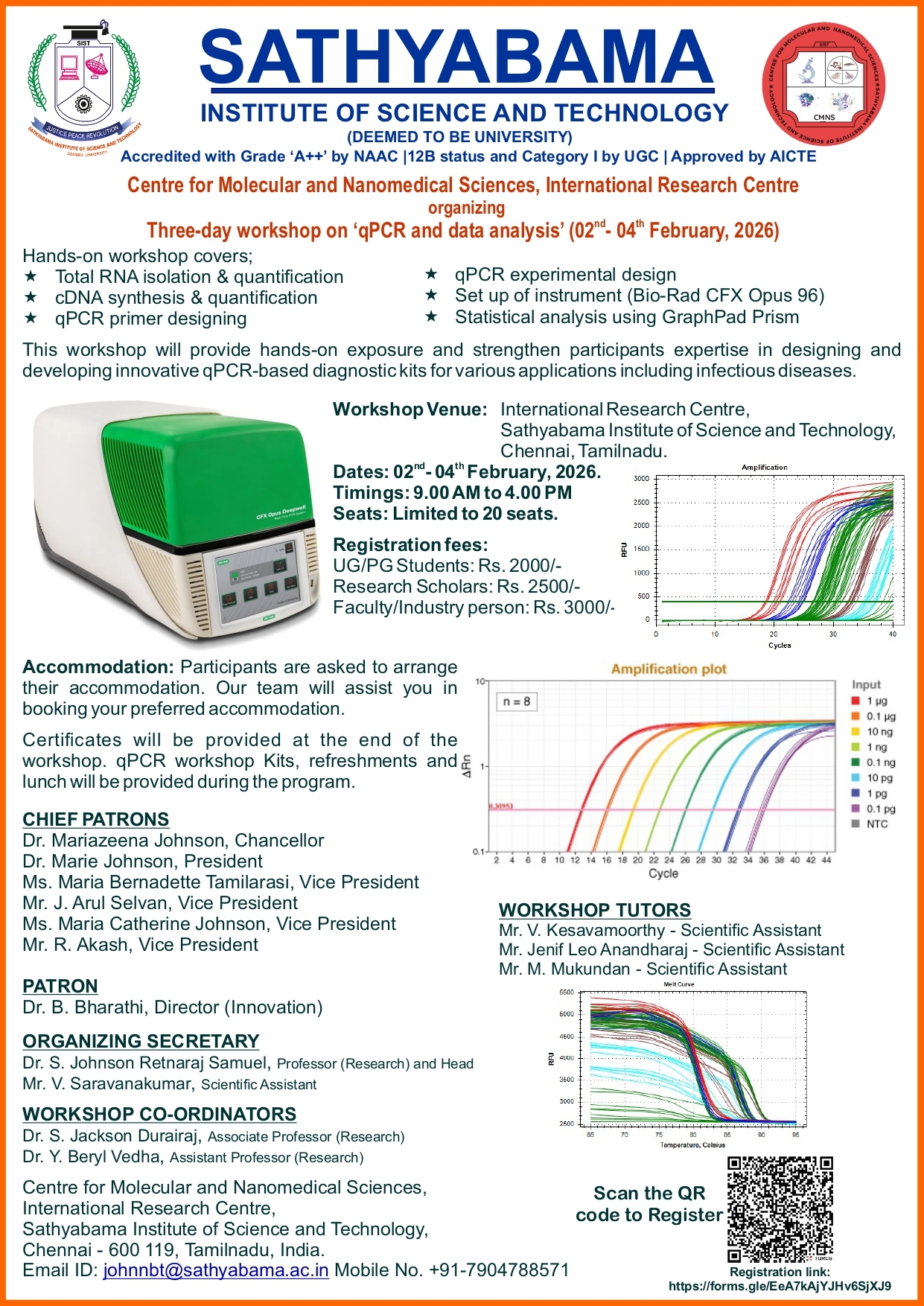
    </dd></dl><p>Sathyabama Institute of Science and Technology is organising a Three-day workshop on ‘qPCR and data analysis’ (02nd- 04th February, 2026) at the 'International Research Center of Sathyabama Institute of Science and Technology, Chennai through physical mode.<br /><br />This workshop will provide hands-on exposure and strengthen participant's expertise in designing and developing innovative qPCR-based diagnostic kits for various applications, including infectious diseases.<br /><br />Hands-on workshop covers;</p><ul><li>cDNA synthesis &amp; quantification</li><li>Total RNA isolation &amp; quantification</li><li>qPCR primer designing</li><li>qPCR experimental design</li><li>Set up of instrument (Bio-Rad CFX Opus 96)</li><li>Statistical analysis using GraphPad Prism</li></ul><figure><img src="https://cdn.indiabioscience.org/media/yim/qPCR_Workshop_Brochure-2026_page-0001.jpg" data-image="823197"></figure>
              ]]></content><category term="chennai" label="Chennai" /><category term="workshop" label="Workshop" /></entry></feed>