<?xml version="1.0" encoding="UTF-8"?><feed xmlns="http://www.w3.org/2005/Atom" xml:lang="en"><title>IndiaBioscience - Resilience and Representation in Research</title><link
    rel="alternate"
    href="https://indiabioscience.org/columns/resilience-and-representation-in-research"
    type="text/html"
    /><link
    rel="self"
    href="https://indiabioscience.org/columns/resilience-and-representation-in-research/feed"
    type="application/atom+xml"
    /><id>https://indiabioscience.org/columns/resilience-and-representation-in-research/feed</id><updated>2026-01-08T12:20:01+05:30</updated><entry><title>Resilience and representation in research: In conversation with Anuradha Vaidya</title><link
                  rel="alternate"
                  href="https://indiabioscience.org/columns/resilience-and-representation-in-research/rrranuradhavaidya"
                  type="text/html"
                  /><summary type="html"><![CDATA[
                <p>In a country where barely 11% of universities (<a href="https://www.careers360.com/courses-certifications/articles/why-is-the-percentage-of-women-heading-higher-education-institutes-in-india" target="_blank" rel="noreferrer noopener">1</a>,<a href="https://www.dailypioneer.com/2025/columnists/women-pioneering-change-in-indian-higher-education.html#:~:text=Indian%20higher%20education%20remains%20male,globally%20are%20occupied%20by%20women." target="_blank" rel="noreferrer noopener">2</a>,<a href="https://www.newindianexpress.com/thesundaystandard/2025/Aug/24/not-fair-only-11-per-cent-women-vice-chancellors-in-indian-universities" target="_blank" rel="noreferrer noopener">3</a>) are headed by women, Anuradha Vaidya’s ascent within academia holds a certain narrative power. As the Director of Symbiosis School of Biological Sciences and the Head of Symbiosis Centre for Stem Cell Research, Anuradha holds together two thriving research ecosystems under her vision. Hers is more than just a professional success story, it offers us a window into what academic leadership is like for a young woman in the country, inhabiting a space not primarily designed with her in mind.</p>              ]]></summary><id>tag:indiabioscience.org,2025-12-29:/columns/resilience-and-representation-in-research/rrranuradhavaidya</id><published>2025-12-29T10:00:00+05:30</published><updated>2025-12-04T17:22:01+05:30</updated><author><name>Gayathri Sreedharan</name><uri>https://indiabioscience.org/authors/GayathriSreedharan</uri></author><content type="html"><![CDATA[
                
<p>In a country where barely 11% of universities (<a href="https://www.careers360.com/courses-certifications/articles/why-is-the-percentage-of-women-heading-higher-education-institutes-in-india" target="_blank" rel="noreferrer noopener">1</a>,<a href="https://www.dailypioneer.com/2025/columnists/women-pioneering-change-in-indian-higher-education.html#:~:text=Indian%20higher%20education%20remains%20male,globally%20are%20occupied%20by%20women." target="_blank" rel="noreferrer noopener">2</a>,<a href="https://www.newindianexpress.com/thesundaystandard/2025/Aug/24/not-fair-only-11-per-cent-women-vice-chancellors-in-indian-universities" target="_blank" rel="noreferrer noopener">3</a>) are headed by women, Anuradha Vaidya’s ascent within academia holds a certain narrative power. As the Director of Symbiosis School of Biological Sciences and the Head of Symbiosis Centre for Stem Cell Research, Anuradha holds together two thriving research ecosystems under her vision. Hers is more than just a professional success story, it offers us a window into what academic leadership is like for a young woman in the country, inhabiting a space not primarily designed with her in mind.</p><figure><a href="https://indiabioscience.org/columns/resilience-and-representation-in-research/rrranuradhavaidya"><img
                width="1920"
                height="1080"
                style="max-width: 100%; height: auto"
                src="https://cdn.indiabioscience.org/media/articles/RRR_UD_2025-12-02-091942_vvny.jpg"></a></figure><p dir="ltr"><a href="https://www.ssbs.edu.in/faculty-anuradhaVaidya" target="_blank">Anuradha’s</a> interest in biosciences began early; however, she was more inclined towards a career in Medicine. Yet financial constraints led her to choose a parallel path towards being a “doctor”. She remembers telling her father,<em> “I will become a doctor, but not through the usual path”</em>, and feeling content rather than disappointed with her choice at the time. Today, she calls this decision “perfect”. She went on to major in zoology from the University of Pune, completed a masters in health sciences. A PhD at the <a href="https://nccs.res.in/" rel="noopener" target="_blank">DBT- National Centre for Cell Sciences (NCCS)</a>, Pune, followed, and immediately after, in 2011, she started her postdoctoral journey at <a href="https://www.ssbs.edu.in/" rel="noopener" target="_blank">Symbiosis School of Biological Sciences</a> – a step that would fundamentally shape her career in science. <br></p><p dir="ltr"><strong>The unexpected leap from “researcher” to “director” </strong><br></p><p dir="ltr">For Anuradha, it would be right to say that leadership found her before she went looking for it. While she owns it effortlessly, and acknowledges the responsibility that came with becoming the “woman” at the head of the table, she recalls experiencing a cocktail of doubt and determination when she was first offered the role in 2021. <strong>“</strong><strong><em>Can I handle this? Can I do justice to the role? Would other faculty see me as the right leader”?</em></strong><br></p><p dir="ltr">For about six months Anuradha interrogated her own suitability for the role, perhaps shaped by an academic culture that is conditioned to equate leadership with seniority and number of years spent in the system. </p><p dir="ltr"></p><blockquote dir="ltr" class="pull-quote"><em>I realised being a director is not just administrative; it’s a demanding vision-setting position. I had to develop a vision, not only as a leader but focusing on institution building, mentoring students and young faculty, and most importantly, creating an enabling environment for the next generation of scientists”.</em><br></blockquote><p dir="ltr"><strong>Mentorship: The undercurrents that map the academic ecosystem</strong><br></p><p dir="ltr">Formal mentors like teachers offer structured academic guidance, but colleagues, friends, parents, or relatives offer something more crucial which Anuradha calls “navigational mentorship” that helps you move through systems. She also shares with us what emotional mentorship means, “<em>It’s an unwavering belief, probably nurtured by parents, that you can succeed. We all go through phases of doubt, where belief in ourselves falters. This kind of mentorship fosters emotional resilience, and forms an essential part of your navigational toolkit to move through not only the academic landscape but through life itself”. </em>Emotional mentorship, she notes, is subtler but essential, especially for young women researchers.<br></p><p dir="ltr">She also speaks passionately about another layer of mentorship that she called “sponsorship”. These come from people who might advocate for you in rooms where you are not present. <br></p><p dir="ltr">Under her leadership, Anuradha tries to deliberately create such opportunities for younger faculty including Assistant Professors, Postdocs, teaching associates, or research associates, bringing them into administrative discussions and meeting rooms that traditionally tend to overlook them. <br></p><p dir="ltr"><strong>Women leading women</strong><br></p><p dir="ltr">With leaders like Vidya Yeravdekar at the helm of Symbiosis serving as its Principal Director and Pro Vice Chancellor, Anuradha senses the beginnings of a systemic transition in academia. In this context, she emphasises the importance of fostering a transgenerational mentorship to make academic leadership a realisation for women. She says, <em>intelligent, hardworking women get stuck because they don’t know how to navigate. This is where handholding is needed — one generation of women guiding the next”.</em></p><p dir="ltr"><br>She herself remembers being asked to pause, take it slow, or to wait for her turn, while opportunities were passed on to men in the system. </p><blockquote dir="ltr" class="pull-quote"><em>Giving the opportunity to our women academics to sit at the table and be heard —seeing how people discuss things — is critical”.</em></blockquote><p dir="ltr">Her own mentorship is rooted in this awareness – especially in her lab with an all-women PhD cohort, many of whom have carried her mentorship into their postdoctoral careers abroad. <strong>“</strong><strong><em>Mentorship is a continuous process, not a six-month programme”.</em></strong><br><br></p><p dir="ltr"><strong>Mastering the art of institution-building </strong><br></p><p dir="ltr">As the head of two prominent schools of bioscience research, Anuradha’s leadership rests on two pillars: Microfocus and macrovision. While reflecting on the dynamic nature of her role, Anuradha explains, “<em>Micro focus involves curriculum development and understanding where the institution stands relative to other institutes and academic entities in the country, whereas </em><em>macro vision is about holding the future of biosciences in perspective when thinking of how to position the university as a good research institution.” </em><br></p><p dir="ltr">While discussing the myriad challenges of her role, ranging from navigating academic administration, managing and securing funds and infrastructure, policy-making, attracting students, and handling accreditations requirements, Anuradha emphasises her vision for the School – a space where teaching anchors cutting-edge research. Private universities, she notes, are primarily teaching-focused centres, but research evolves slowly as capacity builds. <br></p><p dir="ltr">Anuradha’s story of being a woman academic leader from a private university adds an often-overlooked detail to our series on resilience and representation in research. Much of the scientific leadership discourse in the country centres around men, and the small minority of women leaders we have are also from public/government institutes, while women leaders from private universities almost always miss the spotlight. <br></p><p dir="ltr">Anuradha candidly addresses the challenges within a private academic ecosystem. Balancing teaching, research, admissions, and accreditation data is demanding. As admissions form the main focus of private universities, building a strong network becomes critical to attract students. She shares that young faculty in private universities are often faced with heavy teaching loads while simultaneously building labs, and may find this balancing act overwhelming. <br></p><p dir="ltr">She also highlights the visibility barrier, “<em>building your academic identity not only within the university but outside can be daunting for faculty in private universities.</em><em>For example, I work in stem cell biology — I've been in this field for 14 years. There’s a major conference in this field, yet we’re never invited as speakers. Never”!</em><br></p><p dir="ltr"><strong>Work-life integration, skilling, anchoring</strong><br></p><p dir="ltr">If “work-life balance” is what we expected to hear from her, we were surprised to hear her say, </p><blockquote dir="ltr" class="pull-quote"><em>There can never be a work-life balance — it’s more about work-life integration. How can you integrate the two? That’s what’s really important. Prioritisation matters”.</em><br></blockquote><p dir="ltr">She adds that skilling is crucial – upskilling, reskilling, and transferring skills. Additionally, learning to translate personal qualities into professional strengths helps immensely, particularly those like patience, conflict resolution, and time management. She stresses the need to identify what grounds you — an emotional anchor. </p><blockquote dir="ltr" class="pull-quote"><em>You have to be grounded and develop empathy. That’s how you retain people. They work hard because they feel valued. Empathy motivates commitment”.</em><br></blockquote><p dir="ltr"><strong>Visibility matters</strong><br></p><p dir="ltr">On women collectives in academia like <a href="https://powerbio.in/" rel="noopener" target="_blank">POWERBio</a> and <a href="https://www.womenlifthealth.org/" rel="noopener" target="_blank">WomenLift Health</a>, Anuradha believes these are not just support groups, but strategic agents that catalyse structural transformation in academic spaces, creating more equitable environments for women. <br></p><blockquote dir="ltr" class="pull-quote"><em>I think such groups play a critical role in enhancing or elevating visibility for women researchers. Because, if you can’t see, you can’t believe”.</em><br></blockquote><p dir="ltr">She sees them as spaces where women can learn from each other to upskill, advocate, negotiate, and influence institutional policies, from flexible work arrangements to equitable funding and promotion systems.<br></p><p dir="ltr"><em>“If such groups convert their shared experiences into collective action dismantling structural and mental barriers, that would be fantastic.”</em></p><p dir="ltr">Anuradha leads with clarity, mentors with care, and is building institutions with a vision to bring many others like herself along. In a system that is still learning how to imagine women at the head of the table, Anuradha Vaidya’s story shows how women can be excellent leaders while steadily reshaping the set narratives of our academic ecosystems. We hope that her story inspires a generation of women who will no longer ask, <em>“Is this role meant for me?</em>” but instead say, <em>“I see her. I can do this too”.</em></p>
              ]]></content><category term="other" label="Other" /><category term="women-in-science" label="Women in Science" /><category term="personal-experience" label="Personal Experience" /><category term="advice" label="Advice" /></entry><entry><title>Resilience and representation in research: In conversation with Mayurika Lahiri</title><link
                  rel="alternate"
                  href="https://indiabioscience.org/columns/resilience-and-representation-in-research/rrrmayurikalahiri"
                  type="text/html"
                  /><summary type="html"><![CDATA[
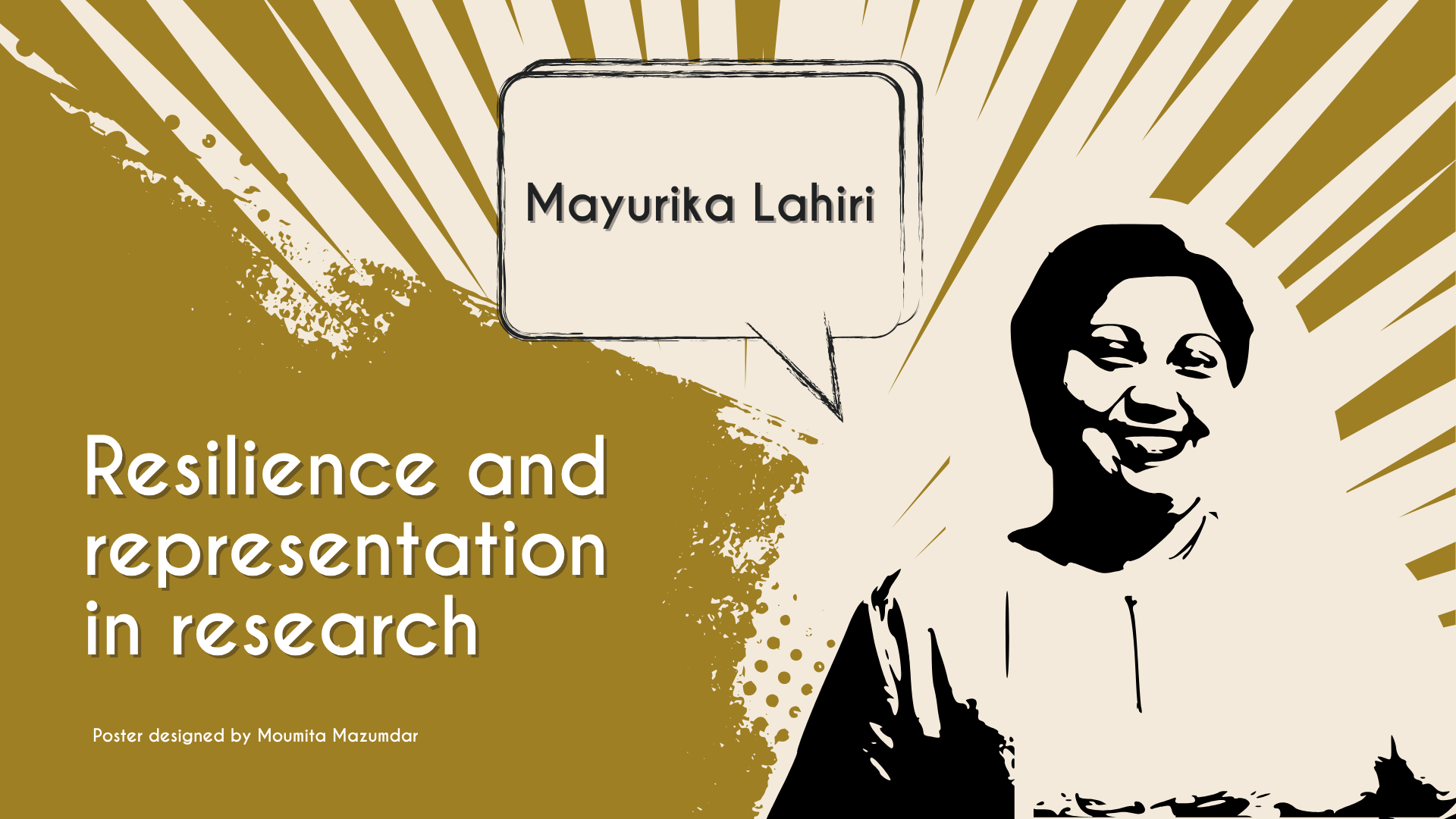
                <p><a href="https://drils.org/team/aarti-sevilimedu/" target="_blank" rel="noreferrer noopener"></a></p><p dir="ltr">During a conversation with <a href="https://www.iiserpune.ac.in/research/department/biology/people/faculty/regular-faculty/mayurika-lahiri/289" target="_blank" rel="noreferrer noopener"><strong>Mayurika Lahiri</strong></a>, Associate Professor of Biology at <a href="https://www.iiserpune.ac.in/" target="_blank" rel="noreferrer noopener">IISER Pune</a>, as she shared about geographic transitions, systemic challenges for women in science, and finding 'her tribe', we saw a career path with adaptability and determination to speak up for herself and for her community. From training in the UK and the USA to establishing her research lab in Pune, Mayurika's story underscores that considerable personal strength is required to navigate systemic and cultural challenges.<br /></p>              ]]></summary><id>tag:indiabioscience.org,2025-11-24:/columns/resilience-and-representation-in-research/rrrmayurikalahiri</id><published>2025-11-24T10:00:00+05:30</published><updated>2025-10-21T10:01:18+05:30</updated><author><name>Moumita Mazumdar</name><uri>https://indiabioscience.org/authors/moumita</uri></author><content type="html"><![CDATA[
                
<p><a href="https://drils.org/team/aarti-sevilimedu/" target="_blank" rel="noreferrer noopener"></a>During a conversation with <a href="https://www.iiserpune.ac.in/research/department/biology/people/faculty/regular-faculty/mayurika-lahiri/289" target="_blank" rel="noreferrer noopener"><strong>Mayurika Lahiri</strong></a>, Associate Professor of Biology at <a href="https://www.iiserpune.ac.in/" target="_blank" rel="noreferrer noopener">IISER Pune</a>, as she shared about geographic transitions, systemic challenges for women in science, and finding 'her tribe', we saw a career path with adaptability and determination to speak up for herself and for her community. From training in the UK and the USA to establishing her research lab in Pune, Mayurika's story underscores that considerable personal strength is required to navigate systemic and cultural challenges.</p><figure><a href="https://indiabioscience.org/columns/resilience-and-representation-in-research/rrrmayurikalahiri"><img
                width="1920"
                height="1080"
                style="max-width: 100%; height: auto"
                src="https://cdn.indiabioscience.org/media/articles/RRR_UD_2025-10-17-093602_ryki.png"></a></figure><p dir="ltr">Marked by both transcontinental moves and institutional transitions, Mayurika’s story reveals how personal conviction can evolve alongside professional growth.</p><p dir="ltr"><strong>Navigating transitions across continents</strong></p><p dir="ltr">Mayurika traces her academic beginnings to her master's degree, completed in 1997, and her PhD, which she earned between 1998 and 2001 in the UK. Having grown up partly in England, where her parents, both doctors, studied, this move felt natural. <em>"That wasn't a huge jump for me. I had already lived in England during my early education"</em>, she says.</p><p dir="ltr">The bigger leap came with her postdoctoral years in the USA. Initially sceptical about moving, she chose Boston to be with her partner, who had secured a position at<a href="https://hms.harvard.edu/" rel="noopener" target="_blank"> Harvard Medical School</a>. She joined<a href="https://www.tufts.edu/" rel="noopener" target="_blank"> Tufts University</a> in a woman PI's newly established lab, becoming her first postdoc.<em> "That experience gave me a lot of training, not just in research but also in managing a lab, mentoring undergraduates, and handling lab logistics"</em>.<br></p><p dir="ltr">Later, she moved to the<a href="https://www.massgeneral.org/" rel="noopener" target="_blank"> Massachusetts General Hospital Cancer Center</a>, where the culture was strikingly different, entirely postdoc-driven and without graduate students.<br></p><p dir="ltr">Looking back, she says the move to the US turned out smoother than she expected. <em>"Boston felt very much like England in many ways. I adjusted easily, enjoyed my work, and built lasting networks and friendships"</em>.<br></p><p dir="ltr">Yet, while international experiences helped her grow as a scientist, they also set the stage for the toughest transition, coming back home.</p><p dir="ltr"><strong>Returning to India: Building systems, breaking hierarchies</strong></p><p dir="ltr">The real challenge, she recalls, was returning to India in 2007. <em>"I had never worked in India and found the bureaucracy overwhelming. However, having mentors like Shashi (</em><a href="https://www.ncbs.res.in/faculty/lsshashidhara" rel="noopener" target="_blank"><em>LS Shashidhara</em></a><em>) really helped". </em>Practical lessons, such as learning to set up a cell culture facility, manage purchases, and work with administration, became essential survival skills.<br></p><p dir="ltr">One piece of advice stayed with her: never make an enemy of the administrative staff. At IISER Pune, she consciously broke hierarchies. <em>"Rather than summoning staff, I would go to their offices myself"</em>, she says. This approach, grounded in respect, helped her create a collaborative environment within the institution. These adjustments not only helped her settle in but also shaped her approach as a mentor to newer faculty.</p><p dir="ltr"><strong>"You cannot remain quiet"</strong></p><p dir="ltr">Staying candid about personal and systemic struggles, Mayurika says that when faced with situations like inappropriate behaviour, administrative biases, or even medical negligence, silence is not an option. She chose to confront them directly.<em> "For me, it's not just about my own case; I raise these issues for the larger community". </em>Her courage to speak out became a defining element of her leadership, one that inspired others to do the same. This insistence on speaking up had ripple effects, but colleagues and staff later thanked her for voicing concerns they themselves felt powerless to raise.</p><p dir="ltr"><strong>Finding community in networks</strong><br></p><p dir="ltr">Networking, Mayurika stresses, was central to her journey. Her first YIM meeting in 2009 in Kerala helped her build connections within the Indian science community, many of which grew into lasting collaborations and friendships. Almost a decade later, at the 2018 meeting, she returned to the YIM alumni meet. She is now a mentor at YIM 2026.<br></p><p dir="ltr">That meeting marked a turning point: for the first time, sexual harassment in academia was openly discussed. <em>"When Shubha (</em><a href="https://en.wikipedia.org/wiki/Shubha_Tole" rel="noopener" target="_blank"><em>Shubha Tole</em></a><em>) asked how many had experienced harassment, almost the whole room raised their hands. It was a stark moment that showed how pervasive the problem is". </em>For Mayurika, such conversations must be confronted directly, without excuses. <em>"Sometimes people excuse inappropriate behaviour by saying, 'Oh, abroad it's normal to hug students.' But that's not acceptable anywhere, not in India, not even in the US. Consent matters".</em></p><p dir="ltr">Mayurika found strength in experiences shared at these collective spaces, realising that advocacy in science must also be communal.</p><p dir="ltr"><strong>Advice for the next generation</strong></p><p dir="ltr">As a cancer biologist, Mayurika believes women in science must cultivate confidence and visibility. <em>"Networking is very important. Conferences help you become visible, and visibility leads to opportunities. Don't hold back from putting yourself forward". </em>She also urges women to be assertive with their work. </p><blockquote dir="ltr" class="pull-quote"><em>If you believe in your science, don't accept dismissive comments or meekly respond to reviews. Write rebuttals with confidence".</em><br></blockquote><p dir="ltr">On balancing family and career, she is clear-eyed about the guilt many women face. <em>"I myself have faced guilt, sometimes imposed by family members, about leaving my daughter for work or travel. But I have also seen that it makes children stronger, more independent, and respectful".</em><br></p><p dir="ltr">At IISER, Mayurika advocated for policies that benefit everyone. This included no late evening or weekend meetings, as well as childcare support, regardless of gender.<em> "These changes help build a fairer workplace"</em>, she reflects. Her advice to young women scientists is simple yet powerful: </p><blockquote dir="ltr" class="pull-quote"><em>Don't feel guilty, don't be meek, make yourself visible, and build networks. You can excel in both career and family life; it's tough, but possible".</em></blockquote><p dir="ltr">In essence, her perspective bridges the personal and institutional, showing how individual choices can spark systemic change.</p><p dir="ltr"><strong>How POWERBio came up</strong></p><p dir="ltr">Mayurika strongly believes that measures to improve women's representation must move beyond tokenism. It is this conviction that ties her to <a href="https://powerbio.in/index.php" rel="noopener" target="_blank">POWERBio</a>. Multiple conversations with peers facing similar struggles led her to this collective. <em>"We realised we were often fighting the same battles, only in silos. POWERBio gave us a platform to turn those isolated experiences into collective action", she recalls</em>.</p><p dir="ltr">In many ways, POWERBio represents the culmination of her journey, a coming together of the resilience, mentorship, and advocacy that have defined her path. Her words reflect the same resolve that has shaped her career, a reminder that resilience in science often lies in the everyday choices to persist, speak out, and support others along the way.<br></p>
              ]]></content><category term="other" label="Other" /><category term="women-in-science" label="Women in Science" /><category term="personal-experience" label="Personal Experience" /><category term="advice" label="Advice" /></entry><entry><title>Resilience and representation in research: In conversation with Sudha Rajamani</title><link
                  rel="alternate"
                  href="https://indiabioscience.org/columns/resilience-and-representation-in-research/resilience-and-representation-in-research-in-conversation-with-sudha-rajamani"
                  type="text/html"
                  /><summary type="html"><![CDATA[
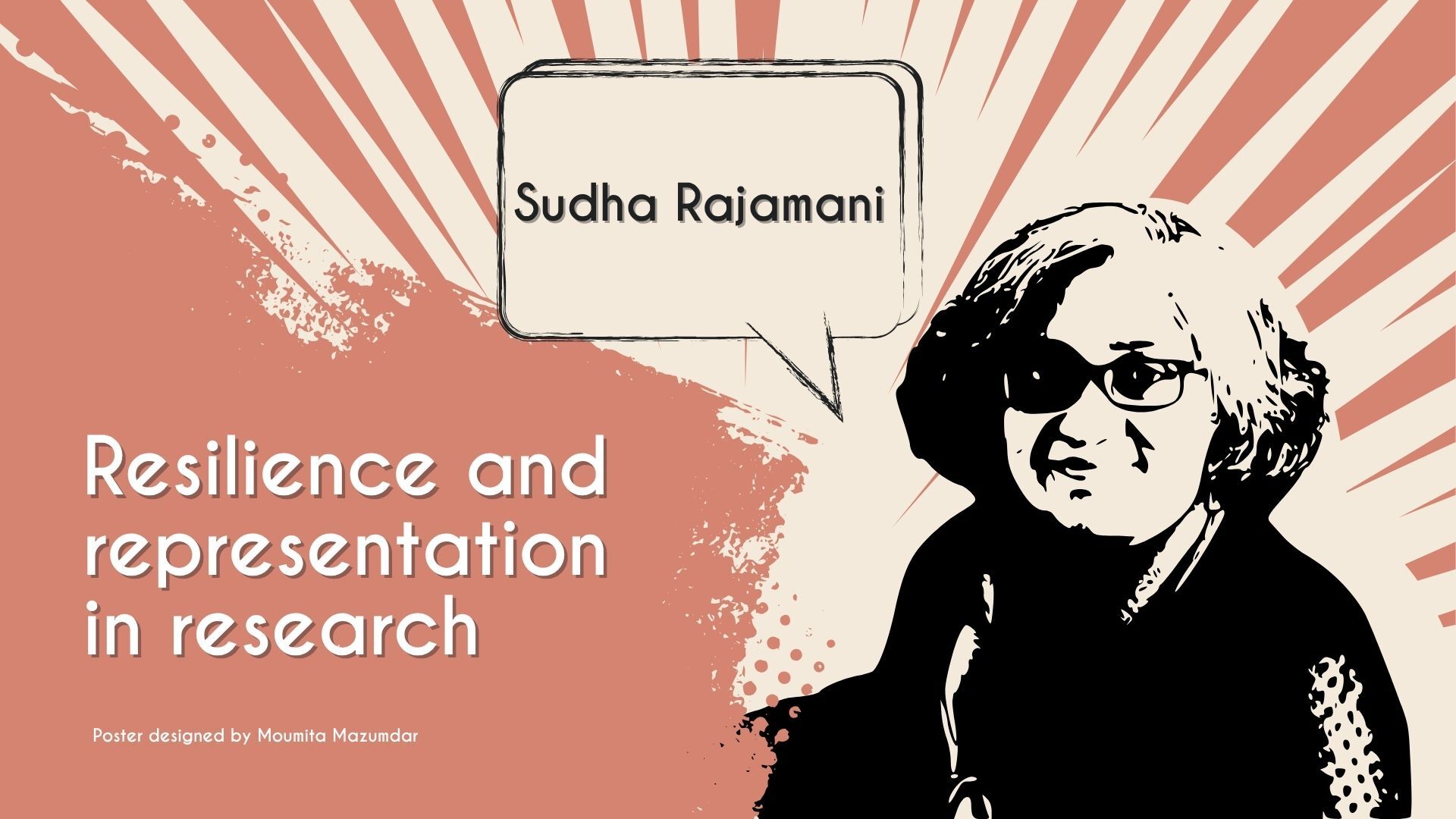
                <p><a href="https://drils.org/team/aarti-sevilimedu/" target="_blank" rel="noreferrer noopener"></a>In the next interview in this series, we spoke with <a href="https://www.iiserpune.ac.in/research/department/biology/people/faculty/regular-faculty/sudha-rajamani/322" target="_blank" rel="noreferrer noopener"><strong>Sudha Rajamani</strong></a>, a Professor at the <a href="https://www.iiserpune.ac.in/" target="_blank" rel="noreferrer noopener">Indian Institute of Science Education and Research, Pune</a>, whose career spans biochemistry, astrobiology, and now, strengthening the community of Indian women in science.<br /></p>              ]]></summary><id>tag:indiabioscience.org,2025-10-31:/columns/resilience-and-representation-in-research/resilience-and-representation-in-research-in-conversation-with-sudha-rajamani</id><published>2025-10-31T10:00:00+05:30</published><updated>2025-10-31T21:56:56+05:30</updated><author><name>Moumita Mazumdar</name><uri>https://indiabioscience.org/authors/moumita</uri></author><content type="html"><![CDATA[
                
<p><a href="https://drils.org/team/aarti-sevilimedu/" target="_blank" rel="noreferrer noopener"></a>In the next interview in this series, we spoke with <a href="https://www.iiserpune.ac.in/research/department/biology/people/faculty/regular-faculty/sudha-rajamani/322" target="_blank" rel="noreferrer noopener"><strong>Sudha Rajamani</strong></a>, a Professor at the <a href="https://www.iiserpune.ac.in/" target="_blank" rel="noreferrer noopener">Indian Institute of Science Education and Research, Pune</a>, whose career spans biochemistry, astrobiology, and now, strengthening the community of Indian women in science.</p><figure><a href="https://indiabioscience.org/columns/resilience-and-representation-in-research/resilience-and-representation-in-research-in-conversation-with-sudha-rajamani"><img
                width="1920"
                height="1080"
                style="max-width: 100%; height: auto"
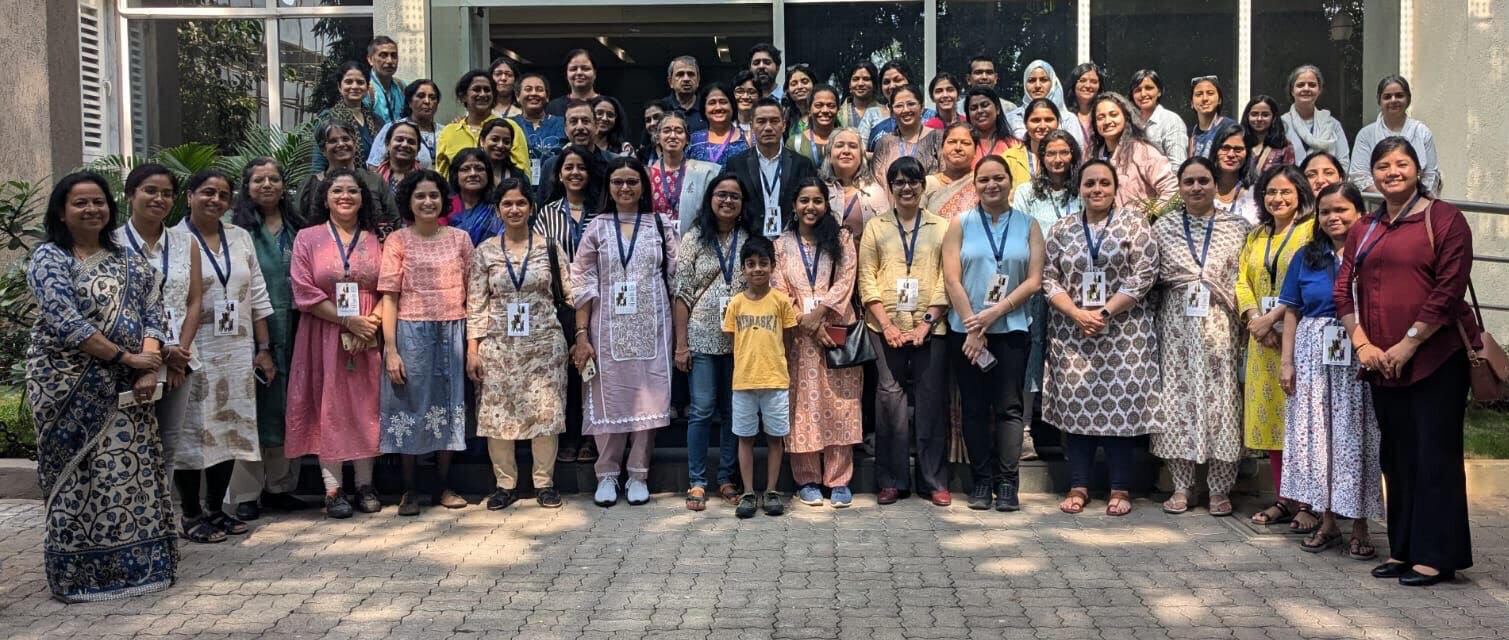
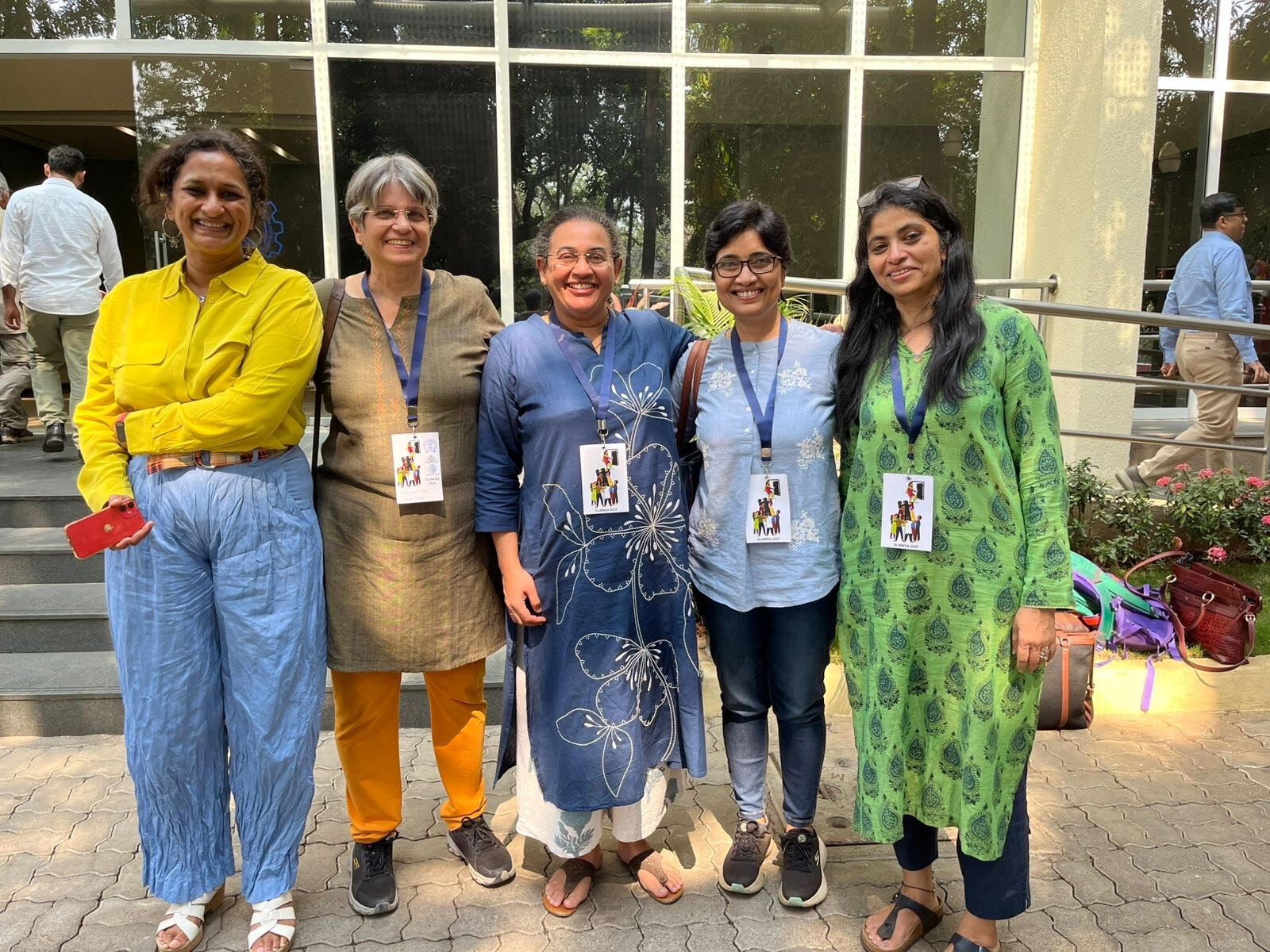
                src="https://cdn.indiabioscience.org/media/articles/RRR_UD.jpg"></a></figure><p dir="ltr"><strong>From biochemistry to astrobiology</strong></p><p dir="ltr">Sudha’s research trajectory has been anything but conventional. After completing her PhD in Biochemistry at the <a href="https://www.nii.res.in" target="_blank">National Institute of Immunology</a> in Delhi, she moved to the University of California, Santa Cruz (UCSC), for a postdoctoral research project focused on Parkinson’s disease. But soon, her path shifted.</p><p dir="ltr"><em>“An unforeseeable change in my career trajectory led me to astrobiology"</em>, she recalls. She joined Dr David Deamer at UCSC, immersing herself in prebiotic chemistry, which is the study of how simple chemical elements found on Earth combined to form relatively complex organic compounds, such as amino acids, sugars, and nucleotides. Subsequently, she worked with Dr Irene Chen at the <a href="https://www.mcb.harvard.edu/department/news/fas-center-systems-biology-reflects-two-decades-research-camaraderie/#:~:text=The%20Bauer%20Fellowship%20experience%20has,whether%20we've%20succeeded.%E2%80%9D" rel="noopener" target="_blank">Harvard Centre for Systems Biology</a> before returning to India. Back in India, her group at the <a href="https://www.sudharajamani.com/" rel="noopener" target="_blank">Chemical Origins of Life (COoL) lab</a> at IISER Pune studies how life first emerged by decoding the chemical processes and environments that shaped Earth’s earliest biology.</p><p dir="ltr"><a href="https://www.ncbs.res.in/faculty/lsshashidhara" rel="noopener" target="_blank">L.S. Shashidhara</a>, an invaluable mentor, whose trust in this emerging field, and the unwavering support of both him and IISER Biology colleagues, were crucial in laying the foundations of Sudha’s astrobiology career in India. ​“<em>I had to carve a niche in an area that was barely existent in India</em>”, she says. ​“<em>There were challenges in terms of recognition and acceptance, but over time the work gained traction</em>”. </p><p dir="ltr">She now ensures that she is a mentor to other early-career researchers in the field who wish to return to India to establish their own labs in the broader area of astrobiology. </p><blockquote dir="ltr" class="pull-quote">Even though empathetic and good mentors and allies are not easy to come by, when they do, it is crucial to make the most of their time, experience, and presence in your life. Importantly, these interactions inform your own mentorship skills, shaping and moulding your ability to mentor when it’s your turn”.<br></blockquote><p dir="ltr"><strong>A platform to support women in biology</strong></p><p dir="ltr">Many of the founding members of <a href="https://powerbio.in" target="_blank">POWERBio</a> are connected with IISER Pune. Sudha attributes ​“over chai conversations” and other informal discussions, which laid the foundation that turned into a shared vision of creating a platform to support women in biology.</p><p dir="ltr">As the Chair of IISER Pune’s Women in Science Committee, Sudha was already aware of the structural barriers women face. She realised, <em>“It’s not enough to just acknowledge that representation is low—we need proactive measures to improve it"</em>. </p><p dir="ltr">She highlights the PhD experience as one example. <em>“We’ve seen women students take six months to a year off to start a family, but their fellowship clocks don’t stop. They fall behind in finishing their PhDs".</em> The same pattern also affects young faculty. <em>“A woman assistant professor may have a baby soon after joining. Policies exist that are well-meaning on paper. However, ‘apples to apples’ comparisons with male peers still happen, which is unfair and needs to be acknowledged and addressed. They lose valuable time in publishing and grant-writing, which disadvantages their careers".</em></p><p dir="ltr">POWERBio emerged from numerous such conversations to bridge these gaps by advocating for systemic changes at multiple levels, helping women restart their careers after significant life events. “<em>Scaling these efforts is challenging, because every institute functions differently, but we hope to be able to create modules that can be adapted more widely</em>”, Sudha notes.</p><figure style="margin-left: auto; margin-right: auto; text-align: center; width: 582px; max-width: 582px;"><img src="https://cdn.indiabioscience.org/media/articles/unnamed-4.jpg" data-image="808680" width="582" height="437"><figcaption style="text-align: center;"><em>Participants of the IIT Bombay workshop pictured with their mentors and allies. | Photo Credit: POWERBio/IndiaBioscience</em></figcaption></figure><p dir="ltr"><strong>The need to ‘formalise’ informal networks</strong></p><p dir="ltr">POWERBio is not yet a registered body, but its members believe that formalisation may be necessary to amplify their voice. For now, much of POWERBio’s support is informal. <em>“Our focus is on facilitating workshops that are specifically tailored to discussing issues that women faculty face in their careers. These workshops include panels where senior women researchers and allies discuss measures that could potentially mitigate the more common problems that most of us face in our workplaces. Additionally, people reach out privately—‘I’m facing this issue, can you help?’ Sometimes we can, sometimes we can’t"</em>, Sudha explains. She points out that biology has not received the same organised focus as physics or mathematics, where Women in Science groups are long-standing and institutionalised. <em>“There’s a perception that biology has more women, but faculty numbers still hover at a quarter or less in most departments. The leaky pipeline is very real",</em> she says.</p><figure style="margin-left: auto; margin-right: auto; text-align: center; width: 469px; max-width: 469px;"><img src="https://cdn.indiabioscience.org/media/articles/unnamed-3.jpg" data-image="808678" width="469" height="352"><figcaption style="text-align: center;">5 out of the 7 core POWERBio members are in this pic who were all present at IIT Bombay for the 1st workshop that was conducted earlier this year. (L to R: Suhita Nadkarni, Vineeta Bal, Radhika Nair, Indrani Talukdar, Meenal Kowshik. Photo Credit: POWERBio/IndiaBioscience</figcaption></figure><p dir="ltr"><br><strong>Bias and resilience</strong></p><p dir="ltr">While Sudha has been fortunate with mentors (sadly, not common in science), she has not been immune to bias. In addition to having to deal with the widely prevalent everyday biases, she has also had to contend with the prejudices that stem from being a single woman (by choice). </p><blockquote dir="ltr" class="pull-quote"><em>When men are forthright, they’re called straightforward. When women do the same, we’re labelled aggressive"</em>, she says. <em>“I’ve been told often that people are afraid of me. I call it ‘healthy respect’, and my response is: let them be. I don’t demand respect, but I will command it". </em></blockquote><p dir="ltr">While she may not be raising a family in the traditional sense, she does have to care for her elderly parents, which comes with its own set of challenges.</p><p dir="ltr">She has also witnessed many women friends and colleagues drop out of science, whether due to unsupportive advisors, abusive environments, or the need to prioritise family. <em>“The spectrum is wide, and the losses are real"</em>, she reflects.</p><p dir="ltr"><strong>Changing the conversation</strong></p><p dir="ltr">Through POWERBio and, especially, IISER Pune’s Women in Science Committee, Sudha has been experimenting with new ways of engaging the community. Instead of stand-alone “Women in Science” events, they began embedding gender conversations within departmental seminars given by invited women researchers from diverse science careers. <em>“Attendance went up dramatically"</em>, she says. <em>“Now, we ask speakers to weave their scientific story with their personal journey, so audiences engage with both".</em></p><figure style="margin-left: auto; margin-right: auto; text-align: center; width: 592px; max-width: 592px;"><img src="https://cdn.indiabioscience.org/media/articles/unnamed-5.jpg" data-image="808682" width="592" height="279"><figcaption style="text-align: center;">The team connects from across the country for their monthly Zoom meeting — attendance can be a challenge, but the tradition continues without a break! Photo Credit: Mridula Nambiar</figcaption></figure><p dir="ltr">The turnout has, however, been low at awareness workshops, including those on sexual harassment, which they have been trying to make mandatory. <em>“It showed us the need to work with internal committees, which can mandate attendance"</em>, she notes. She also highlights the need for greater inclusion of administrative and technical staff, who often face more entrenched hierarchies but rarely approach committees for support - </p><blockquote dir="ltr" class="pull-quote">These structures should serve everyone in the institute, not just academics. I also strongly believe that not everyone trained in science has to remain in academia. There are fulfilling careers in communication, pedagogy, illustration, outreach, and policy. Representation in those spaces is just as important."</blockquote><p dir="ltr">POWERBio, as Sudha sees it, is still evolving. Its workshops and peer networks are designed to demonstrate what is possible when driven, clear-minded women come together to facilitate change. The long-term goal is to create structures that allow women to thrive without apology.</p><p dir="ltr">For her, the vision is clear: dismantling guilt, strengthening mentorship, and building horizontal support networks across institutions. In doing so, she hopes to make Indian science a place where women can not only survive, but flourish.</p><p dir="ltr">Ultimately, the sincere hope and aim is to help address and resolve these issues with POWERBio colleagues, whether through institutional-level changes or by positively influencing science policy for a broader impact.<br></p>
              ]]></content><category term="other" label="Other" /><category term="women-in-science" label="Women in Science" /><category term="personal-experience" label="Personal Experience" /><category term="advice" label="Advice" /></entry><entry><title>Resilience and representation in research: In conversation with Meenal Kowshik</title><link
                  rel="alternate"
                  href="https://indiabioscience.org/columns/resilience-and-representation-in-research/resilience-and-representation-in-research-in-conversation-with-meenal-kowshik"
                  type="text/html"
                  /><summary type="html"><![CDATA[
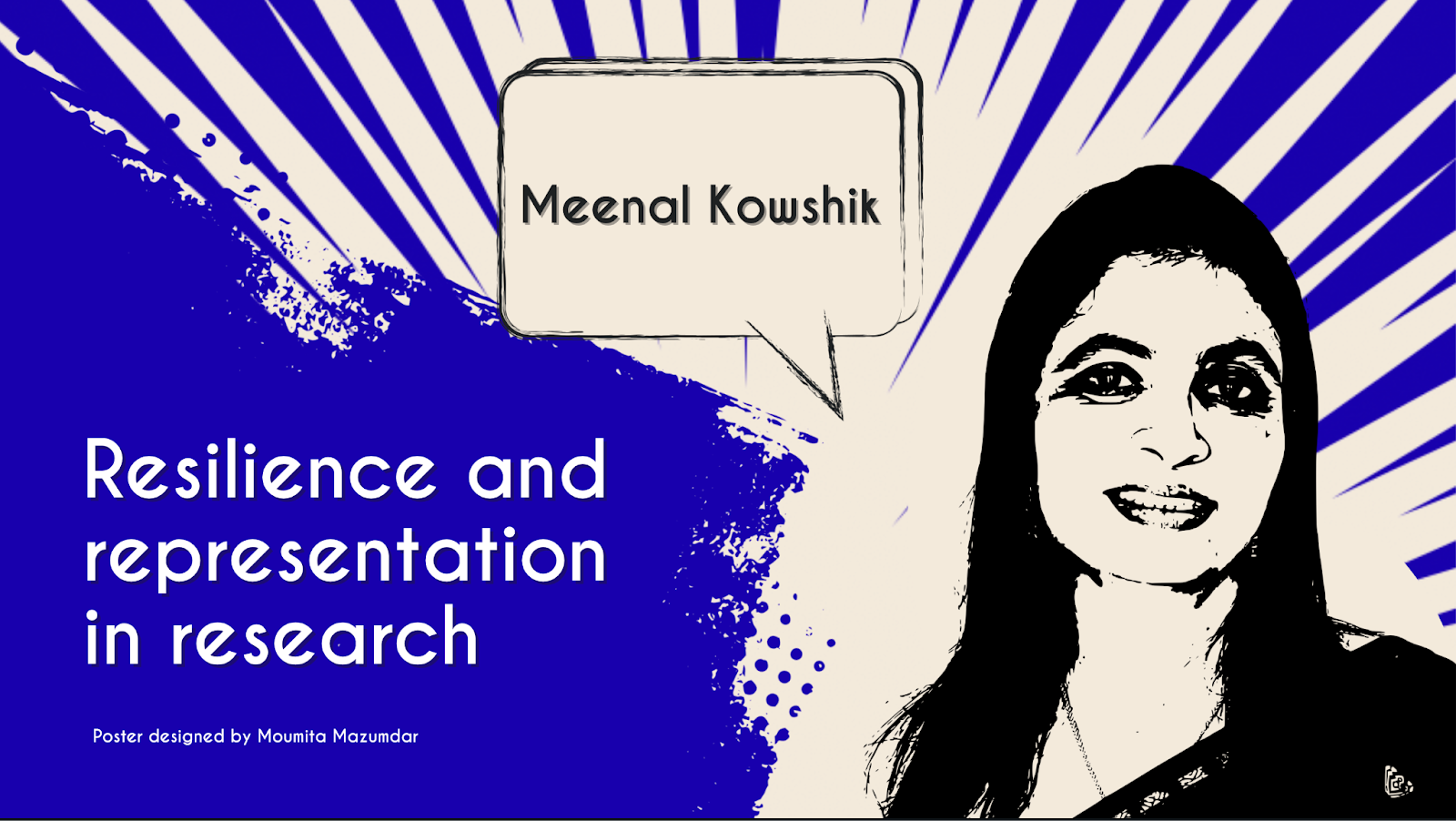
                <p><a href="https://drils.org/team/aarti-sevilimedu/" target="_blank" rel="noreferrer noopener"></a>In the series of interviews with members of the PowerBio collective, IndiaBioscience is documenting the personal accounts of women in Indian science, to understand how individual journeys converged into a shared purpose. These conversations help us understand what led to the creation of this collective. In this interview, we spoke with <a href="https://www.bits-pilani.ac.in/goa/meenal-kowshik" target="_blank" rel="noreferrer noopener"><strong>Meenal Kowshik</strong></a>, a microbiologist and the Dean of Administration at <a href="https://www.google.com/search?client=safari&amp;rls=en&amp;q=BITS+Pilani%2C+Goa&amp;ie=UTF-8&amp;oe=UTF-8" target="_blank" rel="noreferrer noopener">BITS-Pilani, Goa</a>.<br /></p>              ]]></summary><id>tag:indiabioscience.org,2025-10-13:/columns/resilience-and-representation-in-research/resilience-and-representation-in-research-in-conversation-with-meenal-kowshik</id><published>2025-10-13T10:00:00+05:30</published><updated>2025-10-14T08:52:43+05:30</updated><author><name>Siuli Mitra</name><uri>https://indiabioscience.org/authors/PRYwLlb3kA1gO0Q</uri></author><content type="html"><![CDATA[
                
<p><a href="https://drils.org/team/aarti-sevilimedu/" target="_blank" rel="noreferrer noopener"></a>In the series of interviews with members of the PowerBio collective, IndiaBioscience is documenting the personal accounts of women in Indian science, to understand how individual journeys converged into a shared purpose. These conversations help us understand what led to the creation of this collective. In this interview, we spoke with <a href="https://www.bits-pilani.ac.in/goa/meenal-kowshik" target="_blank" rel="noreferrer noopener"><strong>Meenal Kowshik</strong></a>, a microbiologist and the Dean of Administration at <a href="https://www.google.com/search?client=safari&amp;rls=en&amp;q=BITS+Pilani%2C+Goa&amp;ie=UTF-8&amp;oe=UTF-8" target="_blank" rel="noreferrer noopener">BITS-Pilani, Goa</a>.</p><figure><a href="https://indiabioscience.org/columns/resilience-and-representation-in-research/resilience-and-representation-in-research-in-conversation-with-meenal-kowshik"><img
                width="1600"
                height="902"
                style="max-width: 100%; height: auto"
                src="https://cdn.indiabioscience.org/media/articles/unnamed_2025-09-03-110218_rvws.png"></a></figure><p dir="ltr">Meenal Kowshik's life has come full circle with this appointment: after earning a PhD from the <a href="http://www.unipune.ac.in/" target="_blank">University of Pune</a> (now Savitribai Phule Pune University), she joined <a href="https://www.unigoa.ac.in/" target="_blank">Goa University</a> for a short postdoctoral fellowship before becoming one among the first faculty members to join the newly built BITS Pilani, Goa campus in 2004.</p><p dir="ltr"><strong>The foundational years at BITS Pilani, Goa</strong><br></p><p dir="ltr">A new campus meant the opportunity to take on varied roles. Although BITS Pilani, Goa, was conceived as a teaching-focused campus, its first Director, T.C. Goel encouraged the team of young faculty members to also prioritise research. This required a shift in institutional culture. Meenal remembers him saying, “<em>If you don't do research for the next five years, then you all will never do research”.</em></p><p dir="ltr">For Meenal, joining as one of the first members of the faculty also meant early leadership opportunities, an experience she values deeply and one she feels is not always easy to come by for women in Indian science. Her administrative responsibilities have evolved significantly, from overseeing the setup of the library and hostel to serving as Associate Dean (Research), and now as Dean of Administration.<br></p><p dir="ltr">Still, the most rewarding part of her role remains teaching. “<em>No matter how stressed I am, stepping into a classroom lifts my mood”,</em> she reflected.<br></p><p dir="ltr"><strong>Research trajectory</strong><br></p><p dir="ltr">Spending her early years at the interface of microbiology and nanotechnology, Meenal worked on the biosynthesis of nanoparticles. She soon shifted toward chemical synthesis and biological applications, recognising the limitations of the initial approach. “<em>Applications began in antimicrobial and biofilm work, then expanded when we found our hydroxyapatite nanoparticles were fluorescent and taken up by cells. This led to work in gene delivery, first in prokaryotic systems, then eukaryotic, and later in stem cell differentiation</em>”, she explained. <br></p><p dir="ltr">Her current research focuses on exploring the translational potential of nanobiotechnology for muscular dystrophy, a condition with which she has a personal connection. “<em>Our nanoparticles turned out to be effective in delivering large plasmids, making them promising for muscular dystrophy therapies. Now, we’re also working on other forms, like FSHD, in collaboration with the Dystrophy Annihilation Research Trust (DART) in Bangalore”.</em><br></p><p dir="ltr"><strong>Collaborations and mentorship</strong><br></p><p dir="ltr">“<em>Honestly, I haven’t always been lucky with collaborations</em>”, Meenal says about collaborations, creating which has not always been straightforward.<br></p><p dir="ltr">In the early stages of her career, the absence of a postdoctoral stint limited her networking opportunities, and many of her attempts at building research partnerships, particularly with male collaborators, were shaped as much by complex dynamics as by scientific goals. Several promising efforts, she recalls, fell apart for reasons that had little to do with the science itself. <br></p><p dir="ltr">Over time, however, she has found more meaningful partnerships, such as her ongoing work with <a href="https://www.bits-pilani.ac.in/goa/indrani-talukdar/" target="_blank">Indrani Talukdar</a> from BITS Pilani, Goa and with the <a href="https://dartindia.in/" target="_blank">Dystrophy Annihilation Research Trust (DART)</a> in Bengaluru. Her experiences highlight a reality many women scientists in India face: that mentorship and collaboration are not only essential for research, they are also profoundly influenced by structural and cultural barriers within academia.<br></p><p dir="ltr">These uneven experiences with collaboration also shaped Meenal’s thinking about mentorship in Indian academia. “<em>I haven’t had a ‘godfather’ in research</em>”, she reflected, noting that while her Ph.D. guide at Pune’s <a href="https://aripune.res.in/" target="_blank">Agharkar Research Institute</a> (ARI) was supportive, acceptance of a research scholar who was married was rare 25 years back. At another institute, she was outright rejected after disclosing her marital status, an experience that, she says, “<em>stayed with me</em>”. Those early exclusions have informed her approach as a faculty leader; she is determined that her students and younger colleagues should not miss out on opportunities she could not pursue, such as international postdocs or conferences. “<em>At any given point, I had some other funding, so when new faculty joined, I always helped them until they were established”</em>, she explains.<br></p><p dir="ltr">But her reflections are also candid about systemic shortcomings. Peer mentorship, she argues, is both underrated and largely absent in Indian academia, regardless of gender. </p><blockquote dir="ltr" class="pull-quote"><em>I try to be inclusive because I know what it feels like to be an outsider”</em></blockquote><p dir="ltr">she says, recalling her own experiences of shifting schools frequently as a child.<br></p><p dir="ltr">Yet the generosity has not always been reciprocated. She points to instances where she felt disadvantaged in proposal writing, or when her rise to Dean of Administration was met with scepticism: “<em>There are always people who don’t like you or think you got there for reasons other than your capability</em>”. For Meenal, these patterns highlight a cultural gap in which hierarchies dominate, but horizontal networks of support remain fragile, even among women scientists.<br></p><p dir="ltr"><strong>Leading with empathy</strong><br></p><p dir="ltr">For Meenal, leadership has been shaped both by personal experiences and professional accomplishments. Frequent changes in schools, as a child, made her more adaptable and develop a deep empathy for newcomers. “<em>It made me protective of my students’ opportunities</em>”, she notes, recalling how she advocates for their growth so they do not face the exclusions she once did.<br></p><p dir="ltr">Her leadership has also been tested in more difficult circumstances. One such episode damaged professional relationships and likely cost her scientific opportunities. “<em>Though it likely cost me scientific opportunities, I don’t regret it”</em>, she reflects. These experiences, in turn, strengthened her commitment to supporting women in science.<br></p><p dir="ltr">Meenal played a key role in initiating PowerBio, which was drawn out during the Society of Biological Chemists (SBC) conference in Goa in 2023. To her, such platforms are vital in creating safer, more supportive research environments.<br></p><p dir="ltr">“<em>A happy mother is more effective than one who constantly feels guilty</em>”, Meenal says.</p><p dir="ltr">Looking back on the two decades of balancing administration, teaching, research, and family, she distils her lessons into a few essentials: women must not hesitate to ask for help; they should not feel guilty about investing in themselves; and they should recognise that personal well-being fuels professional success. She stressed that personal time, research, and goals are not luxuries but necessities for sustainable leadership.<br></p><p dir="ltr"><strong>Owning the step forward </strong><br></p><p dir="ltr">… For Meenal leads to a place where women can thrive unapologetically.<br></p><p dir="ltr">Meenal is clear about both PowerBio’s promise and its limits. “<em>It’s no magic fix</em>”, she says, </p><blockquote dir="ltr" class="pull-quote"><em>but two things matter: finding the right mentors, women who have faced challenges and, creating a platform for mentorship</em>”. </blockquote><p dir="ltr">The other, she stresses, lies with the mentees themselves: the readiness to seek help and to do so without guilt.<br></p><p dir="ltr">Meenal’s own story illustrates the point. </p><p dir="ltr"><em>“When my daughter was very young, I had to leave for the U.S. for two months. People questioned me, but I had made my decision</em>”, she recalls. She feels that this ability to listen, reflect, and then act decisively is what enables women to move forward. PowerBio, she believes, can offer examples, solidarity, and guidance, but “<em>the step has to be taken individually</em>”.<br></p><p dir="ltr">At the heart of her vision is dismantling the guilt that society often uses to hold women back. By normalising the act of seeking mentorship, creating structures of peer support, and encouraging women to prioritise their own goals, PowerBio hopes to foster a more equitable research ecosystem, one where women researchers can thrive without apology.<br></p><p dir="ltr"><em>Being part of collectives like PowerBio, Meenal’s focus has been on empathy, opportunity, and solidarity among women in science. As she notes, organisations and collectives can provide examples and support, but the step has to be taken individually. For her, the way forward lies in this balance between mentorship and self-determination, and in rejecting the guilt society often uses to hold women back.</em><br></p>
              ]]></content><category term="other" label="Other" /><category term="women-in-science" label="Women in Science" /><category term="personal-experience" label="Personal Experience" /><category term="advice" label="Advice" /></entry><entry><title>Resilience and representation in research: In conversation with Ujjaini Dasgupta</title><link
                  rel="alternate"
                  href="https://indiabioscience.org/columns/resilience-and-representation-in-research/resilience-and-representation-in-research-in-conversation-with-ujjaini-dasgupta"
                  type="text/html"
                  /><summary type="html"><![CDATA[
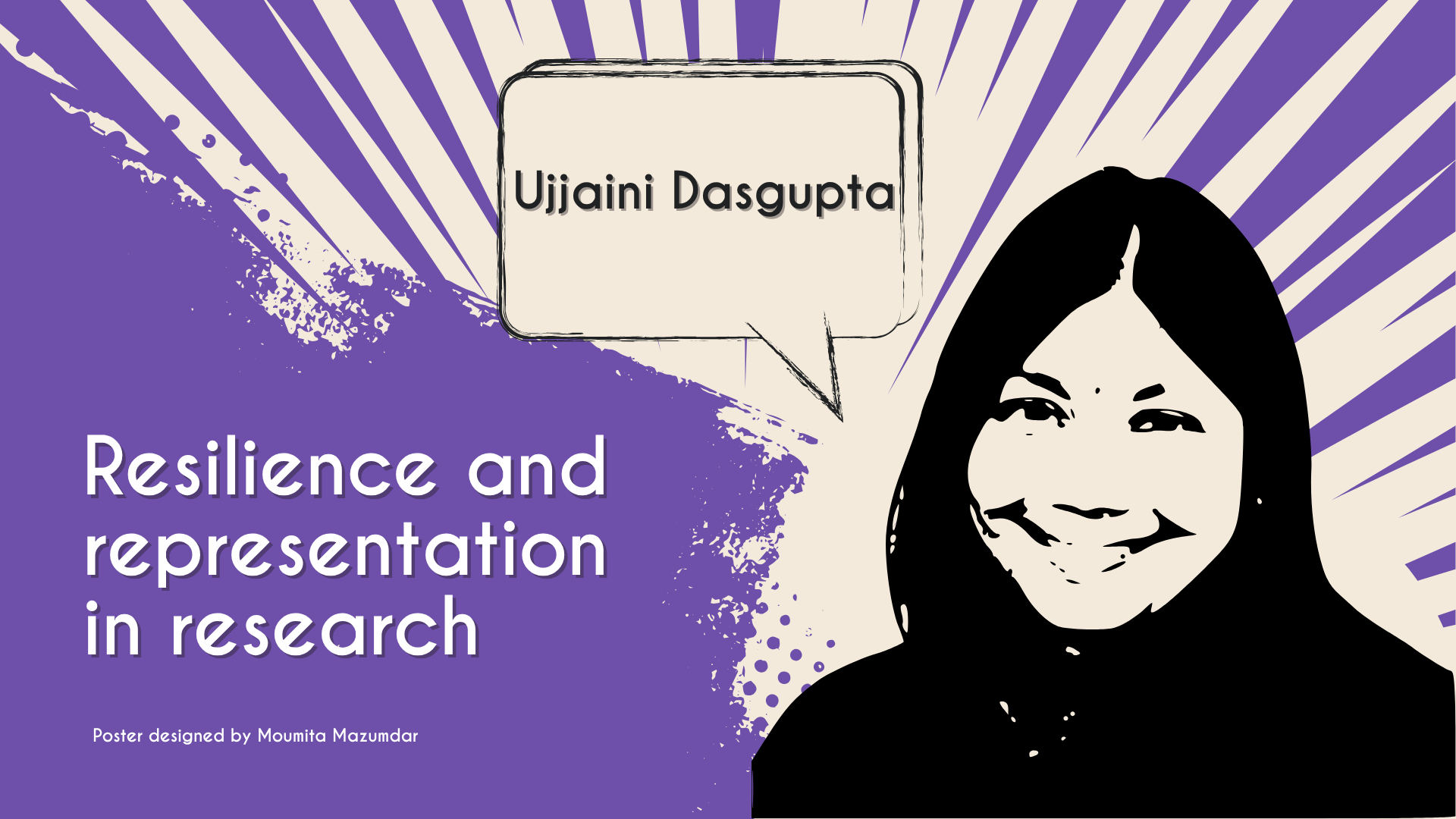
                <p><a href="https://drils.org/team/aarti-sevilimedu/" target="_blank" rel="noreferrer noopener"></a></p><p>Nearly 100 women from diverse scientific institutions across India came together in 2025 to discuss inclusivity, representation, and the advancement of women in academia. IndiaBioscience facilitated the event, after which we spoke with a few founding members of <a href="https://powerbio.in" target="_blank" rel="noreferrer noopener">PowerBio</a>, a collective that initiated the discussions leading up to the main event at IIT Bombay. Through our article series <em>Resilience and Representation in Research</em>, we are sharing insights from these conversations and highlight the meaningful discussions shaping this movement.</p>              ]]></summary><id>tag:indiabioscience.org,2025-09-22:/columns/resilience-and-representation-in-research/resilience-and-representation-in-research-in-conversation-with-ujjaini-dasgupta</id><published>2025-09-22T10:00:00+05:30</published><updated>2025-10-07T09:46:23+05:30</updated><author><name>Moumita Mazumdar</name><uri>https://indiabioscience.org/authors/moumita</uri></author><content type="html"><![CDATA[
                
<p><a href="https://drils.org/team/aarti-sevilimedu/" target="_blank" rel="noreferrer noopener"></a>Nearly 100 women from diverse scientific institutions across India came together in 2025 to discuss inclusivity, representation, and the advancement of women in academia. IndiaBioscience facilitated the event, after which we spoke with a few founding members of <a href="https://powerbio.in" target="_blank" rel="noreferrer noopener">PowerBio</a>, a collective that initiated the discussions leading up to the main event at IIT Bombay. Through our article series <em>Resilience and Representation in Research</em>, we are sharing insights from these conversations and highlight the meaningful discussions shaping this movement.</p><figure><a href="https://indiabioscience.org/columns/resilience-and-representation-in-research/resilience-and-representation-in-research-in-conversation-with-ujjaini-dasgupta"><img
                width="1920"
                height="1080"
                style="max-width: 100%; height: auto"
                src="https://cdn.indiabioscience.org/media/articles/RRR_UD.png"></a></figure><p dir="ltr">Biologist <a href="https://www.ashoka.edu.in/profile/ujjaini-dasgupta/" target="_blank">Ujjaini Dasgupta</a> is the Research Group Leader and a SERB-POWER Fellow at <a href="https://www.linkedin.com/company/ashoka-university/" target="_blank">Ashoka University</a>’s Koita Centre for Digital Health (KCDH-A). She specialises in lipid biology, with a research focus on metabolic reprogramming in cancer cells and the tumour microenvironment. When she first stepped into Presidency College as an undergraduate, she couldn’t have foreseen the winding, uncertain path that would lead her back into academia, this time, as a mentor and independent researcher. Her story is not just about a career in science but about resilience, identity, and carving out space in a system that often leaves little room for pause.</p><p><strong>The spark of science</strong></p><p dir="ltr">During her early years in academia, Ujjaini studied botany, chemistry, and zoology at Presidency College, Kolkata, where she was mentored by Arun K. Mukherjee, a teacher she credits with inspiring her curiosity despite limited resources. <em>“We didn’t have much, but our teachers pushed us to do things with what we had,”</em> she said.</p><p dir="ltr">This foundation was followed by a rigorous Master’s training in biophysics, molecular biology and genetics at Calcutta University, where she was mentored by Chanchal K Dasgupta, AR Thakur, Utpal Chatterjee, and many others who motivated her to take up a career in research. The department, despite its limitations, fostered a culture of critical thinking. “<em>They were giants</em>,” she recalled. “<em>They taught us genetics and molecular biology and sparked the quest in me.”</em></p><p><strong>The PhD years</strong></p><p dir="ltr">Ujjaini continued her academic pursuit at the Department of Plant Molecular Biology, Delhi University South Campus (DUSC) for her PhD, working with Jitendra Khurana.</p><p dir="ltr"><em>“Working with him was transformative,” she said. “He taught me how to think with dexterity, how to question, and how to speak clearly.” </em>While she didn’t fully appreciate his pursuit of perfection at the time, the lessons stayed with her.<em> “Years later, when I started my own lab, I would find myself repeating his words to my students.”</em></p><p dir="ltr"><em>“He was a perfectionist and a perfect gentleman, and what I learned from him still shapes me today,” </em>she added. “<em>At the time, I didn’t always appreciate it, but his insistence on rigour, questioning, and meticulousness stayed with me. When I became a PI, I even told him once, ‘Now I understand why you were so particular.” I remember how happy he was when I sent him the first paper my group published as an independent PI, though it was far from plant biology. </em></p><p dir="ltr">Tragically, Khurana passed away after the COVID-19 pandemic. <em>“I had missed the celebrations for his 60<sup>th</sup> birthday, and I never got to meet him again. The regret that I couldn’t say goodbye still stays with me.”</em></p><p dir="ltr">During the final year of her PhD, Ujjaini also got married.</p><p><strong>Life abroad and coming home</strong></p><p dir="ltr">Ujjaini’s postdoctoral research took her to the <a href="https://www.umass.edu" target="_blank">University of Massachusetts</a>. The shift from the close-knit academic culture of DUSC to a more independent and open system abroad was jarring, but ultimately empowering. Challenges were manifold: she transitioned from studying plants to fruit flies; her first supervisor shut down the lab abruptly; and she had to start afresh in another lab. </p><p dir="ltr">The birth of her daughter during her postdoctoral tenure gave her cherished memories and taught her lessons in balancing work and home. <em>“I changed my field of research, I learned how to manage projects independently, and how to collaborate across disciplines.” </em>By the end of her post-doctoral tenure, her interest in lipids as signalling molecules had been ignited so strongly that she knew it would stay with her for a lifetime. </p><p dir="ltr">“<em>Even though the experience was rewarding and my family stood by me, certain unexpected events during this tenure shook me to the core. When I came back, the dream of setting up my own lab in India was no longer there,” </em>she said with a sigh!</p><p><strong>An unexpected pause</strong></p><p dir="ltr">In the following years, Ujjaini moved away from academic research. She worked in scientific administration and infrastructure support, first at Labindia Lifesciences Pvt. Ltd. and Delhi University, and later at the Advanced Technology Platform Center at the <a href="https://www.rcb.res.in" target="_blank">Regional Centre for Biotechnology, a Department of Biotechnology</a> initiative at the NCR Biocluster, Faridabad. </p><p dir="ltr"><em>“I was away from academics for six years. But I never stopped reading and following journals to stay abreast with contemporary literature. Actually, my love for science stayed throughout,”</em> she reflected. </p><p dir="ltr">Invigorating scientific discussions with faculty friends rekindled her passion. “<em>A particularly thought-provoking discussion one evening with someone as impressionable as Satyajit Rath sealed my decision! My ever-supportive family, along with the unshakable confidence and mentorship from seniors and friends like Sagar Sengupta, Vinay Nandicoori, and Avinash Bajaj, helped me stick to one of the toughest decisions of my life: to get back to science.”</em></p><p dir="ltr">In retrospect, this quiet persistence, reading, thinking, talking, staying connected, and relying on supportive friends, became the thread that tied her back to a scientific career.</p><p dir="ltr">“<em>But that return was not easy! For a while, I didn’t know how to come back,”</em> she admitted<em>.</em><br></p><p><strong>The struggle behind the return</strong></p><p dir="ltr">It wasn’t merely a career break. It was a break without publications, followed by the struggle to return to mainstream science after six years. She had left her comfort zone and was now competing with fresh postdocs with strong publication records. </p><p dir="ltr"><em>“I was neither a fresh postdoc nor someone with PI experience, and therefore I wasn’t even shortlisted anywhere I applied,” she said.</em></p><p dir="ltr">Yet she refused to give up. <em>“Luckily, I was constantly reminded, ‘You haven’t given up, you have just paused. You have to keep trying.”</em></p><p dir="ltr">Eventually, she found an opportunity at Amity University Haryana, where Director Rajendra Prasad gave her a second chance. Along with teaching, she began her work as an independent PI, building her lab from scratch and depending largely on extramural grants. </p><p dir="ltr"><em>“It was hard, getting grants, equipment, and students, especially since I had once again changed my area of research. My first early career grant was rejected, as were many others, but I kept writing. Finally, after a year, I got two grants back-to-back!” she recalled.</em></p><p dir="ltr"><em>She added, “Naturally, I sometimes compared myself with my peers who became faculty members earlier, ran labs, published papers on time, while I was still trying to beat the odds.</em><em>But slowly, it came together. The incredible joy of doing the first experiment with the students, running the first gel in the lab, and publishing the first paper after three rejections and rebuttals from the same journal made it all worthwhile!”</em></p><p dir="ltr">What carried her through was the discipline and perspective she had gained over the years. <em>“Having experienced the system from the outside gave me a different kind of empathy,”</em> she said. “<em>I now try to ensure no one in my lab feels isolated, the way I once did.”</em></p><p><strong>Building a lab</strong></p><p>Ujjaini believes that a research program becomes successful only when it is interdisciplinary and that it must be built brick by brick. Above all, she emphasises that the real pillars of strength are her multifaceted students and fantastic collaborators who make it all possible.</p><p dir="ltr">“There is no shortcut to success,” she insists, adding that mentorship is more than academic guidance. <em>“I’ve had students go through mental health issues and personal crises. I try to be present, not just as a supervisor, but as someone who listens.”</em></p><p dir="ltr">Her lab, she maintains, is a space where respect is non-negotiable: <em>“Everyone has to help and respect each other.” </em>She is particularly committed to supporting women in science. <em>“I didn’t have many role models when I started. If I can be that for someone else now, then that’s a legacy worth leaving.”</em></p><p dir="ltr">After ten years at Amity University, Ujjaini recently moved to the Trivedi School of Biosciences, Ashoka University, where she is once again building her lab from scratch, with the same zeal and excitement.</p><p><strong>In pursuit of change</strong></p><p>For Ujjaini, <strong>PowerBio</strong> has been an incredibly special experience. What began as a small group of strong, like-minded individuals sharing personal stories evolved into a supportive collective, one that encouraged reflection, connection, change and the voicing of long-unspoken truths.</p><blockquote class="pull-quote"><em>We talked about women being simply recognised as individuals, about fairness, inclusivity, bias, the invisible labour women often do in academic spaces, mentorship, and what it means to navigate science while juggling multiple roles. It wasn’t just about venting or voicing opinions. It became a safe space to think constructively about how we could make things better for many of us and those younger than us.”</em></blockquote><p>The experience underscored for her the importance of empathy in leadership. It has made her more intentional in how she mentors, shapes the culture of her lab, and shows up for her students and mentees; not just as a scientist, but as a human being who understands what it means to struggle, to grow and not give up.</p><p><strong>Advice for others </strong></p><p dir="ltr">To those who have had to pause their careers, her message is clear and urgent:</p><p dir="ltr"><em>“Don’t give up. Science is a long road. A few years away doesn’t mean the journey is over. Stay connected, even if passively, and keep your enthusiasm intact. Read, talk, think, reach out, ask for help and work hard.”</em></p><p dir="ltr">Ujjaini’s voice softened when she added, <em>“You’ll be surprised - out of all the roadblocks, there will be people willing to support you if they know you’re serious about coming back.”</em></p><p dir="ltr">And finally, the advice she lives by:</p><blockquote dir="ltr" class="pull-quote"><em>You can’t pause a dream forever. Every day is brand new. At some point, you have to restart and pursue.”</em><br></blockquote>
              ]]></content><category term="other" label="Other" /><category term="women-in-science" label="Women in Science" /><category term="personal-experience" label="Personal Experience" /><category term="advice" label="Advice" /></entry><entry><title>Resilience and representation in research: In conversation with Indrani Talukdar</title><link
                  rel="alternate"
                  href="https://indiabioscience.org/columns/resilience-and-representation-in-research/resilience-and-representation-in-research-in-conversation-with-indrani-talukdar"
                  type="text/html"
                  /><summary type="html"><![CDATA[
                <p><a href="https://drils.org/team/aarti-sevilimedu/" target="_blank" rel="noreferrer noopener"></a>Close to 100 women from various science organisations across India met at an event in 2025 to deliberate on issues of inclusivity, representation and the success of women scientists in academia. IndiaBioscience facilitated the event, after which we spoke with a few founding members of <a href="https://powerbio.in" target="_blank" rel="noreferrer noopener">PowerBio</a>, a collective that initiated the discussions leading up to the main event at IIT Bombay. Through a series of articles, we will share conversations with these members to better understand the collective and the important dialogues it is fostering.<br /></p>              ]]></summary><id>tag:indiabioscience.org,2025-09-01:/columns/resilience-and-representation-in-research/resilience-and-representation-in-research-in-conversation-with-indrani-talukdar</id><published>2025-09-01T10:00:00+05:30</published><updated>2025-10-07T09:46:57+05:30</updated><author><name>Moumita Mazumdar</name><uri>https://indiabioscience.org/authors/moumita</uri></author><content type="html"><![CDATA[
                
<p><a href="https://drils.org/team/aarti-sevilimedu/" target="_blank" rel="noreferrer noopener"></a>Close to 100 women from various science organisations across India met at an event in 2025 to deliberate on issues of inclusivity, representation and the success of women scientists in academia. IndiaBioscience facilitated the event, after which we spoke with a few founding members of <a href="https://powerbio.in" target="_blank" rel="noreferrer noopener"><strong>PowerBio</strong></a>, a collective that initiated the discussions leading up to the main event at IIT Bombay. Through a series of articles, we will share conversations with these members to better understand the collective and the important dialogues it is fostering.</p><figure><a href="https://indiabioscience.org/columns/resilience-and-representation-in-research/resilience-and-representation-in-research-in-conversation-with-indrani-talukdar"><img
                width="1706"
                height="960"
                style="max-width: 100%; height: auto"
                src="https://cdn.indiabioscience.org/media/articles/Screenshot-2025-06-29-at-7.22.46-PM.png"></a></figure><p dir="ltr"><a href="https://www.bits-pilani.ac.in/goa/indrani-talukdar/" target="_blank"><strong>Indrani Talukdar</strong></a>, Associate Professor at the Birla Institute of Technology and Science - Pilani, Goa, has held fast to science and mentorship, despite being challenged at almost every step. Driven by a resolve to create space for the next generation of scientists, Indrani’s work in science spans across borders, inspiring her to tackle systemic obstacles and the challenges of being a single parent. She is also a member of the PowerBio collective and our next interviewee in this series.</p><p><strong>Returning to India, unprepared but determined</strong></p><p dir="ltr">After a Master's Degree in Biochemistry from Calcutta University, Indrani pursued a PhD at West Virginia University. Two postdoctoral fellowships followed one at the University of California, San Diego, and then at Sanford Burnham Research Institute, where her research interests included studying RNA biology, stem cell biogenesis, and metabolic syndromes. <br></p><p dir="ltr">Indrani returned to India in 2012 under unusual circumstances in her personal life, moving back with a very young child and no job. This was sudden, and the transition was not easy. Despite having an excellent academic record, she struggled for nearly a year to find a position.<br></p><p dir="ltr"><em>"I had no professional network in India. I didn’t do my PhD here, and it really matters to know people and make connections. The system here is close-knit."</em></p><p dir="ltr">She finally secured a faculty position in 2013. But the following ten years were anything but smooth.<br></p><p dir="ltr"><strong>Managing challenging work environments</strong></p><p dir="ltr">As a single parent and early-career female faculty member, she found herself facing situations that emanated from personal biases of her colleagues. This impacted the time she could give her work and the attention that her child needed at a young age. The lack of professional support was compounded with undue attention to her personal life. Colleagues would ask very intrusive personal questions related to her marital status and her mental health, and few would understand the importance of being sensitive or empathetic.<br></p><p dir="ltr"><em>“I struggled to take 8 am classes and attend meetings and workshops that ran late into the evening, clashing with my responsibilities as a single parent. Despite having access to a daycare, its limited hours often meant my child was left unattended. There were instances where I returned to find my child standing outside alone. I had to write to the administration explaining my limitations. Even though some solution was given, for example, switching the class timings in the next semester, I was accused of seeking special favours, and hardly any empathy was shown."</em><br></p><p dir="ltr"></p><p dir="ltr"><strong>Professional struggles and isolation</strong></p><p dir="ltr">Despite being awarded an early-career research grant, she soon discovered that implementing it would be nearly impossible due to limited infrastructure and support. With only one student for the first six years, research output remained low, further impacting her evaluations.</p><p dir="ltr"><em>"I wish I had a mentor. Someone to say, don’t take up a complex project without sophisticated infrastructure to support the work. Write something feasible first."</em></p><p dir="ltr">Indrani’s first student, also a mother, faced challenges that mirrored her own, including maternity leave and family relocation. This greatly affected the productivity of her lab (along with everything else), and reflected in the performance review.</p><p dir="ltr"><em>"My promotion was judged by metrics, not by context. It took me 10 years to be promoted."</em></p><p dir="ltr">These cumulative stresses led her into depression for which she eventually sought therapy and began taking medication to recover.<br></p><p dir="ltr"><strong>Surviving and thriving</strong></p><blockquote dir="ltr" class="pull-quote"><em><p dir="ltr"><em>I don’t want my story to be about pity. I want it to be about survival. I stayed. I didn’t leave science. I built something with the help of science."</em></p></em></blockquote><p dir="ltr">Come 2017, and things started turning around. Among a few female colleagues on her campus, Indrani found a support group. She became popular among students as a teacher, and started to build meaningful collaborations for her research - both gave her a boost. </p><p dir="ltr">Indrani leads a research lab with multiple students and projects. Though modest in scale, it is a space she built from scratch and she feels supportive environments for young scholars, especially women, have a significant role to play.<br></p><p><em>"I love mentoring students. For undergrads, I relate to them like my own teenage child. For PhD students, I provide clear boundaries while remaining open. I tell them, I won’t poke into your life, but I’m here if you need me."</em></p><p dir="ltr">Indrani’s institute has also made significant progress. She believes the younger generation struggling under a similar situation would get much more support today. The administration's outlook has evolved over time, but there is a long way to go.<br></p><p dir="ltr"><strong>Why PowerBio matters</strong></p><p dir="ltr"><em>"We see a drop in the number of women as we go up the ladder. The reason isn’t lack of merit. It’s systemic. And it’s time we talk about it."</em></p><p dir="ltr">Indrani sees PowerBio as a critical platform for women in science as it will provide for women a safe space to share their challenges, talk about strategies that work, and support each other. It also helps identify blind spots for policymaking and institutional culture.<br></p><p dir="ltr"><em>"My journey is part of the broader struggle of 50% of the population (i.e., women). If institutions ignore that, how can they ever understand the struggles of smaller marginalised groups?"</em><br></p><p dir="ltr"><strong>Towards change</strong></p><p dir="ltr">PowerBio isn’t just about storytelling. It’s about shaping narratives and policies.</p><blockquote dir="ltr" class="pull-quote"><em>You’re told you started at the same time as everyone else, so your finish line should be the same. But our paths are not the same. Until that’s acknowledged, equity remains a myth."</em></blockquote><p dir="ltr">Indrani hopes that speaking up inspires others, demonstrating that science has enabled her to live with dignity and independence.</p><blockquote dir="ltr" class="pull-quote"><em>I survived. I stayed. And I built a space for myself and others. That’s the story I want to tell."</em><br></blockquote>
              ]]></content><category term="other" label="Other" /><category term="women-in-science" label="Women in Science" /><category term="personal-experience" label="Personal Experience" /><category term="advice" label="Advice" /></entry><entry><title>Resilience and representation in research: In conversation with Radhika Nair</title><link
                  rel="alternate"
                  href="https://indiabioscience.org/columns/resilience-and-representation-in-research/resilience-and-representation-in-research---voices-from-the-powerbio-collective-in-conversation-with-radhika-nair"
                  type="text/html"
                  /><summary type="html"><![CDATA[
                <p><a href="https://drils.org/team/aarti-sevilimedu/" target="_blank" rel="noreferrer noopener"></a>Close to 100 women from various science organisations across India met at an event in 2025 to deliberate on issues of inclusivity, representation and the success of women scientists in academia. IndiaBioscience facilitated the event, after which we spoke with a few founding members of <a href="https://powerbio.in" target="_blank" rel="noreferrer noopener"><strong>PowerBio</strong></a>, a collective that initiated the discussions leading up to the main event at IIT Bombay. Through a series of articles, we will share conversations with these members to better understand the collective and the important dialogues it is fostering.<br /></p>              ]]></summary><id>tag:indiabioscience.org,2025-07-18:/columns/resilience-and-representation-in-research/resilience-and-representation-in-research---voices-from-the-powerbio-collective-in-conversation-with-radhika-nair</id><published>2025-07-18T13:00:00+05:30</published><updated>2025-10-14T08:53:26+05:30</updated><author><name>Siuli Mitra</name><uri>https://indiabioscience.org/authors/PRYwLlb3kA1gO0Q</uri></author><content type="html"><![CDATA[
                
<p><a href="https://drils.org/team/aarti-sevilimedu/" target="_blank" rel="noreferrer noopener"></a><em>Close to 100 women from various science organisations across India met at an event in 2025 to deliberate on issues of inclusivity, representation and the success of women scientists in academia. IndiaBioscience facilitated the event, after which we spoke with a few founding members of </em><a href="https://powerbio.in/" target="_blank" rel="noreferrer noopener"><strong><em>PowerBio</em></strong></a><em>, a collective that initiated the discussions leading up to the main event at IIT Bombay. Through a series of articles, we will share conversations with these members to better understand the collective and the important dialogues it is fostering.</em></p><figure><a href="https://indiabioscience.org/columns/resilience-and-representation-in-research/resilience-and-representation-in-research---voices-from-the-powerbio-collective-in-conversation-with-radhika-nair"><img
                width="1920"
                height="1080"
                style="max-width: 100%; height: auto"
                src="https://cdn.indiabioscience.org/media/articles/RRR_RN.png"></a></figure><p dir="ltr"><a href="https://www.linkedin.com/in/radhika-nair-bb50279/?originalSubdomain=in" target="_blank"></a><strong><a href="https://www.linkedin.com/in/radhika-nair-bb50279/?originalSubdomain=in" target="_blank"></a></strong><a href="http://www.chg.res.in/www.chg.res.in/RadhikaNair.html" target="_blank"></a><strong><a href="http://www.chg.res.in/www.chg.res.in/RadhikaNair.html" target="_blank">Radhika Nair</a></strong>, who leads a team of young women researchers at the Bengaluru-based <a href="http://www.chg.res.in" target="_blank">Centre for Human Genetics</a>, studies the molecular mediators of end-stage cancer or metastasis, an endeavour complicated by the inherent heterogeneity within tumours. Her team investigates the intrinsic cellular mechanisms and the external environment influencing tumour progression to build a more comprehensive understanding. In our conversation with Radhika, what stood out was her sense of collegiality and shared purpose, both in research and in advocating for inclusive spaces for women in science.</p><p dir="ltr"><strong>Building meaningful collaborations in India</strong></p><p dir="ltr">There are multiple challenges to carrying out translational science in India. Building meaningful interdisciplinary collaborations is still relatively hard to develop in India, and warrants a deeper look at both challenges and enabling factors that have helped build some of them. Firstly, Radhika feels that a synergistic relationship between a hospital setting and a research laboratory is critical, and added that very few cohorts are built through such projects in India. An example of the kind of collaborative effort required by teams involves <a href="https://sjri.res.in/molecular/keypersonnel/Dr.%20Jyothi%20S%20Prabhu" target="_blank">Jyoti S Prabhu</a> [St. John’s Research Institute (SJRI)] and <a href="https://be.iisc.ac.in/~mkjolly/mohit/" target="_blank">Mohit Kumar Jolly</a> [Indian Institute of Science, Bengaluru (IISc)], who bring in the clinical and bioinformatics specialisation for Radhika through multiple short projects. Looking at cancer through a bioengineering perspective through work with <a href="https://www.rgcb.res.in/mahendran" target="_blank">Mahendran KR</a> [Rajiv Gandhi Centre for Biotechnology (RGCB)] has given her a novel way of viewing peptide-based therapies. Secondly, she does think that “a permanent position,” unfortunately, is a deciding factor for a collaboration. Third, there is a mismatch of priorities between the clinician and the researcher. For example, while a biologist might insist on preserving the tissue’s integrity, a clinician will put attending to their patient first. It is necessary to have policies formulated around these problems to ensure collaborations are sustained and evolve at multiple levels, including individual and institutional.</p><p dir="ltr"><strong>Finding inspiration (and better answers) beyond the lab</strong></p><p dir="ltr">As a biologist, Radhika is driven by scientific questions—but for her, this knowledge must translate into reducing the 80% mortality associated with metastasis. What has helped partnerships succeed is a deeper understanding of the challenges clinicians face when collaborating with researchers. In a partnership, the approaches to asking and answering questions need to be complementary. She also recognises the realities of clinical work: clinicians must prioritise patient care, which means they often lack the time or resources to pursue research in parallel. There are also logistical and ethical challenges in accessing biological samples from patients.</p><p dir="ltr">Despite these hurdles, she believes these challenges are valuable lessons because they shift a biologist’s perspective toward patient-centred research. That’s where interdisciplinary collaboration becomes crucial. “<em>I truly believe that ‘the best biologists are not ‘biologists’, but they are the ones who come from other fields because they see things so differently.</em>”</p><p dir="ltr">Here’s how she articulated her view of interdisciplinary work: <strong><em>“</em></strong><em>No single method, procedure, or experiment is going to be perfect ever—each has its limitations. </em><em>For example, I cannot limit my work to cell culture in my research. There are advantages to this system, because I can manipulate it very fast, but there are disadvantages too. It's not real and doesn’t recapitulate the complexity of the human system. Now, when using mouse models, the advantage you have is that you have a live body and immune system, but it again completely doesn’t represent a human body. Patient samples are perfect, but you can't manipulate a human being. So, I think every model system has strengths and caveats, and you have to use multiple model systems to get a complete picture. This works for collaborations too- getting collaborators from different domains allows me to look at problems in novel ways.”</em><br></p><p dir="ltr"><strong>Lived experiences in research</strong></p><p dir="ltr">During her postdoctoral stint abroad, Radhika observed how patients are included in research teams via counselling and representation on grant review boards. It reinforced for her the need to embed empathy into training for researchers, cancer care professionals, and counsellors. She recalled a particularly powerful moment for her at a global cancer conference when a woman stood up and asked, ‘When is this drug coming out? How will it help me? What’s the timeline? I’m metastatic, I’m stage four, I am living from scan to scan, week to week.’<em> “Everyone just went silent. That was the real face of the disease, not us sitting and tinkering in the lab.”</em> Radhika feels that research becomes deeply personal after witnessing the disease up close, as she did while caregiving for a loved one - <em>“Seeing radiation take its toll, watching chemotherapy run into a blood vessel and turn it pitch black, multiple surgeries- gave me a completely different insight into the disease. You don’t get that from a lab. It changes how you think.”</em></p><p dir="ltr"><strong>Women in STEM</strong></p><p dir="ltr">Following a privileged upbringing by her supportive parents, life took a harsh turn for Radhika in her 20s, with domestic violence rearing its ugly head during a career break. Going back to her passion for science gave her purpose and financial independence, even as she endured abuse during the time she was pursuing postdoctoral research at Cambridge.</p><p dir="ltr">She recalls<em>, “I was often asked why I didn’t come back by 35, it was too late to come back by 38. How could I explain that I lost years of my life fighting for my child, my life and safety?”</em></p><p dir="ltr">After eight years, she escaped with the help of her son, started afresh, and returned to India to find limited support within the ageist scientific system. Despite the odds, she has secured a faculty position. She continues to push forward, emphasising that although the system is faulty, science provided her with the power, dignity and integrity to survive and flourish as a single mother solely responsible for a young child's financial and emotional security.</p><p dir="ltr">Radhika’s connection with PowerBio is also profoundly personal. She was fortunate to have a supportive mentor in <a href="https://www.garvan.org.au/people/researchers/alexander-swarbrick" target="_blank">Alexander Swarbrick</a> (Garvan Institute of Medical Research), friends at work and home in Australia, where the healing finally happened. <em>“Until I made the decision to leave an abusive situation, I had to survive and work as if everything was normal. There was no safe space for me. I had to show up like nothing had happened.”</em> Her story underscores the need for collectives like PowerBio, not just for policy change, but for recognition, solidarity, and healing.</p><p dir="ltr">Still, the core issues remain.<br></p><blockquote dir="ltr" class="pull-quote"><strong><em>Our nurturing, reproductive, and productive work years clash. I wish we lived in a world where women could walk freely and not be judged. But that’s not the world we live in. Sometimes, I feel the conversation gets lost here. Bravery is important. But so is practicality. We have to work within the society we live in.”</em></strong></blockquote><p dir="ltr"><strong><strong>Small steps forward</strong></strong></p><p dir="ltr">Radhika believes that<em> “India as a society has a long way to go. Indian science is a reflection of the deep biases held against women in general, and especially women who have a different path but have persevered. <em>I am proud to be a survivor, thrived, and have made my way in science in my own manner, however circuitous the journey may have been- meeting many incredible women and men along the way who have empowered me.<strong></strong></em>I hope my opening up will show others that, however difficult- even if the research ecosystem is archaic and deeply flawed- science is not biased, and it has helped me to survive and live my life with dignity.”</em></p><p dir="ltr">What began as a group of seven women sharing their thoughts on inclusivity in March 2024 is now a 28-member collective, <a href="https://powerbio.in/" rel="noopener" target="_blank"><strong>PowerBio</strong></a>. The aim? To create a safe space for women to speak openly. <em>“Most women just want to articulate what they’re going through. They want to ask, ‘Am I alone in this?’ Because you're made to feel weak or like you're whining. But often, you're genuinely struggling—and the system expects you to keep quiet and cope.”</em></p><p dir="ltr">Conversations range from how to respond to interview questions about marital status to navigating funding, challenges faced by single women in science, and workplace sexual harassment.<br></p><p dir="ltr"></p><blockquote dir="ltr" class="pull-quote"><strong><p dir="ltr"><strong><em><em><em>PowerBio is evolving. I joined because I felt that, individually, I could only do so much. A collective, on the other hand, has more agency and critical mass to effect change.</em></em>”</em></strong><br></p></strong></blockquote>
              ]]></content><category term="other" label="Other" /><category term="women-in-science" label="Women in Science" /><category term="personal-experience" label="Personal Experience" /><category term="advice" label="Advice" /></entry></feed>