Two early-career neuroscientists from India, Poulomi Banerjee and Proloy Das, have been awarded the prestigious 2025 International Brain Research Organization (IBRO) Rising Star Award, in recognition of their research contributions and potential for the future of neuroscience. While they have taken different paths in their scientific journeys, they share a common goal: creating a research space that fills a significant gap in their field and enhances India’s position in the neurosciences.

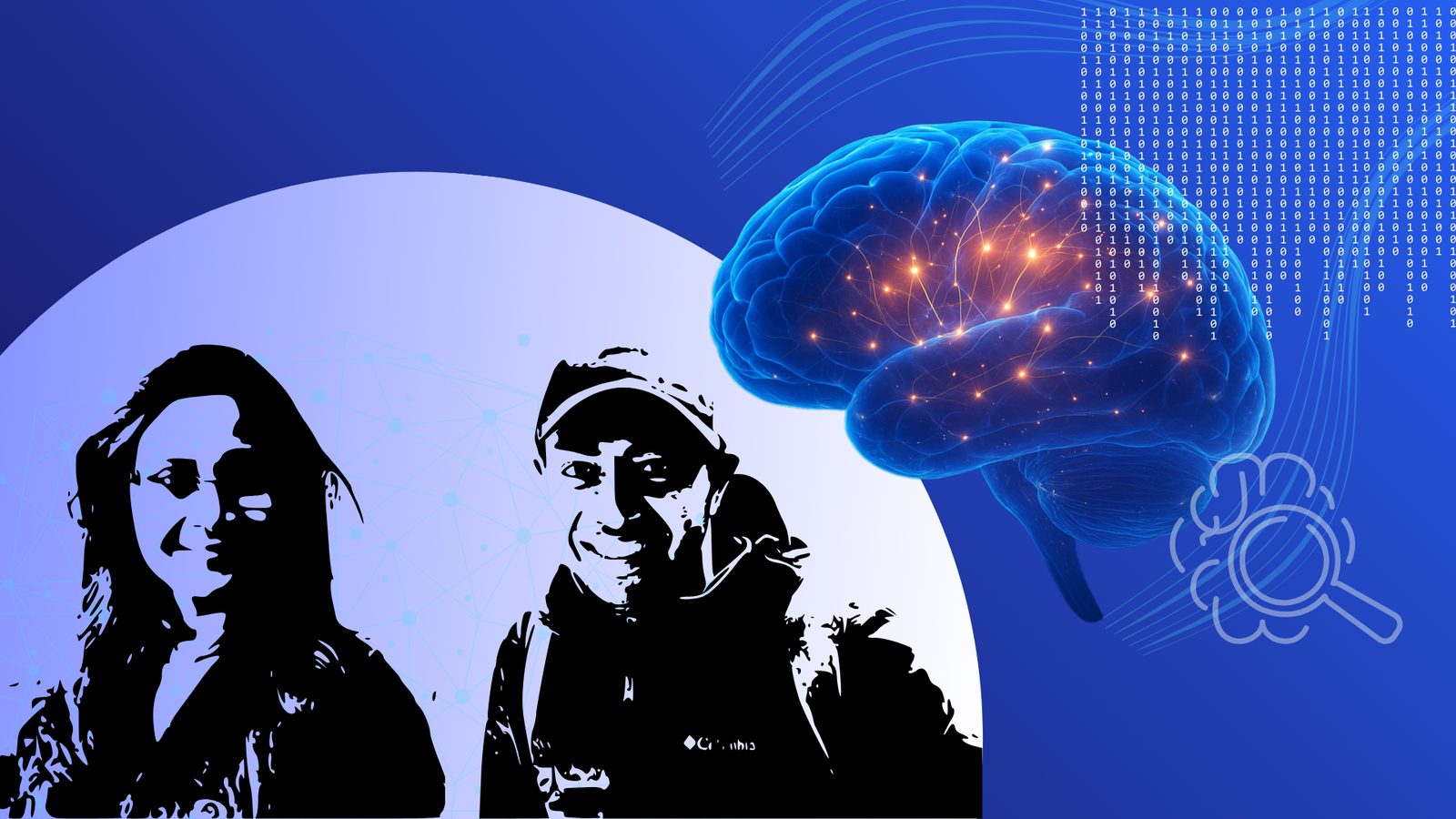
Announced annually, the IBRO Rising Star award is given to early-career neuroscientists displaying exceptional promise for advancing the field of brain research. The goal is to support researchers who are at a challenging time in their career and help them to establish independent laboratories to undertake innovative, high-risk projects that will benefit the field. “IBRO is proud to support early-career neuroscientists in their transition from postdoc to PI, and to be part of their continued journey in advancing global neuroscience. Our heartfelt congratulations to all Rising Stars Awardees!”, Rebecca Hadid, Director of Grants and Programs, IBRO, told IndiaBioscience.
The award provides financial resources for building infrastructure, purchasing equipment, and initiating new research lines. Additionally, it offers congenital benefits, including enhanced international visibility and the opportunity to collaborate with the global neuroscience community, thereby avoiding isolation within their countries or institutions.
An opportunity for a new chapter
Every award brings in distinction, but for young scientists building their first labs, it can also mark the turning of a page. For Poulomi and Proloy, this support comes just as they prepare to anchor their research journeys back in India.
For Poulomi, the award could not have come at a more pivotal time. After eight years in the international space as a postdoctoral researcher in the UK Dementia Research Institute (UK DRI) at University of Edinburgh, Poulomi returned to India to start her lab at the Scientific Knowledge for Ageing and Neurological Ailments Research Trust (SKAN RT) in Bengaluru. “As a woman scientist returning to India after spending eight years abroad, this award feels symbolic. It supports my scientific vision while encouraging inclusivity in the neuroscience ecosystem”, Poulomi reflected.
The funding from the award, she mentions, will help her to “initiate high-risk, high-reward projects, build a strong research team, and attract collaborations and matched funding”. Building a lab from scratch is no easy task, and for her, this recognition gives both resources and a profile in India’s expanding neuroscience research community.
Meanwhile, Proloy joined the BRIC-National Brain Research Centre (NBRC), Manesar, in 2024 and is setting up what he calls his “baby lab”, waiting for the very first MSc and PhD students to join this year. “NBRC already has some of the wet-lab facilities I’ll need, but I was hoping to buy workstations and computers so my lab is fully ready before the first batch arrives. This award will help with that”.
For Proloy, the award is more than just funding; it is also a platform to communicate about his work with the broader research community. “As with any new lab, I need some way to reach out to the wider research community and publicise our work. This award is the perfect mouthpiece for that purpose”, he explains.
Addressing big issues with new perspectives
Poulomi’s research targets the neuroimmune processes underlying neurological disorders, an interest honed during her time at the UK DRI. “I explored how inflammation contributes to neurodegeneration and neurodevelopmental disorders using patient-derived pluripotent stem cells, blood macrophages, and post-mortem brain tissue”, she explained, mentioning work she published in Science Advances (2023), Journal of Pathology (2021), and Stem Cell Research (2020).
Now, at SKAN RT, Poulomi is keen to explore the cellular and molecular basis of early-onset Parkinson’s disease (EOPD) among Indian patients. This is critical, as Indian EOPD patients are underrepresented in large-scale studies, which are predominantly based on Western cohorts. “Using patient iPSC (induced Pluripotent Stem Cells)-derived brain organoids and other human experimental models, I hope to uncover population-specific disease mechanisms and biomarkers. This could open possibilities for targeted therapies suited to Indian genetic backgrounds”, she added.
With a background in electrical engineering and signal processing, Proloy approaches human neuroscience from a different perspective, tackling the challenge of analysing complex data. “One of the primary challenges is the lack of efficient tools for analysing data generated by neuroscience studies. Traditionally, neuroscientists borrow methods from biostatisticians, but human neuroscience quickly becomes too complicated to rely on those concepts alone, especially when correlating neurophysiological time series with behavioural data”, Proloy explained. To address this gap, he is developing new analytical techniques and modelling paradigms to “summarise long neurophysiological recordings in ways that make it easier for experimentalists to make sense of their data”, he added.
Dealing with a new ecosystem back home
Transitioning to being an independent faculty has its own challenges. In commentary (1, 2, 3, 4) on the steep learning curve of adjusting to a new research ecosystem, Poulomi says, “Setting up a lab from scratch involves navigating logistical and administrative hurdles while also defining a clear scientific vision”.
“Different countries have different infrastructures, funding landscapes, and collaborative ecosystems, and adapting to that is an ongoing process”.
For Proloy, the challenge was being re-acquainted with India’s systems of academia and funding after training abroad. “I had very little idea about the PhD admissions, NET exams, or even how grants are announced here”, he recalls. “Unlike the National Institute of Health (NIH) or National Science Foundation (NSF) in the US, funding calls in India often appear out of nowhere with about 30 days’ notice. It’s not disastrous, but it can disrupt your workflow in the beginning”.
Proloy adds that early-career scientists working in government institutions can also experience a lack of institutional support. “You just have to work a bit harder to be equally productive”, he notes.
The neuroscience landscape in India
Both Poulomi and Proloy feel that the ecosystem for neuroscience in India is growing, but still has many underexplored avenues. Poulomi believes they have seen “impressive progress in basic neuroscience”, but notes the need for stronger translational research and human-centric disease modelling. “There’s a real opportunity to integrate patient-derived models and multi-omics approaches”, she says, “especially for studying disorders in diverse populations”.
Proloy points to a deeper structural issue.
“We misinterpret the ‘Make in India’ drive, focusing too much on replicating existing products rather than creating original innovations”, he says.
Without more investment in basic science, it’s hard to produce truly global breakthroughs. But neuroscience offers enormous opportunities in diagnostics, monitoring, and drug development if we can align research with that vision”.
Advice to the future generation
Poulomi recommends budding neuroscientists to nurture their curiosity and promote interdisciplinary approaches that connect research to real-world questions. “We’re in an exciting era”, she says.
With AI, data science, and multi-omics, we are now better equipped to unravel the complexities of neurological disorders like never before. Build strong foundations, don’t be afraid to try new model systems, and believe great science can happen anywhere with the right mindset and support”.
Proloy offers practical advice — “Don’t be afraid to get your hands dirty with fieldwork”.
Treat it like a blue-collar job, the hard work pays off. And stay up to date with trends. You never know what you’ll stumble upon, so it’s always better to be prepared than to be sorry”.
Poulomi Banerjee and Proloy Das, in their own unique ways, are laying the groundwork for impactful neuroscience research in India. Their paths represent resilience, adaptivity, and vision; these qualities, combined with scientific knowledge, can create change not just in their careers, but in the landscape of neuroscience research in the country.