Maternal gut microbes may influence fetal brain development through metabolites. While human evidence remains limited, India’s fiber-rich diets and fermented foods may offer unique research opportunities to link maternal microbiomes with child neurodevelopment and explore culturally tailored dietary or probiotic interventions.

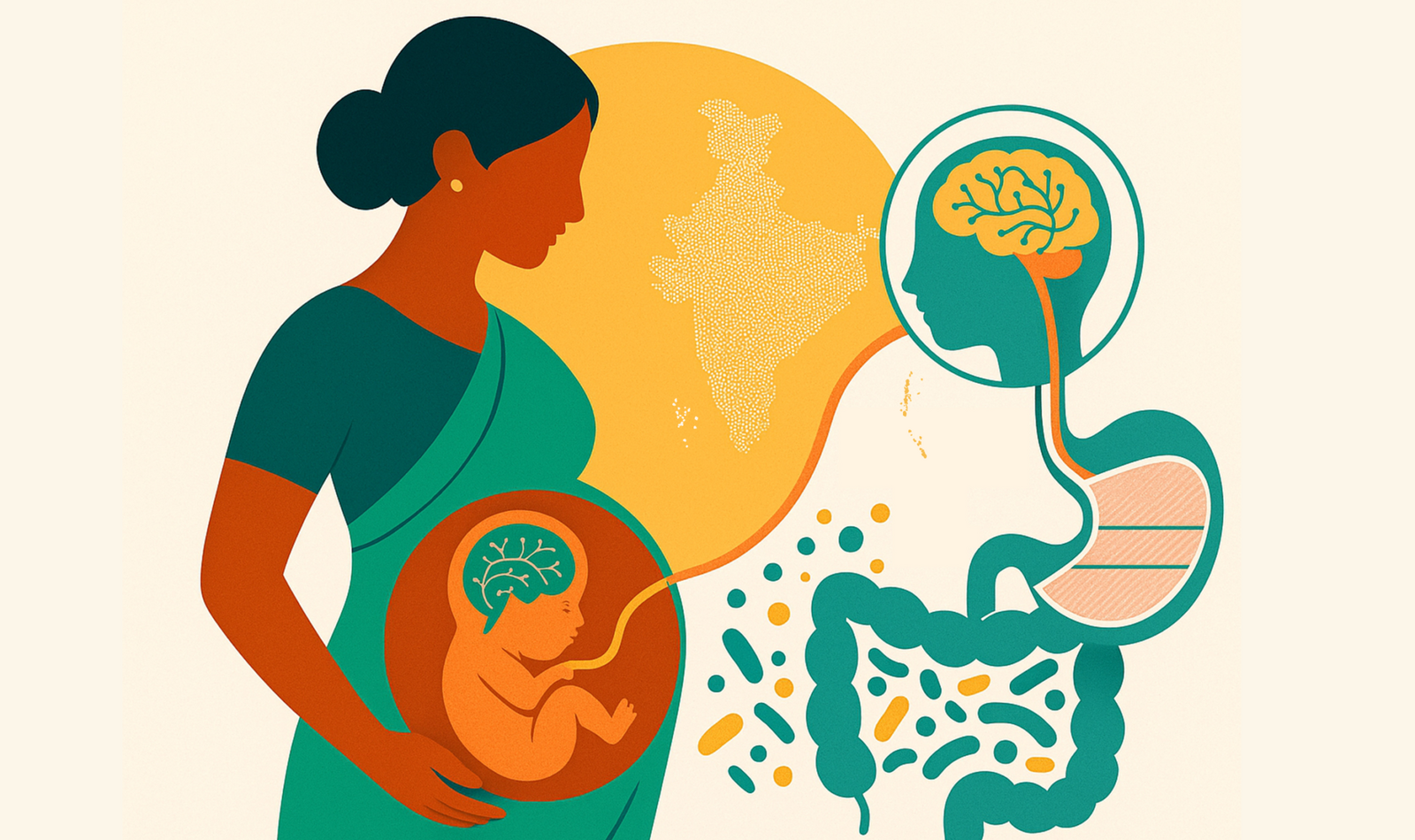
A quiet conversation between microbes and neurons
When we picture pregnancy, we usually think of genetics, hormones, and the mother’s diet. However, recent research points to another surprising player: the bacteria living in a mother’s body.
Pregnancy is now seen as a critical window when a mother’s gut bacteria can shape their baby’s brain. Laboratory studies in mice show that pregnant females without a normal gut microbiome gave birth to offspring with altered brain genes, fewer immune cells, and weaker nerve connections. But when mothers were given back key bacterial products, brain development was restored. Similarly, adding a single probiotic strain (Bifidobacterium breve) boosted nutrient flow and brain growth signals in mouse fetuses.
So how does this work? These animal findings (1, 2) highlight likely mechanisms. Some bacterial products, especially short-chain fatty acids (SCFAs), cross the placenta and help calm inflammation, creating a safer immune environment for the developing brain.
Others, made from amino acids like tryptophan, may travel in the blood and act directly on neurons or brain immune cells. In mice, together, these signals seem to boost the growth of thalamocortical axons (nerve fibers critical for sensory processing).
However, much remains speculative in humans. To date, no one has credibly found live gut bacteria in the womb; most experts think microbes do not colonise the fetus until birth. Instead, maternal microbes likely “signal” through their metabolic byproducts. Human research so far is largely observational. An Australian study found that higher diversity of gut bacteria in third-trimester mothers, especially a high abundance of fibre-fermenting families like Lachnospiraceae and Ruminococcaceae, predicted fewer anxiety/depression symptoms (internalising behaviours) in their 2‑year-old children. In other words, moms with more “healthy” gut flora had toddlers with better emotional outcomes. But this was an association and does not prove cause-and-effect. Other cohort studies (1,2,3) suggest that a fiber-rich diet during pregnancy may support better child behaviour. Still, no clinical trials have tested probiotics or prebiotics in pregnant women to track brain outcomes in children.
Why this matters for India
India’s context is unique. Our diets are high in plant fibers and fermented foods, factors that shape the gut microbiome in characteristic ways. Nationwide studies (like LogMPIE) show that Indian adults tend to have Prevotella-rich gut communities, reflecting high-fiber diets, and many regional fermented foods boost Lactobacillus and SCFA production. These dietary patterns may favour microbes that generate metabolites beneficial to the fetus. On the other hand, India also faces a heavy neurodevelopmental and mental health burden: roughly one in eight Indian children (ages 2 – 9) has at least one diagnosed neurodevelopmental disorder (NDD) such as intellectual disability, autism, epilepsy, or hearing loss. Nationwide surveys also find that about 10 – 15% of the general population suffers from significant mental health issues.
Urban and westernised diets with more fat and sugar shift the gut community towards Bacteroides and reduce microbial diversity. Uneven sanitation and usage of antibiotics further shape microbiota composition. In rural areas, children are often exposed to diverse environmental microbes but may suffer recurrent infections and undernutrition, while urban mothers experience “hygienic” lifestyles, processed foods, and high antibiotic exposure. Could differences in maternal microbiomes across diets, regions, and lifestyles partly explain this?
Where research can go next
Key research opportunities in India include building on existing pregnancy cohorts (e.g., the DBT-supported GARBH-INi cohort) by adding gut microbiome and blood metabolite measurements during pregnancy and linking these data to newborn and infant brain outcomes. DRISHTI’s new data platform aims to integrate imaging, nutrition, and environmental data with clinical records. Yet microbiome sampling has so far been limited. Adding modules to collect maternal stool, vaginal swabs, and breast milk, alongside detailed dietary and antibiotic use information, could open the door to addressing questions raised by the mouse studies. Blood samples from the mother in mid- and late pregnancy could be analysed (metabolomics) and matched with fetal ultrasound (brain growth) and later child developmental assessments. Such longitudinal and multi-site cohorts, ideally spanning India’s diverse regions and diets, could clarify whether specific maternal microbes or metabolites predict infant cognitive milestones or risk of NDDs. Parallel animal or cell studies could test causality, e.g., pregnant mice given Indian-style high-fiber diets or traditional probiotics (from curd, idli, etc.) to see if fetal brain wiring improves.
Moving from microbes to interventions
If microbes do shape brain development, could we harness them? Trials might test whether probiotic supplements, high-fiber diets, or even traditional fermented foods in pregnancy improve infant brain health. More complex approaches like Fecal Microbiota Transplant (FMT) are being explored abroad, but in India, simpler, culturally familiar strategies may hold more promise.
Policy and the bigger picture
Several Indian infrastructures can be leveraged. The GARBH-INi/DRISHTI birth cohort already follows thousands of mothers with detailed clinical and biosample data. It could be straightforward and high-yielding to add a “microbiome module” to it, sequencing mothers’ gut microbiota, metaproteomics, and measuring metabolites. Other long-term studies could similarly incorporate gut-brain parameters. Nationwide health surveys (ICMR’s Non-communicable diseases or Maternal health projects) might add questions on diet and collect stool from subsamples. The recently launched “OneHealth” and digital health initiatives could include microbiome data in their research agendas.
Importantly, India’s funding agencies are already seeding this field. The Department of Biotechnology (DBT) has financed extensive microbiome surveys (e.g., the Pune Microbiome project) and established centres focused on microbiome science. ICMR has prioritised neurodevelopment and mental health (e.g., autism, ADHD) in its national programs and could easily encourage microbiome components in these studies. The National Mental Health Survey (ICMR 2015 – 16) highlighted India’s 10 – 14% mental illness prevalence; adding microbiome-metabolome arms to future waves would be timely.
The “maternal microbiome-fetal brain” axis is a frontier of science with tremendous promise for India. By integrating gut flora and metabolite data into our pregnancy research, and by piloting culturally tailored dietary or probiotic interventions, Indian researchers can uncover locally relevant insights. Such work could lead to novel public-health strategies, national guidelines on fiber-rich diets in pregnancy, or probiotic supplements for expectant mothers that reduce the country’s NDD and mental-health burden.
The best advice remains for now: nourish yourself well, follow medical guidance, and trust that your body and its resident microbes are working together to build your child’s brain.